
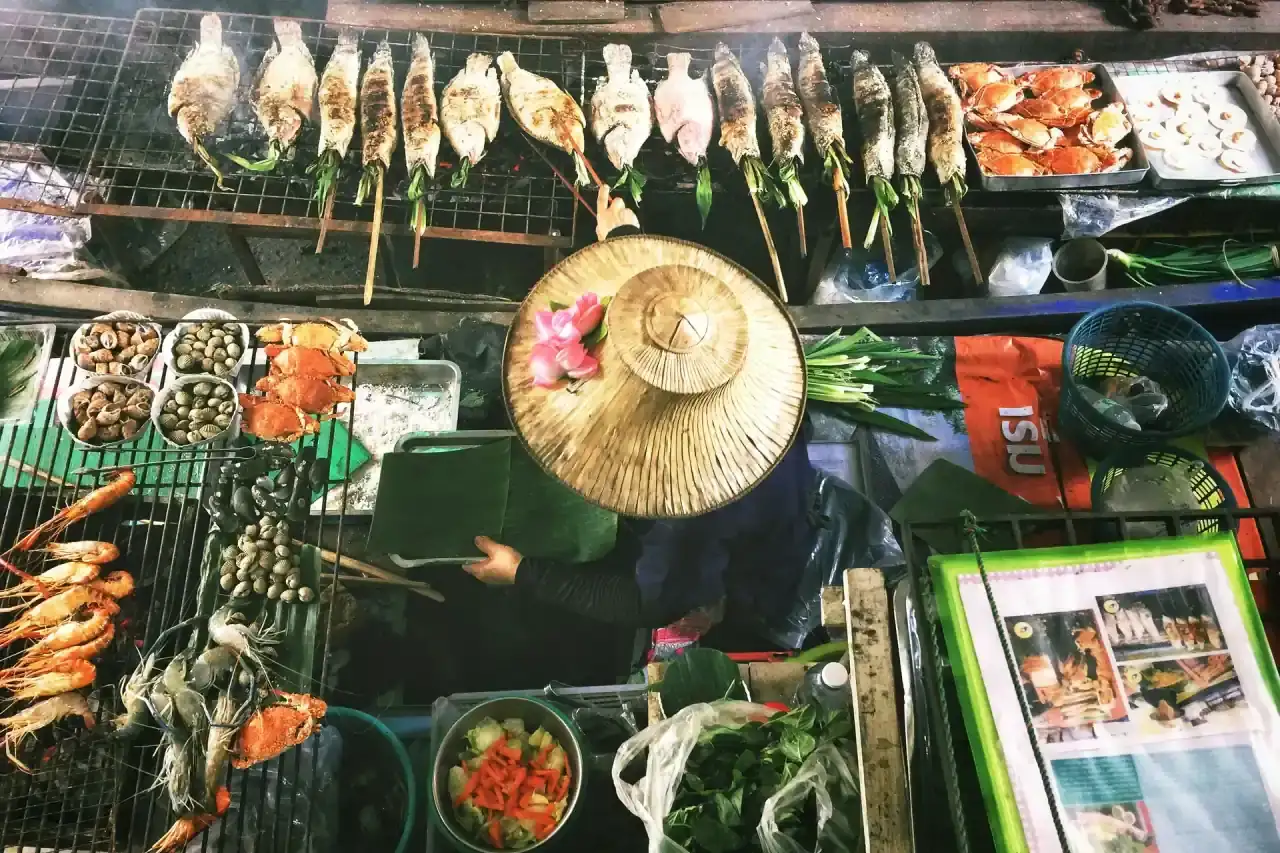

Thai Food from Foreign Influences
Thai food is internationally famous with such a long rich history. Whether chilli-hot or mild, harmony is the guiding principle behind each dish. Not many people know that several iconic Thai dishes — from curry, noodles, to sweets like Tong Yip, Tong Yod and Foy Tong — originated from foreign influences.
Indian Influence – Curry
The origin of curry dates back over 3,700 years to Mesopotamia. The word “curry” is derived from the Tamil word “Kari,” later anglicized into “curry.” Thai curries evolved by replacing dairy with coconut milk and coconut oil. This adaptation made the flavor uniquely Thai.
Thai Curry vs Indian & Japanese Curry
India originally had no chili — peppers were brought from the Americas by Christopher Columbus. Thai curry developed its personality later, becoming four key variations:
- Red Curry – most popular
- Green Curry – spiciest
- Massaman Curry – sweet & sour note
- Panang Curry – peanut based
Chinese Influence – Noodles & Pad Thai
The Chinese brought noodle culture to Thailand. The name “Guay Teow Pad Thai” literally combines Chinese + Thai:
- Guay Teow = rice noodles (Chinese)
- Pad = fry (Thai)
Who Made Pad Thai Famous?
Prime Minister Plaek Pibulsonggram popularized Pad Thai during World War II to improve nutrition — adding bean sprouts, eggs, peanuts, and protein.
Japanese Influence
Sushi, sashimi and minimal plating influenced Thai presentation. Yakitori style inspired Thai moo ping & gai yang.
Malaysian Influence
Malaysian noodle Mee Siam → inspired Thai dish Khanom Jeen Sao Nam.
Malaysia's peanut satay → adapted into Thailand and became Satay Gai / Satay Moo.
Vietnamese Influence
Thai salads such as Larb & Som Tam mirror Vietnamese herb composition — mint, basil, coriander.
Indonesian Influence
Satay and Miang Kham have Indonesian inspiration. “Satay” comes from Indonesian “Sate.”
Portuguese Influence – Birth of Thai Desserts
Tong Yip, Tong Yod, and Foy Tong are Portuguese influenced. Marie Guimar — daughter of Portuguese father — introduced egg yolk desserts to the Thai palace.
French Influence – Thai Royal Bakery Style
During King Rama IV & King Rama V era, Thai chefs were trained by French culinary masters → croissants, éclairs, tarts adapted with Thai flavors became popular.
7 Thai Dessert Names From Their Origin Countries
- Kanom Tokyo – inspired by Japanese Dorayaki
- Lod Chong Singapore – iced coconut dessert
- Mochi Nakornsawan – Japanese adapted
- Gluay Kaek – fried banana from Muslim cooking
- American Fried Rice – fusion dish invented during war era
- Kanom Jeen – noodle dish from Mon culture
- Singapore Cookies – Thai cookies using Singapore starch
Experience Thai food through real stories, history, and street vendors.



.webp&w=1920&q=75)

.webp&w=1920&q=75)