
Making merit is part of everyday life for Buddhist laypeople in Thailand, all year round, and one of the most common things Thais do when they visit a temple. Thais believe in reincarnation, and making merit is a way to build up good deeds for the future. Some believe it also helps reduce bad luck and keeps difficult situations from getting worse. Making merit (บุญกิริยาวัตถุ) has 3 parts: Tan (ทาน, giving), Sil (ศีล, following the precepts) and Pavana (ภาวนา, meditation). This article covers Tan, giving objects and taking part in rituals. It is the first, most basic step of making merit, and like all giving, it leaves you feeling good.
Food offering in the morning
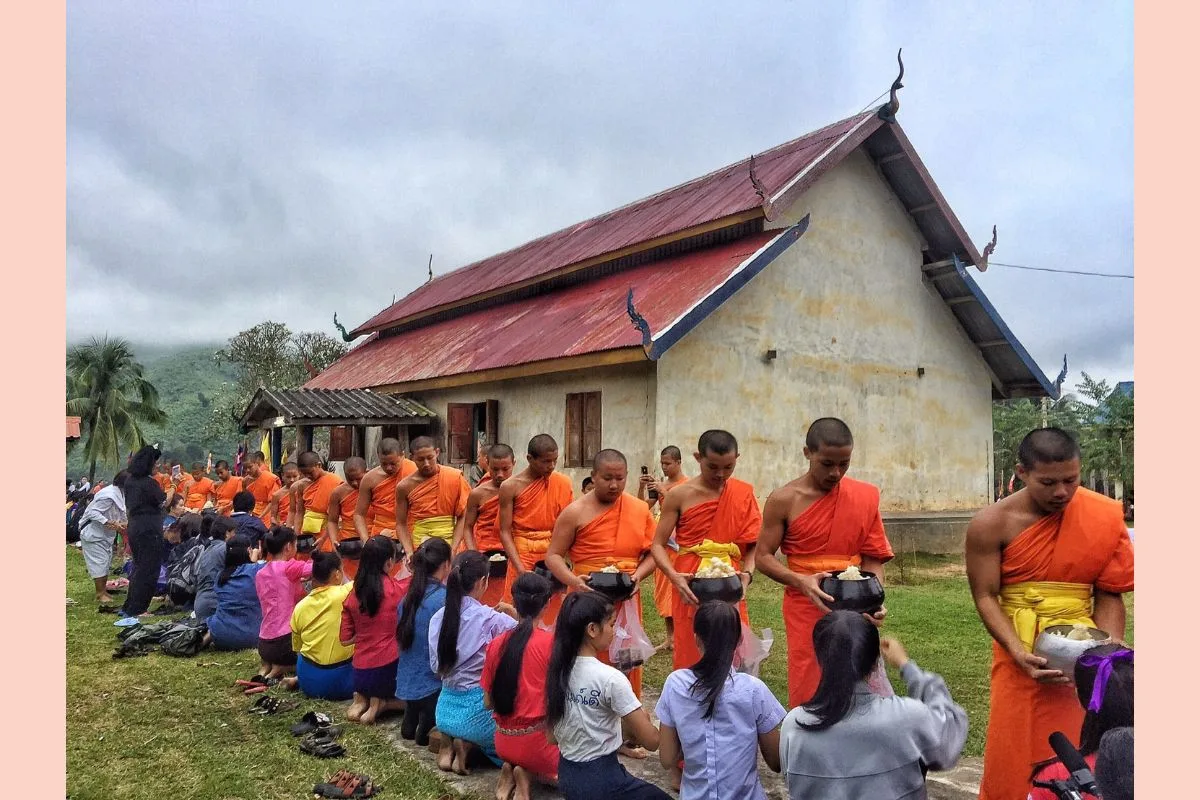
This practice, known as “Tak Bat” in Thai, is a way for Buddhists to make merit and support the monastic community. Every morning, Thai people offer food, flowers, snacks and drinks to the monks and receive a chant or blessing in return. It is a favourite way to start the day by supporting Buddhism. In the old days, people cooked the food themselves and served the best of it to the monks first.
Today, you can also see this at local markets. Offering food to monks is a meaningful way to engage with Thai culture, practice generosity, and support the monastic community. By participating in this tradition, you can gain insights into the importance of humility, gratitude, and the interconnectedness of all beings.
Release Fish, Frogs or Turtles into the River Near a Temple
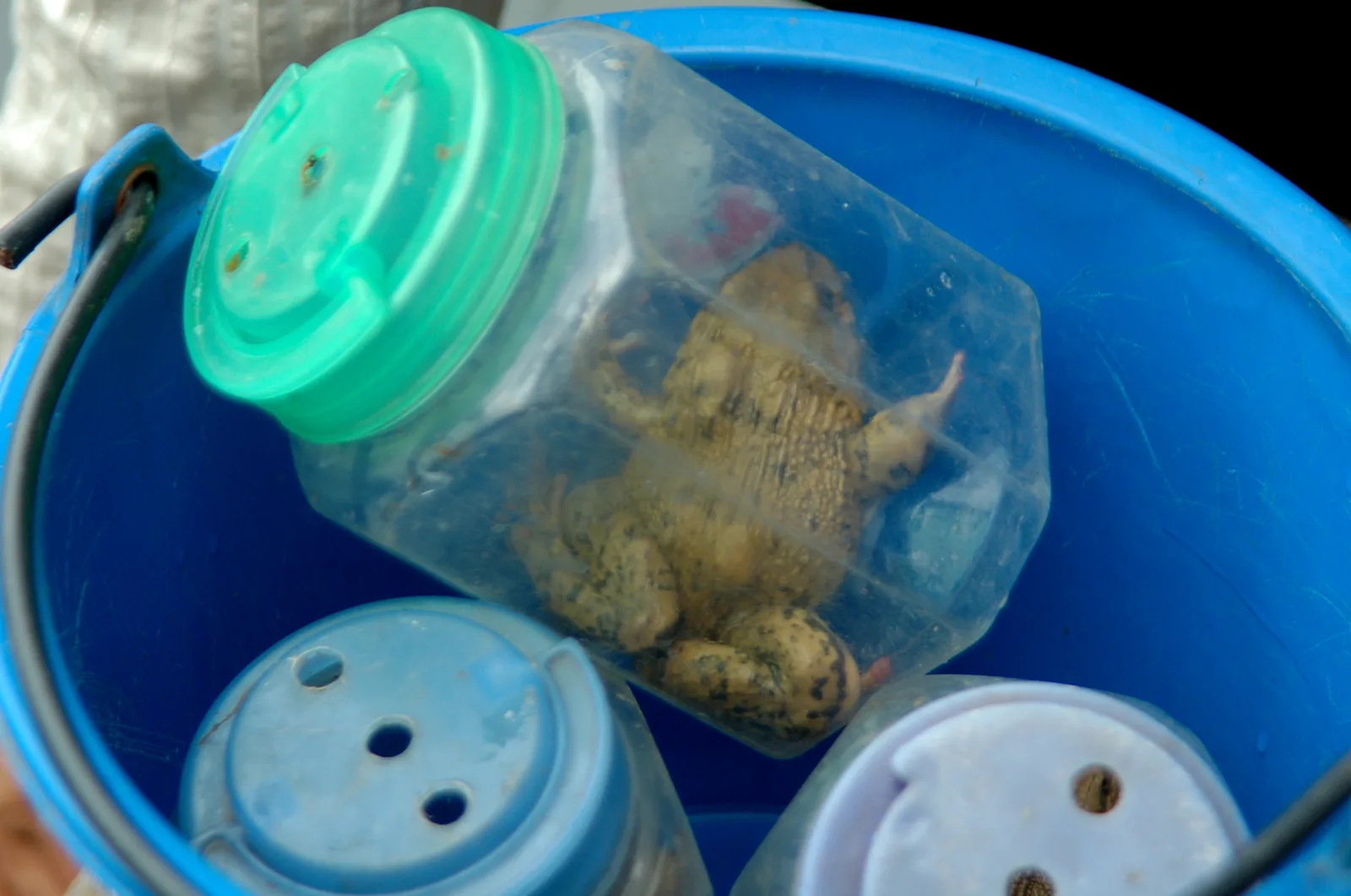
Releasing animals such as fish, frogs, or turtles into a river or other natural habitat is a common practice in some cultures, including certain Buddhist traditions in Asia. This practice is often seen as a way to generate merit, which is considered a positive force that contributes to one’s spiritual progress and well-being in Buddhist beliefs. The act of releasing animals is based on the principle of compassion and the desire to save lives. By giving these animals a chance to return to their natural environment, practitioners believe they are performing a virtuous deed. This practice is often linked to the Buddhist teaching of mettā (loving-kindness) and the intention to reduce harm to sentient beings.
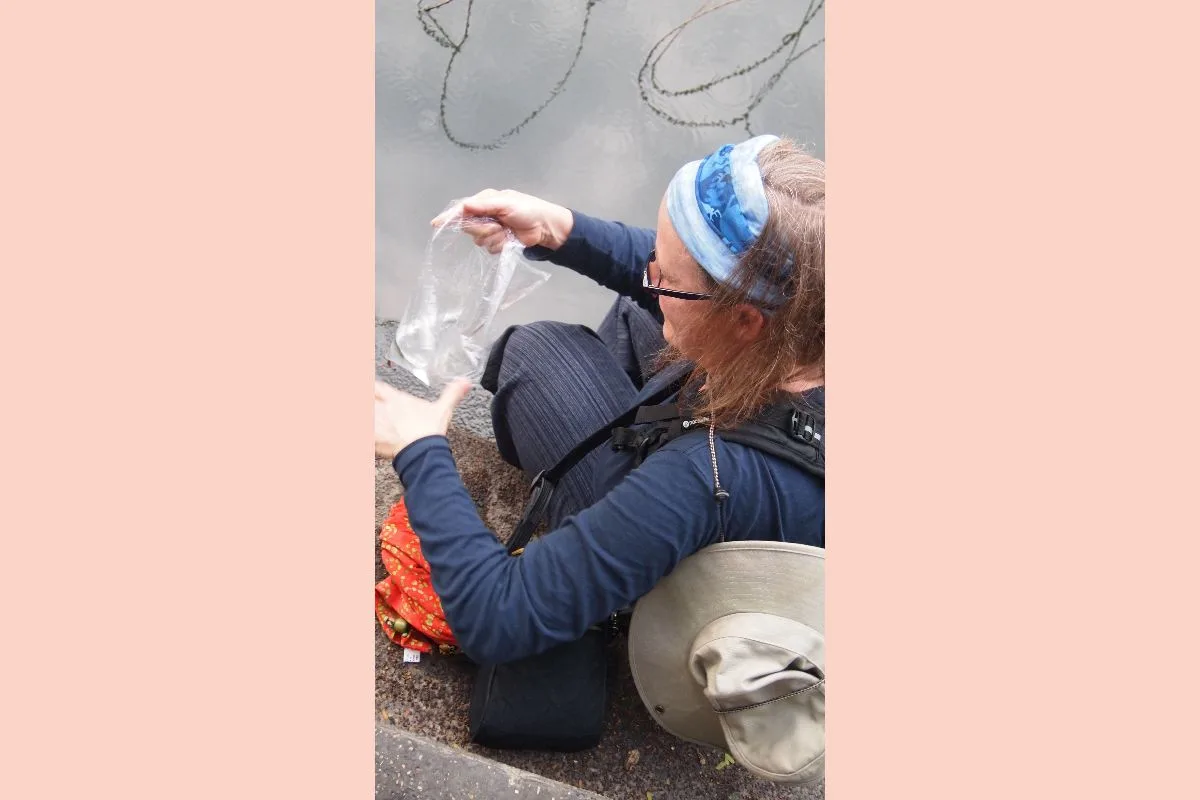
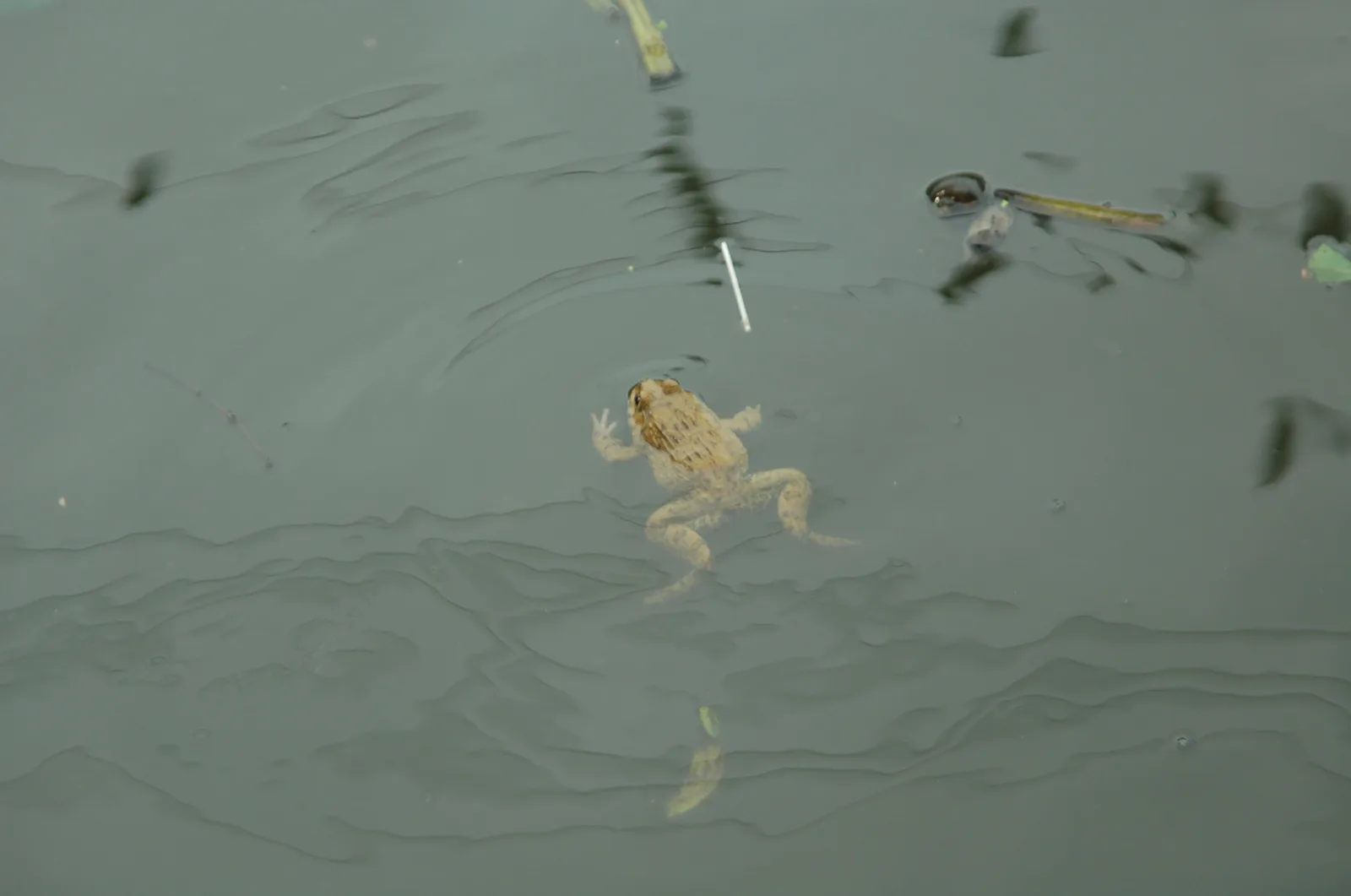
When you visit a temple, you may see live fish in a tank. People buy them and release them into the river or pond nearby. Locals see it as saving a life, and some never eat that kind of fish again. Some dedicate the merit to an elderly relative who is ill, hoping it will help them recover.
If you’re interested in participating in animal release as a form of making merit, it’s important to approach the practice with mindfulness and awareness. It’s a good idea to consult with local experts or organizations to ensure that the release is done in a way that respects both the well-being of the animals and the environment. Additionally, it’s recommended to seek guidance from respected sources within the relevant cultural or religious context to understand the practice fully and its potential implications.
Listen to the sermon
Temples in Thailand often host regular dhamma talks and sermons by monks. These talks can cover a variety of topics related to Buddhist teachings, meditation, ethics, and more. In the morning and evening, older people come to join the chanting. You sit quietly for about 30–45 minutes and listen to the rhythmic chanting in the main hall. At the end, a monk may give a short talk on a lesson for life. Meditation is a mental practice that involves focusing one’s attention and eliminating the stream of thoughts that typically occupy the mind. It’s often used as a technique for relaxation, self-awareness, and personal growth. Meditation has been practiced for thousands of years in various cultures and spiritual traditions around the world. The main goal of meditation is to train the mind to achieve a state of clarity, inner calm, and heightened awareness.
Meditation usually involves focusing the mind on a specific object, thought, sound, or sensation. This could be the breath, a mantra (a repeated word or phrase), a candle flame, or even the sensations in the body. Meditation aims to create a sense of inner calm and tranquility. Through practice, you learn to quiet the mind’s constant chatter and reduce feelings of stress and anxiety.
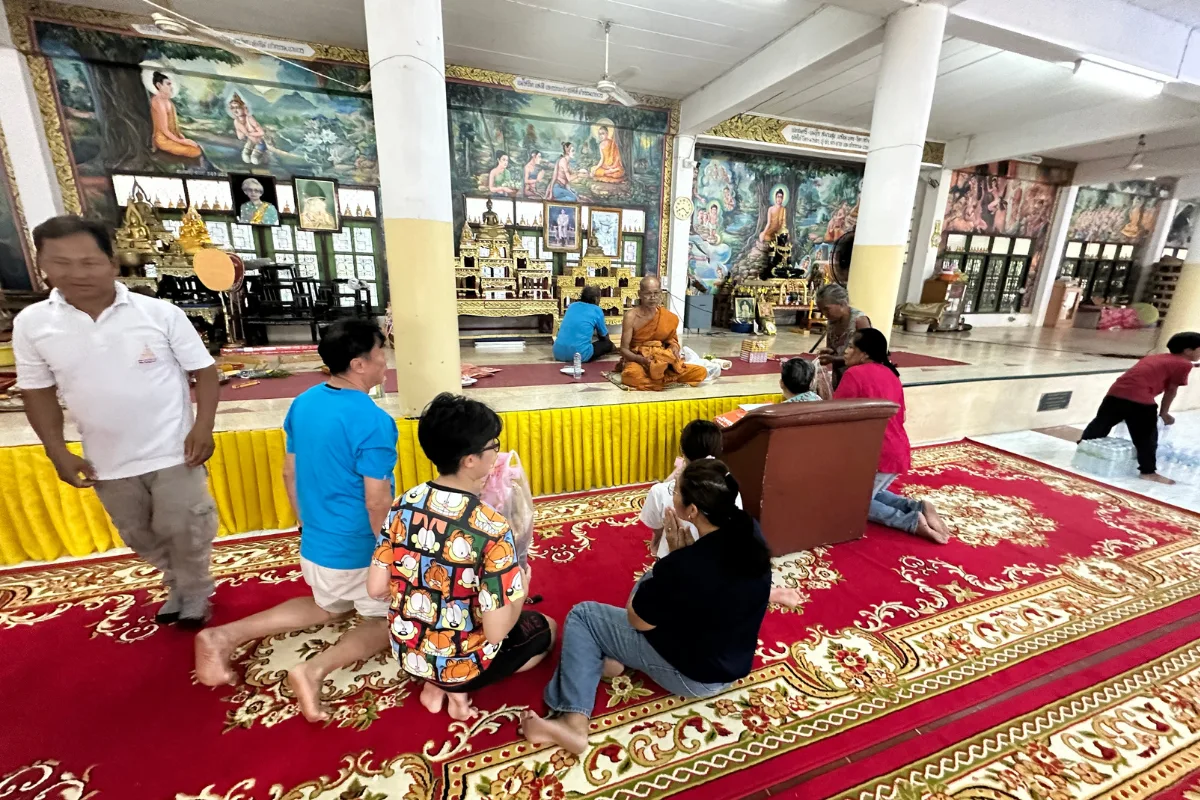
Some monasteries might also have public talks or retreats where you can listen to a monk’s teachings. These events might require advance planning, so it’s a good idea to check their websites or contact them in advance. During major Buddhist festivals or holidays, some temples host larger gatherings and special sermons. Visiting during these times could provide you with the opportunity to listen to a monk’s preaching.
Meditation
Meditation is one way to understand your own mind. There are so many things to think about in life.
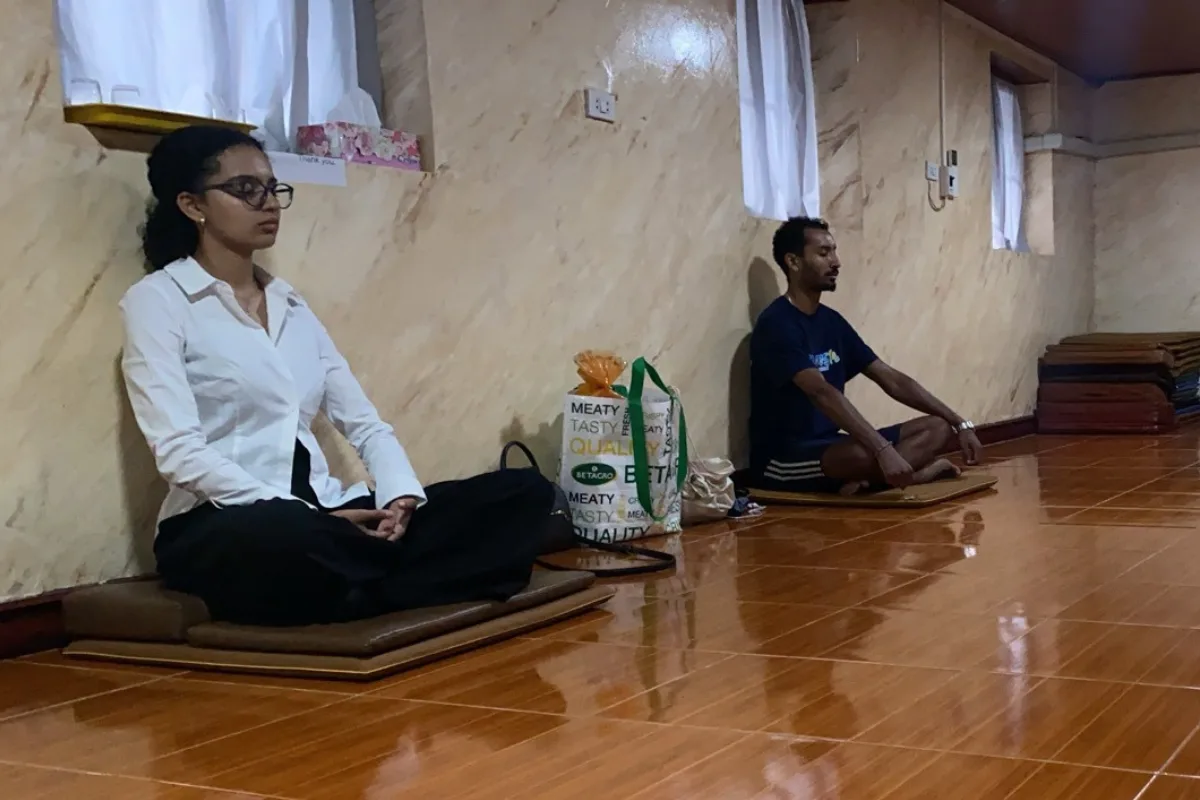
That makes it easy to lose focus and hard to concentrate. Meditation is a way of focusing on one thing such as your breathing, moving or chanting. Regular meditation can help you become more aware of your thought patterns and habits, leading to increased self-understanding and personal growth. Over time, you learn to control your mind and your thoughts. Thais learn meditation from monks, but you can also practise it at home and in daily life.
Pid Tong (Apply gold leaf ปิดทองพระพุทธรูปหรือปิดทองลูกนิมิตร)
“Pid Tong” (ปิดทอง) refers to the traditional Thai practice of applying gold leaf to Buddhist statues or other sacred objects. This practice is also known as “gilding” in English. The term “Pid Tong” translates to “covering with gold.” It’s a symbolic and respectful act that holds spiritual significance in Thai culture, especially within the context of Buddhism.
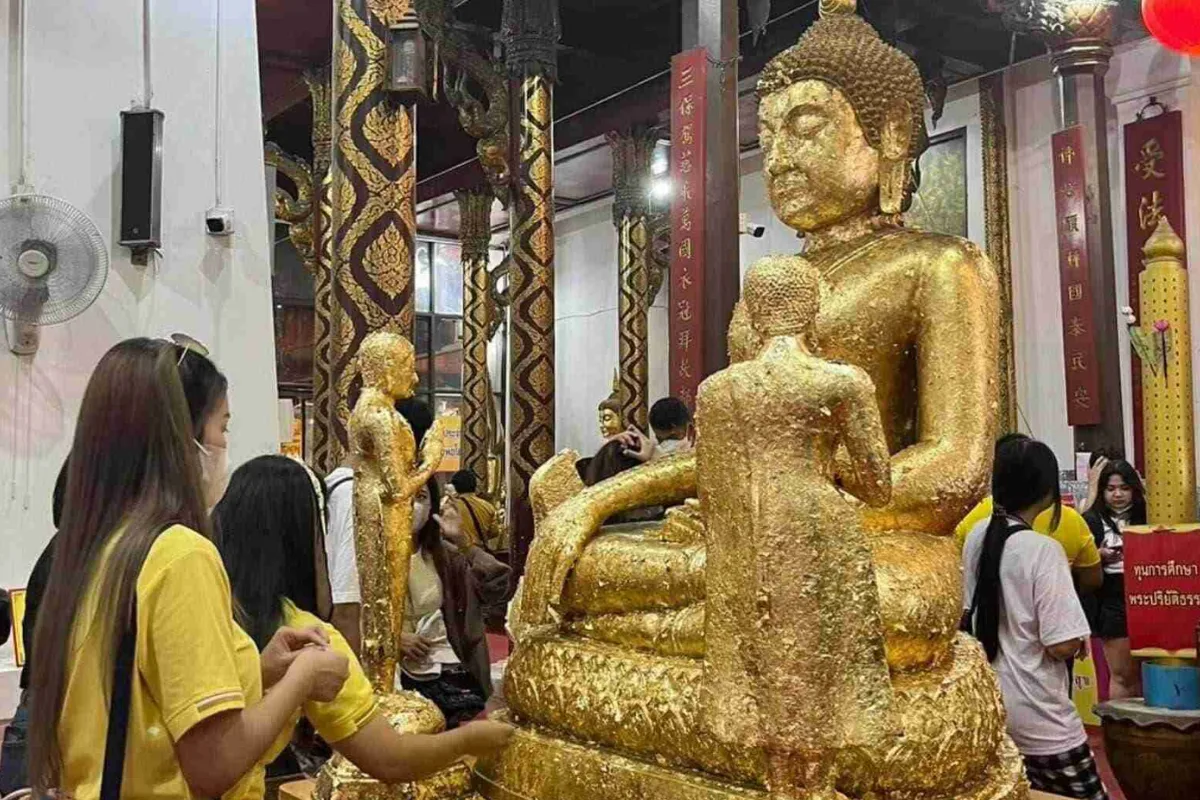
In this practice, thin sheets of gold leaf are delicately placed onto the surface of a Buddha statue or other revered objects, such as stupas or amulets. The intention behind Pid Tong is to show devotion, honor, and respect to the Buddha or the sacred object. The gold represents purity and enlightenment, and the act of applying gold leaf is considered a form of merit-making. Many Thais bring gold leaf to apply to a Buddha statue when they visit a temple. There are many explanations for this practice, and no single agreed one.
When a new main chapel is built, sacred stone spheres called Look Nimit are buried around it. There is a big celebration, and people apply gold leaf to them too. It is one of the biggest merit-making events for a local community.
Bring soy milk for evening session (ถวายน้ำปานะ)
“ถวายน้ำปานะ” (Towai Nam Pana) is a traditional Thai Buddhist practice of offering liquids, often water or other beverages, as a form of merit-making and respect to monks and the Triple Gem (the Buddha, the Dharma, and the Sangha). Buddhist monks do not eat after noon. During the Buddhist rain retreat, people gather at the temple in the evening to meditate, so bringing soy milk, one of the drinks monks may have in the evening, is a common offering. While soy milk is a suitable option, you can also offer other types of liquids that are commonly used in this practice. Here are some alternatives to consider:
Water: Pure water is the most common and traditional choice for offering. It symbolizes purity, clarity, and the essential element of life.
Herbal Drinks: Herbal teas or infusions can be a thoughtful and healthful option for offering. These can include floral teas, chamomile, or other non-caffeinated herbal blends.
Fruit Juices: Natural fruit juices, such as orange juice, apple juice, or grape juice, can be offered as a refreshing and nutritious choice.
Coconut Water: Coconut water is considered pure and hydrating. It’s commonly associated with tropical regions and is often used as an offering.
Flower-Infused Water: Infusing water with petals of edible flowers like jasmine, rose, or chrysanthemum can create a visually appealing and aromatic offering.
Tea: Traditional tea, whether black, green, or herbal, can be offered as a symbolic gesture of respect and mindfulness.
Clear Soft Drinks: Clear carbonated drinks or clear sodas can be offered as an alternative option.
Non-Alcoholic Beverages: Non-alcoholic versions of drinks like beer or wine can be offered, maintaining the symbolism of liquids without the alcohol content.
Milk Alternatives: Besides soy milk, other plant-based milk alternatives like almond milk, oat milk, or coconut milk can be used for offering.
Distilled Water: Highly purified distilled water can be offered as a symbol of purity and clarity.
When selecting the type of liquid for your offering, consider the symbolism associated with the liquid and its appropriateness for the setting. It’s also a good idea to inquire with local temple staff or practitioners to ensure that your choice aligns with the temple’s customs and practices. Ultimately, the intention behind the offering is what matters most, so approach the practice with a sincere heart and a respectful attitude.
Give Sankatan (สังฆทาน) to the monk
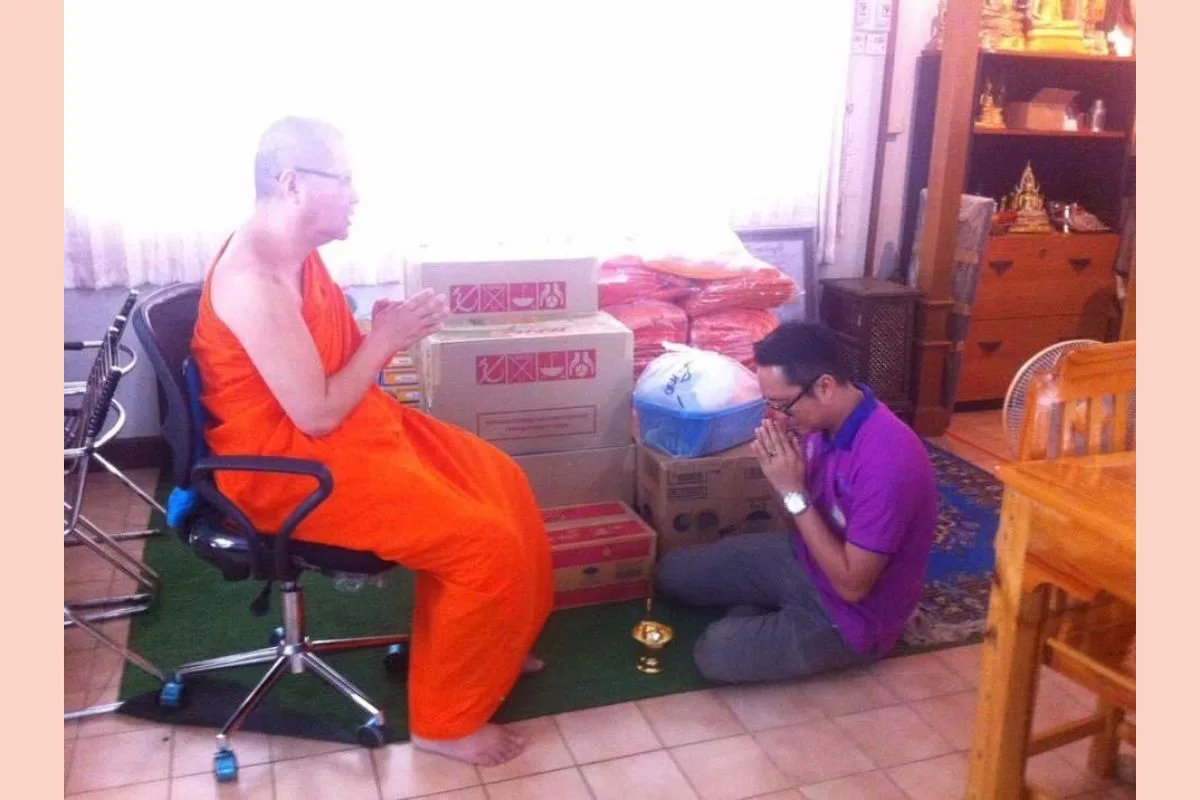
Sankatan refers to the act of making a special offering or donation to monks in Thai Buddhism. This offering is often done on significant occasions, such as birthdays, anniversaries, or other auspicious events, as a way to accrue merit and share blessings. Sankatan is a basket of everyday items a monk needs, such as pins, medicine, detergent, salt, a flashlight, a toothbrush and water. People give it to the temple without naming a specific monk. You can offer supplies that are used by the monks or the temple, such as candles, incense, flowers, and ceremonial items. However, it’s common to offer money as a form of support and generosity. The head of Buddhist monk will share these resources among their group later.
If you’re interested in experiencing a Sankatan (สังฆทาน) offering firsthand, especially during your visit to Thailand, you can check with your local operator or guide. They can provide guidance on what items to offer, the proper protocol, and the best times to visit. Many temples organize special events, festivals, or ceremonies where Sankatan offerings are made. Check the temple’s schedule or inquire with locals to find out if there’s an upcoming event. After making your offering, take a moment to express your gratitude to the monks or temple staff. If you’re curious, feel free to ask questions to learn more about the practice and its significance.
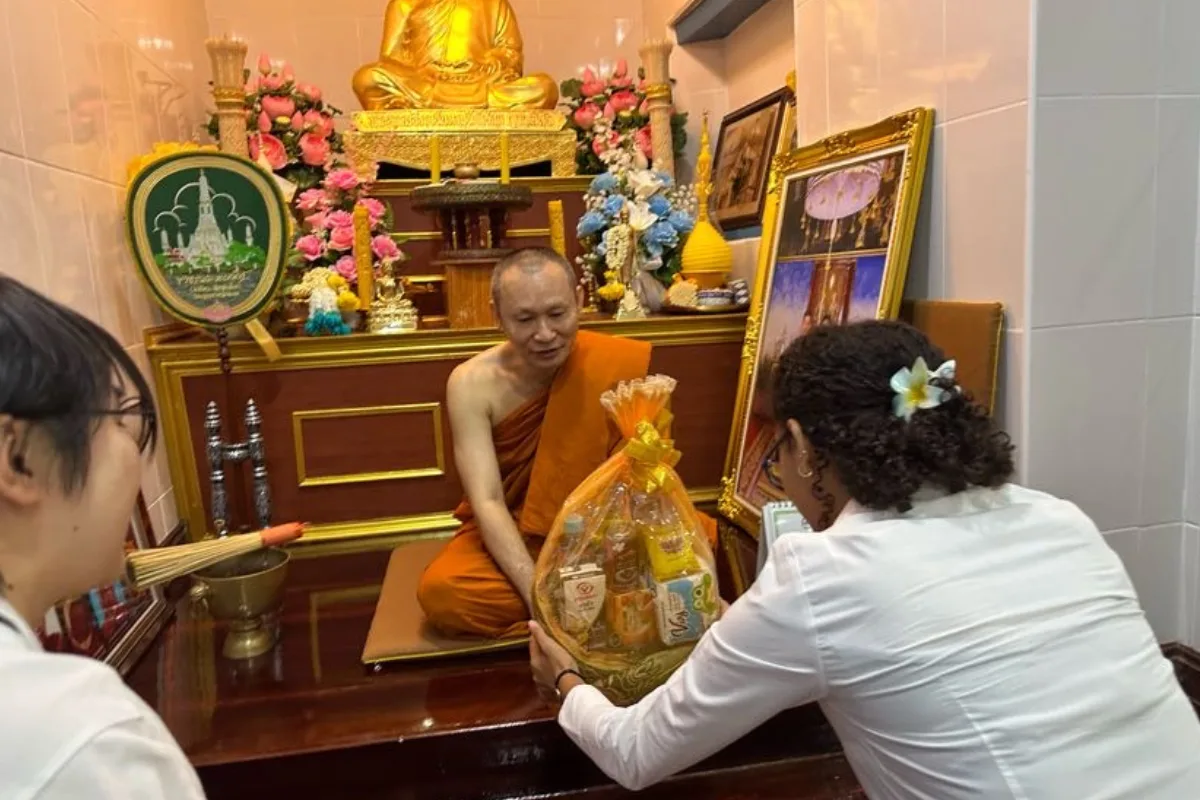
When deciding what to offer for Sankatan, consider the practical needs of the monks and the temple community. Your intention to give and support is what matters most. Before making your offering, you can inquire with the temple staff or local practitioners to get an idea of their specific needs and preferences. Additionally, it’s a good idea to adhere to any guidelines or customs set by the temple for Sankatan offerings.
Vian Tean (เวียนเทียน)
Vian Tean is held in the evening. People light candles and incense sticks and walk around the main chapel to pay respect to the Buddha on special days, such as the start and end of the Buddhist rain retreat or Makha Bucha.
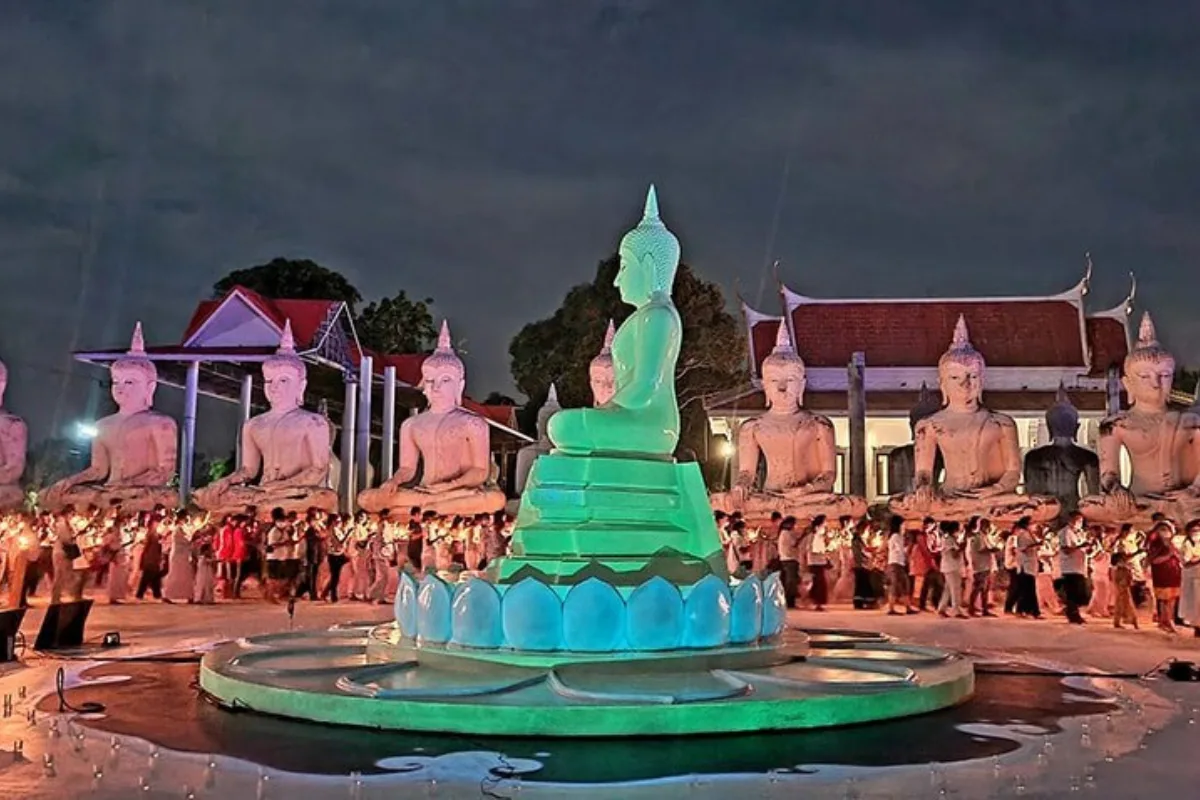
This practice is also commonly known as “circumambulation” in English. It involves walking clockwise around a particular point or area, usually in a temple or shrine. You can select a temple, shrine, stupa, or sacred object where you would like to perform the Vian Tean practice. This could be a revered statue of the Buddha, a stupa containing relics, or a sacred tree.
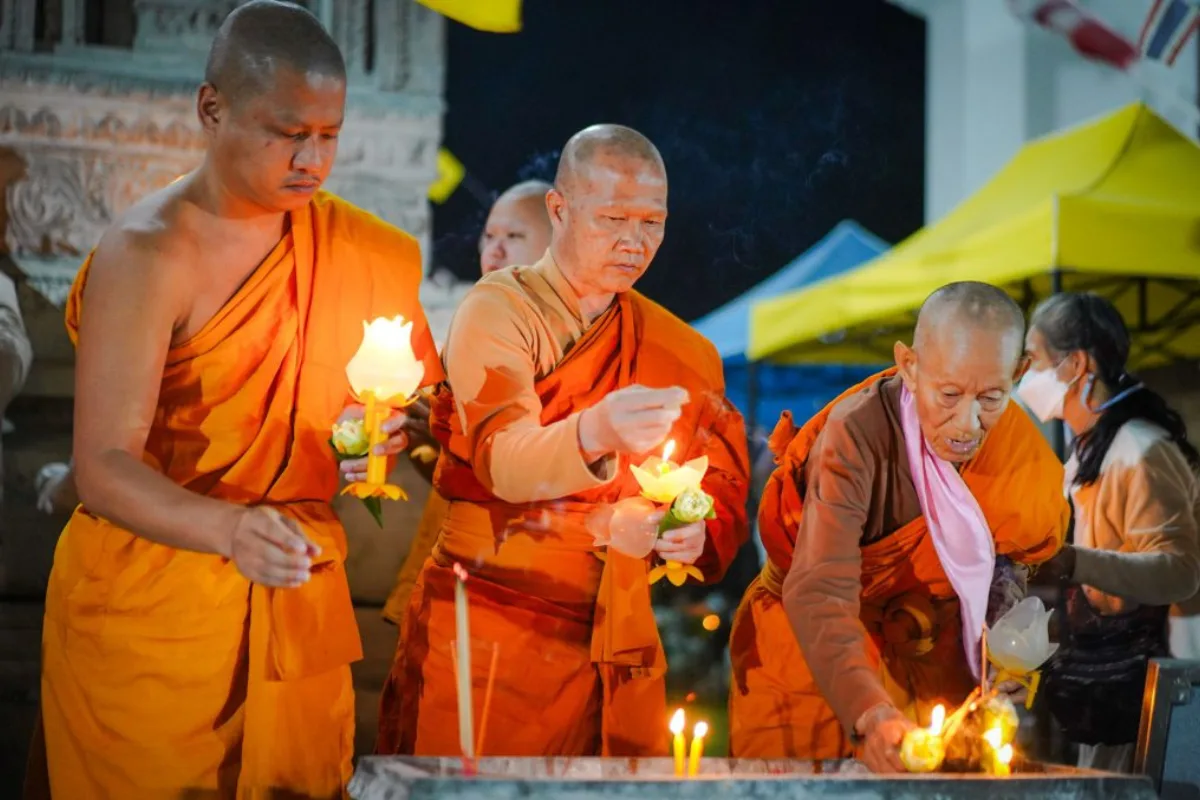
Dress in appropriate and modest attire, covering your shoulders and knees, as a sign of respect when entering a temple or sacred area. As you walk, engage in the practice mindfully. Focus your thoughts on the teachings of the Buddha, cultivate a sense of gratitude, or engage in your personal prayers or reflections. Some individuals choose to recite Buddhist mantras or chants while performing Vian Tean. This can help enhance the meditative and spiritual aspect of the practice. You can complete the circuit around the sacred object or area once, several times, or as many times as you feel inclined. The number of circuits can have personal significance. When you have completed the desired number of circuits, pause for a moment of reflection and gratitude. You may choose to leave offerings such as flowers, incense, or candles at the sacred object or shrine as a symbol of respect and devotion. While performing Vian Tean, be mindful of your surroundings and the people around you. Maintain a sense of tranquility and respect for the sacred space.
Donation to others
Donating money to charity is considered a significant and highly meritorious practice in Buddhism. This act of generosity is known as “dana” in Pali, the language of the Buddhist scriptures. Dana, or giving, is one of the fundamental virtues in Buddhism and is seen as a way to accumulate positive karma (merit) and cultivate a generous and compassionate heart. Making donations, whether it’s money, food, clothing, or other necessities, is believed to create positive karma that leads to beneficial outcomes in this life and future lives. It’s considered a way to support one’s own spiritual development and well-being. In addition to monetary donations, giving can also involve offering one’s time, skills, or resources for the benefit of others. The purity of one’s intention when making a donation is emphasized. Giving should come from a genuine desire to help and make a positive impact, rather than seeking praise or recognition. In Buddhism, there are various types of recipients for charitable giving, including monastics (monks and nuns), the needy, the sick, and those engaged in various forms of spiritual practice. The act of giving is seen as a source of joy and happiness. The happiness that arises from giving is considered a form of spiritual wealth. There is more making merit related to Buddhist event and inside the temple. Visitors can see more things going on in Thai temples. Feel free to ask your local guide to explain the event. Or join one of our tours and let our guide explain more.
📚 Related Articles You Might Like
Food & Culinary History
- Thai Food from Foreign Influences
- Experience the History of Royal Thai Cuisine
- Food and Thai Festivals
Festivals & Traditions
Culture & Beliefs