
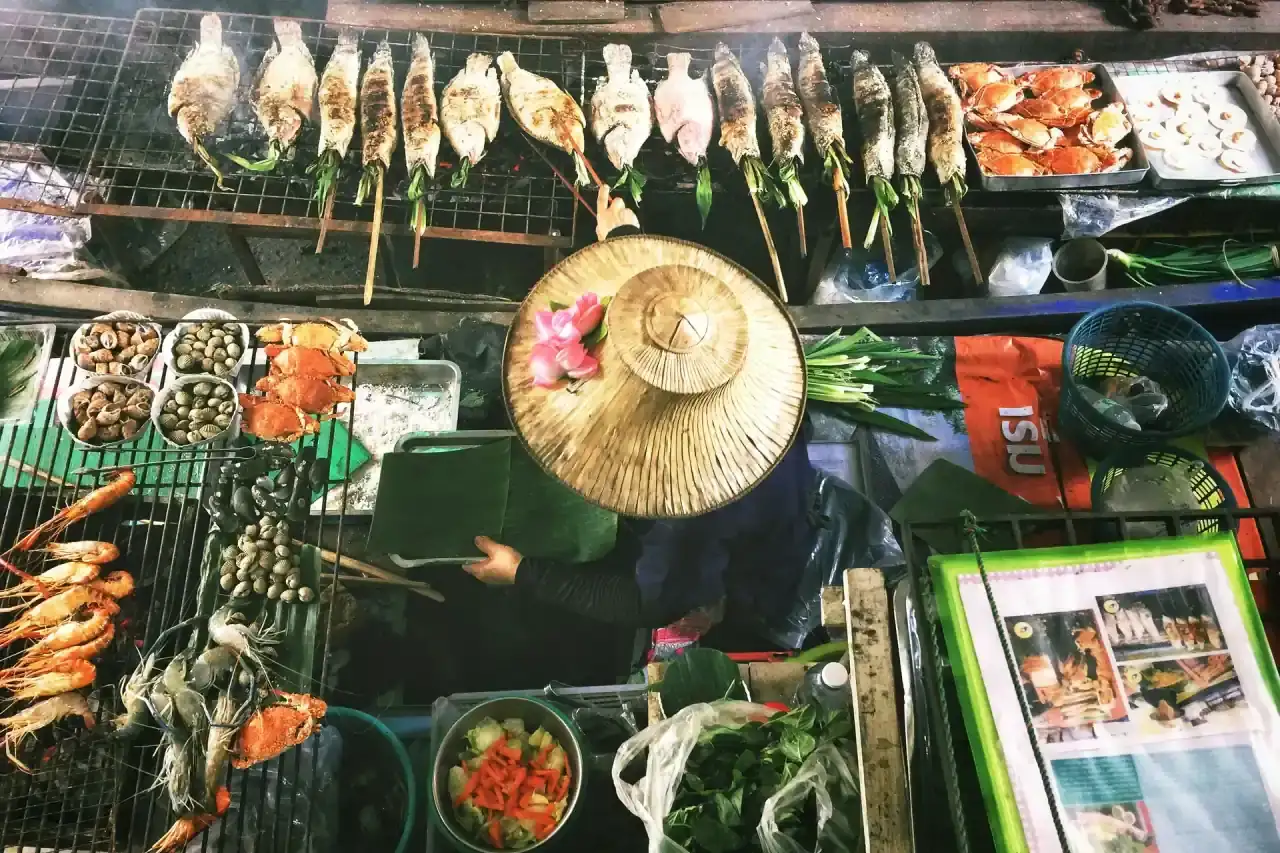

Savor the culinary treasures of Lanna with Eat Walk Talk Tour.
Delicious Chiang Mai Food: The Ultimate Guide to Authentic Northern Thai (Lanna) Cuisine 🍜🌶️
For culinary enthusiasts traveling through Southeast Asia, Thailand is rightfully celebrated as one of the world's greatest gastronomic destinations. Yet while international palates are intimately familiar with the sweet, sour, and creamy coconut profiles of Bangkok (such as Pad Thai and Tom Yum Goong) or the blazing chili heat of Southern Thai curries, the northern mountainous region of Chiang Mai boasts a culinary tradition entirely its own: Lanna Cuisine (อาหารล้านนา). Developed over seven centuries as the cultural heart of the ancient Lanna Kingdom and shaped profoundly by neighboring Myanmar (Burma), Yunnanese Chinese trade caravans, Shan ethnic groups, and Laos, Northern Thai gastronomy is earthy, herbaceous, deeply savory, and remarkably complex.
Unlike Central Thai cuisine, traditional Lanna cooking rarely utilizes refined white sugar or heavy coconut milk—with the celebrated exception of Khao Soi. Instead, local home cooks and market masters coax profound depth from charcoal-roasted aromatics, dried indigenous forest spices—most notably the tingling, citrus-tinged Makhwaen prickly ash peppercorn—fermented soybean cakes (Tua Nao), fresh herbs, wild forest mushrooms, and slow-braised meats. Whether you are slurping golden noodles at a humble curbside wooden stall, browsing fragrant morning markets, or sitting cross-legged on woven floor mats for a ceremonial Khantoke banquet, dining in Chiang Mai is a joyful cultural immersion. To prepare your palate before heading north, explore our comprehensive Bangkok Food Experience Guide.
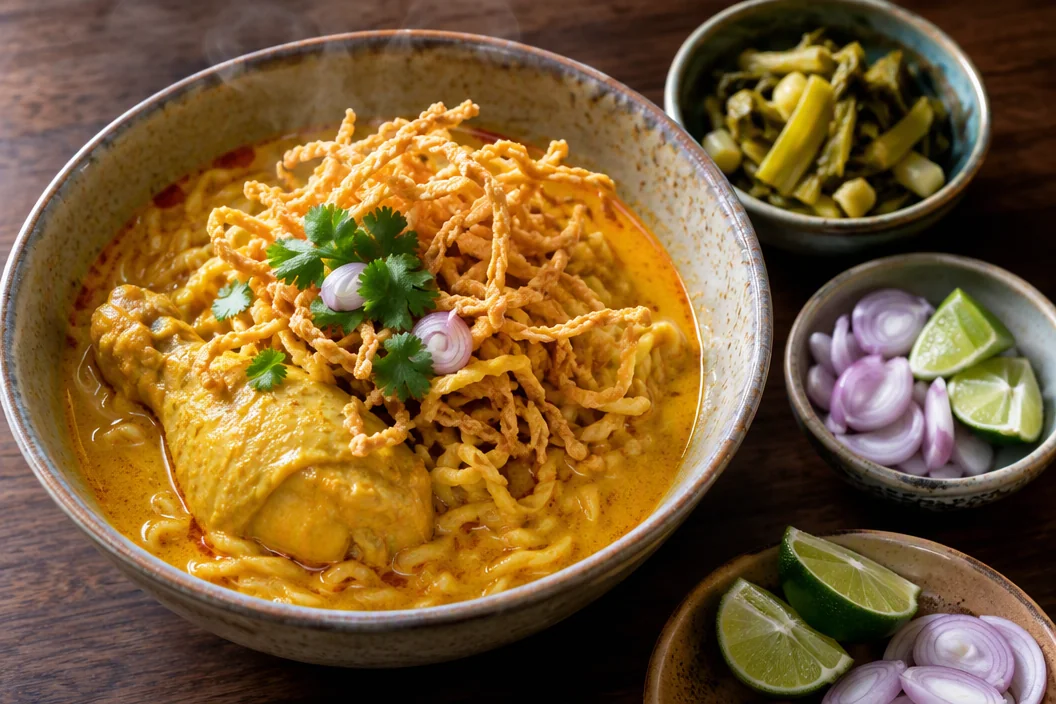
🍲 Lanna Dining Summary: The holy trinity of Chiang Mai dining consists of: (1) Khao Soi (creamy coconut curry egg noodles with a crispy fried noodle crown), (2) Sai Oua (aromatic lemongrass and kaffir lime herbal pork sausage), and (3) Nam Prik Num (charcoal-roasted green chili dip paired with crispy pork cracklings). For the definitive cultural feast, reserve an evening Khantoke dinner featuring traditional Lanna music and royal court dances.
The Iconic Dishes of Northern Thailand (Lanna)
1. Khao Soi (ข้าวซอย): The Crown Jewel of Chiang Mai Noodles
No culinary journey through Northern Thailand is complete without devouring a steaming bowl of Khao Soi. Influenced by Chinese-Muslim (Chin Haw) overland merchants traveling ancient trade caravan trails between Yunnan, Myanmar, and Siam, Khao Soi is a rich, fragrant coconut curry noodle soup. The broth is simmered with freshly pounded yellow curry paste, dried black cardamoms, cinnamon quills, fresh turmeric, and velvety coconut cream, enveloping tender, bone-in chicken drumsticks or meltingly soft braised beef shank.
Flat, chewy wheat-and-egg noodles swim beneath the golden broth, crowned dramatically with a nest of crispy, deep-fried egg noodle strands that provide a delightful crunch. Every bowl is served alongside a small dish of essential condiments: freshly squeezed lime wedges to cut through the richness, thinly sliced raw purple shallots, roasted chili paste fried in oil (Prik Phao), and tangy pickled mustard greens (Phak Kat Dong). Famous Spots: Khao Soi Lam Duan Fah Ham (Michelin Bib Gourmand, serving along the Ping River for over 70 years), Khao Soi Mae Sai in Santitham, and Khao Soi Islam for authentic Halal beef and mutton recipes.
2. Sai Oua (ไส้อั่ว): The Aromatic Northern Herbal Sausage
As you wander through Chiang Mai’s morning markets, the intoxicating scent of grilling pork over charcoal will lead you to coils of Sai Oua. Unlike standard sweet sausages, Sai Oua is an intensely savory masterpiece packed with coarsely ground pork belly, kaffir lime leaves, lemongrass stalks, galangal root, fresh cilantro, garlic, shallots, and fiery red curry paste.
Stuffed into natural pork casings and coiled into massive spirals over glowing coconut-shell coals, the sausage achieves a crispy, blistered skin while maintaining a juicy, herbaceous interior that bursts with citrusy warmth at the first bite. Locals purchase Sai Oua by weight, sliced warm into bite-sized discs accompanied by steaming sticky rice and fresh ginger slices. Where to Buy: Warorot Market (Kad Luang) and Mae Hia Agricultural Market.
3. Nam Prik Num & Nam Prik Ong: The Legendary Northern Dips
In Lanna dining culture, savory chili relishes (Nam Prik) anchor every communal table:
- Nam Prik Num (น้ำพริกหนุ่ม): Prepared from long green spur chilies, garlic cloves, and shallots slow-roasted over open charcoal coals until blistered and blackened, peeled, and hand-pounded in a stone mortar with fish sauce or fermented fish. Smoky, savory, and moderately spicy, it is eaten with crunchy pork cracklings (Kaep Moo) and steamed garden vegetables like winged beans, baby corn, and cabbage.
- Nam Prik Ong (น้ำพริกอ่อง): A comforting, mild relish reminiscent of a rich Italian bolognese. Minced pork is wok-tossed with sweet cherry tomatoes, fermented soybean cakes (Tua Nao), garlic, and mild red chili paste, resulting in a luscious sweet-and-savory dip perfect for dipping crunchy cucumber spears and warm sticky rice.
4. Gaeng Hang Lay (แกงฮังเล): Burmese-Style Slow-Braised Pork Curry
Dating back to the centuries when Chiang Mai was under Burmese rule, Gaeng Hang Lay is a celebratory, non-coconut curry. Fatty pork belly and tender shoulder are marinated with fresh ginger, tamarind pulp, dark soy sauce, and a unique Hang Lay masala spice mix containing cardamoms, cloves, star anise, and cinnamon. Slow-simmered for several hours, the pork absorbs a deep, sweet, sour, and savory glaze, punctuated by whole pickled garlic cloves and slivers of fresh ginger that cut cleanly through the rich pork fat.
5. Larb Kua Lanna (ลาบคั่ว): The Smoky, Herb-Roasted Minced Meat Salad
While Northeastern (Isaan) larb is famous for its tart lime juice and toasted rice powder, Larb Kua in Northern Thailand is a completely distinct dish. Minced pork, beef, or chicken is seasoned with an intricate, dry-roasted spice blend featuring dried bird's eye chilies, long pepper, and wild Makhwaen (northern prickly ash peppercorn). Flash-fried in hot pork lard with crispy garlic and dried blood curd, it delivers a deeply smoky, aromatic, and tongue-tingling flavor profile that exemplifies the culinary soul of the northern valleys.
6. Kanom Jeen Nam Ngiaw (ขนมจีนน้ำเงี้ยว): Tangy Rice Noodles in Tomato Pork Broth
Another beloved staple across the northern provinces is Kanom Jeen Nam Ngiaw. Fresh, fermented round rice noodles are bathed in a tart, robust broth simmered from pork ribs, minced pork, blood cubes, and local cherry tomatoes. The defining soul of the dish comes from dried red cotton tree flowers (Dok Ngiaw) and fermented soybean paste, giving the broth an earthy floral note and deep tang. Garnished with crispy garlic, crunchy bean sprouts, pickled cabbage, and pork rinds, it is a comforting lunch favorite enjoyed at dedicated noodle shops across Chiang Mai.
7. Kaep Moo (แคบหมู): The Art of Northern Crispy Pork Rinds
No Lanna meal is complete without a mountain of Kaep Moo (crispy deep-fried pork cracklings). Prepared daily in massive woks across Chiang Mai's markets, Kaep Moo comes in two distinct varieties: Kaep Moo Rai Mun (skin-only, puffed until light, hollow, and shatteringly crispy) and Kaep Moo Tid Mun (pork skin with a thick layer of golden, crunchy pork belly fat attached). Dipped generously into Nam Prik Num, it creates an unforgettable textural harmony of crunch and smoky spice.
The Tradition of the Khantoke Dinner (ขันโตก)
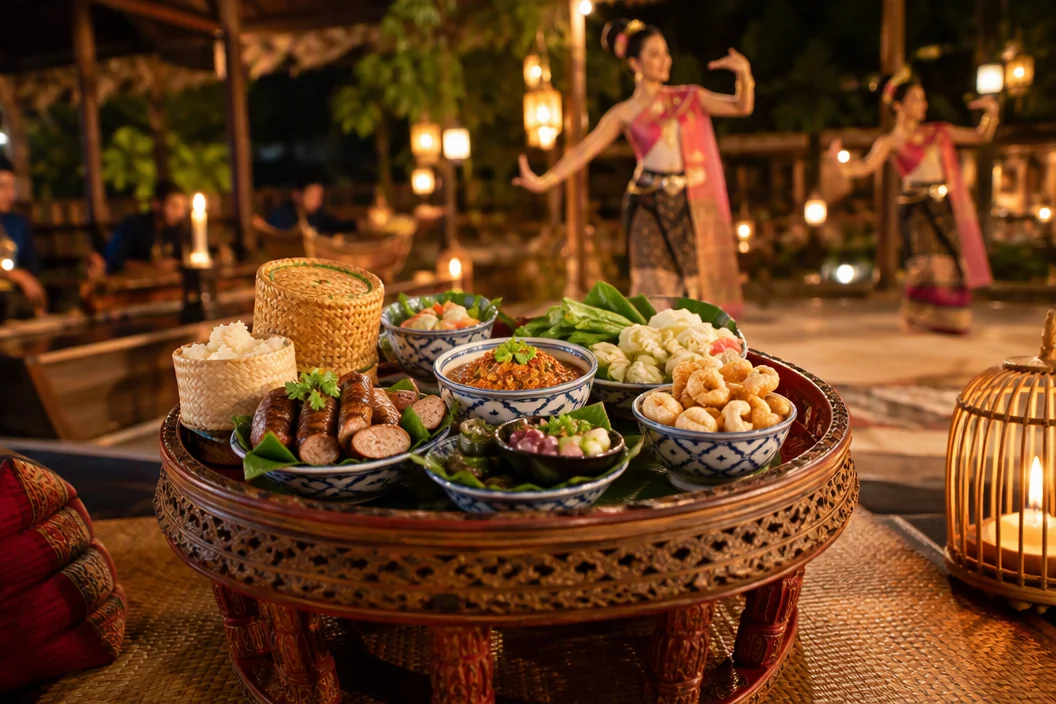
The pinnacle of traditional Northern Thai hospitality is the Khantoke banquet. A Khantoke is a low, circular pedestal tray crafted from polished teakwood or woven rattan. Historically, Lanna nobility and royal families served feasts on these trays to welcome honored guests, visiting ambassadors, and dignitaries during special festivals.
Guests remove their shoes and sit cross-legged on comfortable silk cushions on the floor around the Khantoke table. The tray is laden with an assortment of signature Lanna dishes: steaming bamboo baskets of sticky rice, Gaeng Hang Lay pork curry, Sai Oua sausage, fried chicken wings, crispy Kaep Moo, Nam Prik Num, and sweet crispy noodles (Mee Krob). As you dine, classical Lanna musicians play traditional stringed Sueng and hammered Khim instruments while dancers perform the graceful Fingernail Dance (Fon Lep), the energetic Sword Dance, and festive northern hill-tribe folk dances.
Where to Eat: Chiang Mai's Best Local Markets and Street Centers
- Warorot Market (Kad Luang): The oldest and most iconic market in Chiang Mai, located along the Ping River. The ground floor is packed with stalls frying fresh Sai Oua, packing jars of Nam Prik Num, and bagging crispy Kaep Moo—making it the definitive spot to purchase edible culinary souvenirs.
- Chang Phuak Gate Night Market (North Gate): Operating nightly outside the northern moat gate, this bustling open-air street food market is famous for the legendary "Cowboy Hat Lady" (Khao Kha Moo Chang Phueak), who slices ultra-tender braised pork leg over rice with pickled mustard greens.
- Siri Wattana Market (Tha-nin Market): Located just north of the Old City, this is a clean, authentic covered market favored by locals and culinary students. It features incredible stalls selling Gaeng Ho, fresh herbal curries, and sticky rice sets at local neighborhood prices.
- Ton Payom Market (Suthep Road): Located near Chiang Mai University, this local morning market is famous among university students and local chefs for exceptionally fresh Sai Oua and hot sticky rice.
- Sunday Walking Street (Ratchadamnoen Road): Every Sunday evening, the center of the Old City transforms into a massive night market featuring hundreds of artisan food stalls serving grilled skewers, Kanom Jeen noodles, coconut pancakes, and iced herbal drinks.
Frequently Asked Questions (FAQ) About Chiang Mai Food
คำถามที่พบบ่อยและข้อมูลสำคัญที่คุณควรรู้ รวบรวมโดยผู้เชี่ยวชาญท้องถิ่น
Q1 What makes Northern Thai (Lanna) food different from Bangkok or Southern Thai food?
Northern Thai cuisine reflects its cooler mountainous climate and shared borders with Myanmar and Laos. It relies heavily on sticky rice rather than jasmine rice, avoids white sugar and coconut milk in most curries (favoring savory, sour, and herbal broth bases), and utilizes unique regional aromatics like dried fermented soybean cakes (Tua Nao) and wild prickly ash (Makhwaen).
Q2 What is the single most famous dish you must eat in Chiang Mai?
The definitive must-eat dish is Khao Soi—a luscious, golden coconut curry noodle soup featuring tender braised chicken or beef, soft egg noodles, and a crunchy topping of crispy fried noodles, accented with lime, shallots, and pickled mustard greens.
Q3 Is Northern Thai food very spicy for foreign palates?
On average, Northern Thai cuisine is noticeably milder than the fiery curries of Southern Thailand or the raw chili heat of Isaan papaya salads. Dishes like Gaeng Hang Lay (Burmese pork curry) and Nam Prik Ong (tomato-pork dip) are mild to medium, while Sai Oua sausage and Nam Prik Num carry a pleasant, moderate warmth. Stalls will gladly adjust chili levels upon request.
Q4 Where can I find the absolute best Khao Soi in Chiang Mai?
Top celebrated Khao Soi institutions include:
- Khao Soi Lam Duan Fah Ham: The historic pioneer operating along the Ping River for over seven decades, recognized with a Michelin Bib Gourmand.
- Khao Soi Mae Sai: A beloved local favorite in the Santitham neighborhood known for its rich, aromatic broth.
- Khao Soi Khun Yai (Grandma's Khao Soi): A tucked-away stall near the North Gate operating strictly from 10:00 AM to 14:00 PM.
- Khao Soi Islam: An authentic Halal restaurant on Charoen Prathet Soi 1 famous for tender braised beef and mutton Khao Soi.
Q5 What happens at a traditional Khantoke dinner?
At a Khantoke dinner, guests remove shoes and sit on floor cushions around low, circular teakwood pedestal trays laden with shared Northern Thai specialties and sticky rice. Throughout the meal, live performers present classical northern court dances (Fingernail Dance, Sword Dance) and traditional music on stage, offering a full cultural immersion.
Q6 How much does a typical local meal cost in Chiang Mai?
Dining in Chiang Mai is remarkably affordable:
- Street food noodle bowls (Khao Soi, Guay Tiew): 45 – 70 THB ($1.30 – $2.00 USD).
- Casual market dishes and grilled sausages: 30 – 80 THB ($0.90 – $2.30 USD).
- Sit-down local Lanna restaurant meal: 150 – 300 THB ($4.50 – $9.00 USD) per person.
- Traditional Khantoke Dinner with cultural performance: 550 – 900 THB ($16 – $26 USD) per person.
Q7 Are there vegetarian and vegan options available in Chiang Mai?
Chiang Mai is widely hailed as the vegetarian capital of Southeast Asia! The city boasts dozens of dedicated organic vegan cafes and traditional Buddhist vegetarian (Je) eateries, especially around the Old City and Nimman neighborhoods. Vegetarian versions of Khao Soi (using tofu and mushrooms) and vegetable curries are widely available.
Q8 Where can I buy authentic Chiang Mai food souvenirs to bring home?
Head to Warorot Market (Kad Luang) in the morning. Vendors offer vacuum-sealed packages of freshly grilled Sai Oua sausage, sealed bags of crunchy Kaep Moo pork cracklings, jars of Nam Prik Num chili dip, and dried Makhwaen peppercorns, all labeled and safe for transport.
Q9 What is the proper way to eat sticky rice in Chiang Mai?
Sticky rice (Khao Niao) is traditionally eaten by hand. Using your clean right hand, pinch off a small golf-ball-sized clump from your bamboo basket (Tip Khao), roll it gently between your palms to form a cohesive ball, and use your thumb to scoop up grilled meats, curries, and chili dips.
Q10 Is ice and tap water safe at Chiang Mai street food stalls?
Never drink untreated tap water in Thailand; stick to commercially bottled or filtered water. However, the ice served at street food stalls and markets is produced from purified water in certified government-regulated ice factories (easily recognized by uniform cylindrical shapes with hollow centers) and is safe to consume.
Q11 What is Kanom Jeen Nam Ngiaw and who should try it?
Kanom Jeen Nam Ngiaw is a tart, hearty Northern Thai noodle soup made with fermented rice noodles, minced pork, pork ribs, cherry tomatoes, and red cotton flowers. It is slightly sour, savory, and warming—perfect for adventurous eaters who love complex broths.
Q12 Should I take a cooking class or a food tour in Chiang Mai?
Both are highly recommended! Chiang Mai is world-renowned for its organic cooking schools, which include morning market tours followed by hands-on cooking in countryside farm kitchens. If you prefer tasting without cooking, booking our guided Chiang Mai Food Tour guarantees you discover hidden alleyway stalls that tourists rarely find on their own.


.webp&w=1920&q=75)
.webp&w=1920&q=75)