
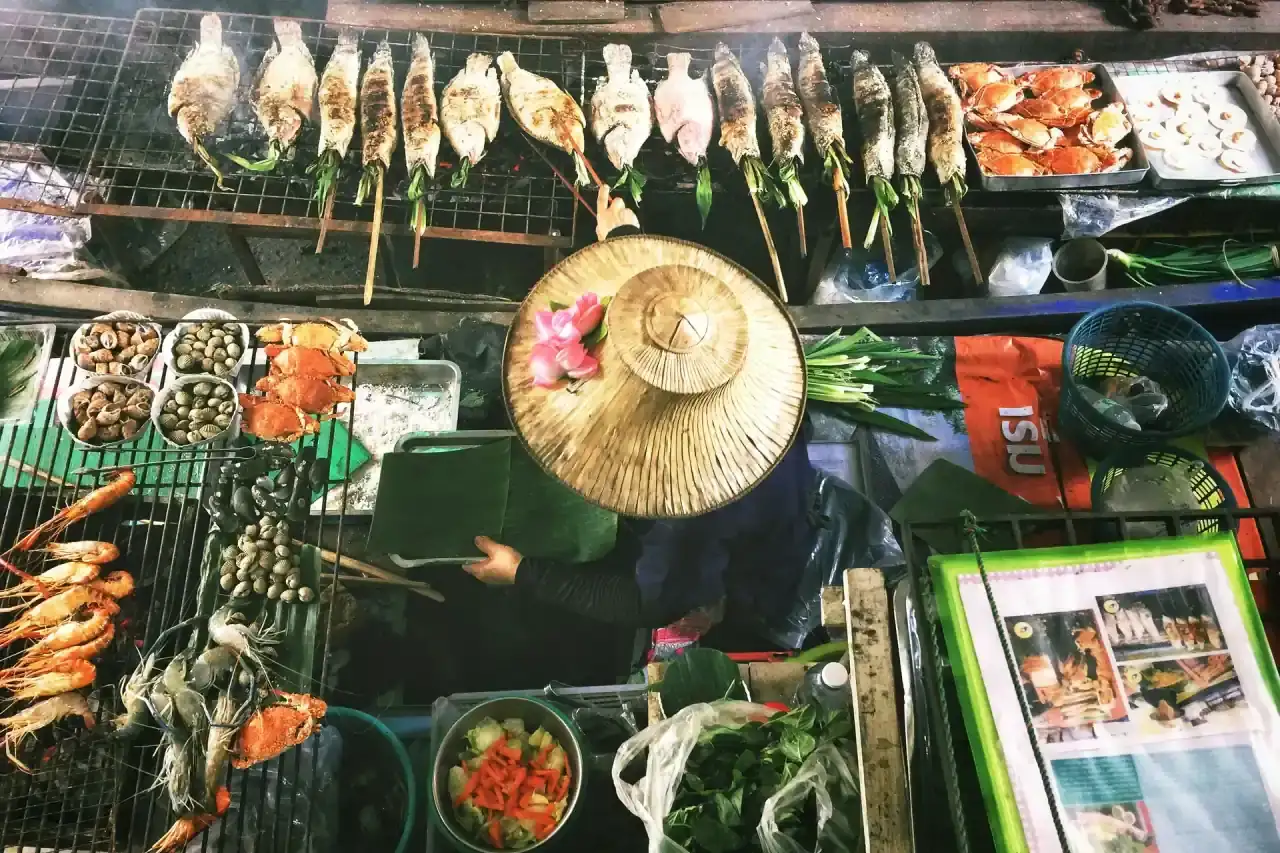

Explore the spiritual heart of Northern Thailand with Eat Walk Talk Tour.
Top Recommended Chiang Mai Temples: The Ultimate Guide to Lanna Buddhist Heritage 🛕✨
Chiang Mai, the lush, mist-shrouded mountain capital of Northern Thailand, is universally celebrated as the cultural and spiritual sanctuary of the kingdom. Founded in 1296 by King Mengrai as the royal seat of the ancient Lanna Kingdom (meaning "The Land of a Million Rice Fields"), this historic walled city preserves an extraordinary concentration of over 300 active Buddhist temples (known locally as wats). Far from static historical monuments or open-air museums, Chiang Mai’s temples are vibrant, living communal sanctuaries where monks in saffron robes chant ancient Pali sutras, local families make merit, and centuries of artistic devotion remain vibrantly alive.
The temple architecture of Northern Thailand is strikingly distinct from the classical Siamese styles found in Bangkok or Ayutthaya. Influenced by Mon, Burmese, Shan, and Sri Lankan traditions, classical Lanna architecture features multi-tiered, low-sweeping teakwood roofs, intricate gold-leaf stencil work on lacquered walls, mythical multi-headed Naga serpent balustrades guarding marble staircases, and gracefully bell-shaped brick and stucco stupas (chedis). For first-time visitors, the sheer abundance of temples can quickly lead to "temple fatigue." This curated guide highlights the most historically significant, visually breathtaking, and culturally enriching temples in and around Chiang Mai, complete with insider etiquette and practical logistics. If you are arriving from the capital, take a look at our guide on What to Do While on a Bangkok Business Trip before journeying north.
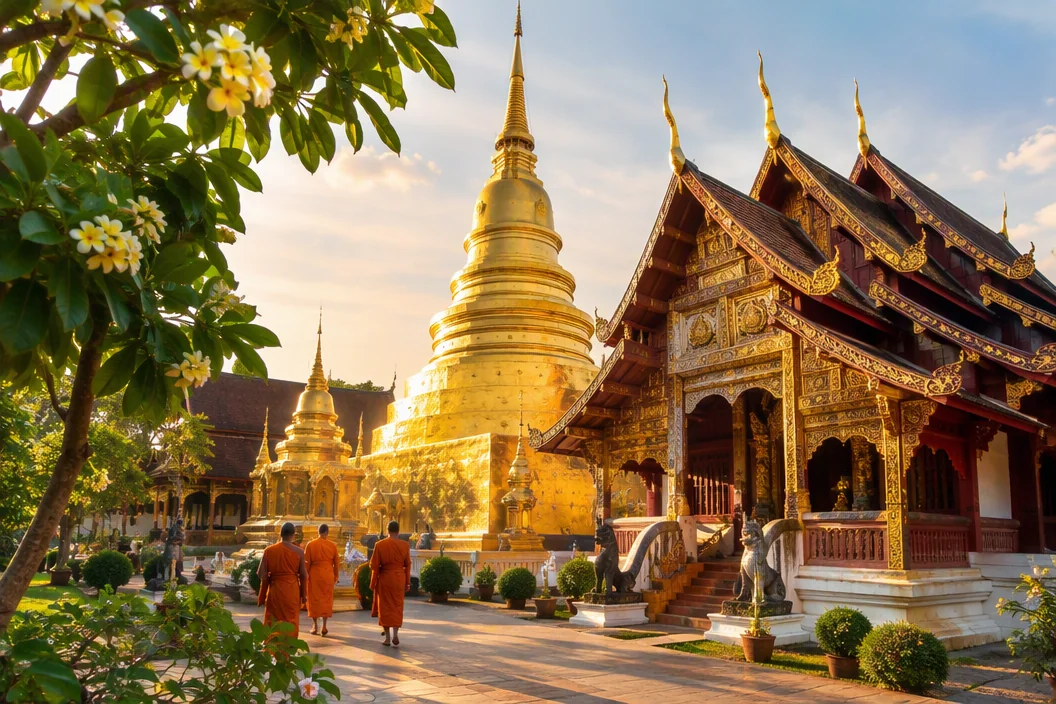
🙏 Quick Temple Hopping Summary: Chiang Mai’s premier temples fall into three distinct geographic categories: (1) The Historic Old City (Wat Phra Singh, Wat Chedi Luang, Wat Chiang Man), easily explored on foot or bicycle; (2) Doi Suthep Mountain & Forest Enclaves (Wat Phra That Doi Suthep, Wat Pha Lat, Wat Umong); and (3) Unique Artisan Marvels (Wat Sri Suphan, Wat Suan Dok). Modest dress (covered shoulders and knees) and removal of footwear before entering prayer halls are strictly mandatory across all sites.
Must-Visit Temples Inside the Historic Old City Walls
Chiang Mai’s Old City is a remarkably preserved 1.5-kilometer square enclave enclosed by ancient red-brick walls and a tranquil water-filled moat. This compact, pedestrian-friendly zone houses the city’s most venerable religious foundations:
1. Wat Phra Singh Woramahawihan (The Monastery of the Lion Buddha)
If your schedule allows for only a single temple inside the historic perimeter, make it Wat Phra Singh. Founded in 1345 by King Pha Yu to house the ashes of his father, this royal monastery represents the purest and most exquisite surviving masterpiece of classical Lanna temple architecture in Thailand.
The undisputed crown jewel of the complex is the intimate Viharn Lai Kham (Assembly Hall of Gilded Patterns). This small teakwood hall features delicate golden stencil work painted onto rich black lacquer and houses the highly revered Phra Buddha Sihing statue. The interior walls showcase extraordinary 19th-century folk murals illustrating the daily lives, traditional attire, and court customs of early Chiang Mai citizens. The expansive temple courtyard is immaculately maintained, shaded by sacred bodhi trees, and enlivened by novice monks pursuing their Buddhist scholarly education.
2. Wat Chedi Luang (The Temple of the Great Stupa)
Dominating the very heart of the Old City, Wat Chedi Luang is impossible to miss. Construction began in 1391 under King Saen Muang Ma, culminating in a colossal brick stupa that once towered over 80 meters high with a base width of 54 meters, making it the tallest structure in the entire Lanna Kingdom. In 1468, Thailand’s most sacred religious relic—the Emerald Buddha (now enshrined in Bangkok's Grand Palace)—was installed in the eastern niche of this monumental chedi, where it resided for nearly a century.
Although a catastrophic earthquake in 1545 collapsed the upper spire, the partially ruined structure remains deeply majestic and hauntingly atmospheric. Giant stone elephants guard its base, and intricate naga balustrades lead toward vaulted stone alcoves. On the temple grounds, you will also find the Sao Inthakin (City Pillar Shrine), which protects the spiritual heart of Chiang Mai, as well as one of the city's most established and friendly "Monk Chat" pavilions.
3. Wat Phan Tao (The Monastery of a Thousand Kilns)
Located immediately adjacent to Wat Chedi Luang, Wat Phan Tao is an intimate gem that offers a stark, peaceful contrast to its monumental neighbor. Historically used as a casting center for Buddha statues (hence "Thousand Kilns"), its main prayer hall (Viharn) is constructed entirely from dark, aged teakwood timbers salvaged from an ancient royal palace of King Mahotara Prateth in 1876.
Above the main entrance hangs a magnificent, carved gilded pelmet depicting a peacock standing proudly over a reclining dog—the astrological zodiac sign of the founding prince. During the annual Yi Peng and Loy Krathong lantern festivals, the monks of Wat Phan Tao float hundreds of clay oil lanterns along the garden pond and suspend glowing orange paper lanterns from bamboo groves, creating one of the most mesmerizing photographic spectacles in Southeast Asia.
4. Wat Chiang Man (Chiang Mai’s Oldest Temple)
Established in 1296 by King Mengrai during the very founding of the city, Wat Chiang Man is Chiang Mai’s oldest temple. The King actually lived in a royal pavilion on this site while overseeing the architectural planning of his new capital. The grounds are crowned by the ancient Chedi Chang Lom (Elephant Stupa), featuring fifteen life-sized stone elephant buttresses emerging from a golden-tipped brick pedestal.
Within its secondary viharn, two priceless and miraculous micro-statues are protected behind iron bars: Phra Sae Tang Khamani (a 10-centimeter crystal Buddha believed to bring rain to crops) and Phra Sila (a bas-relief marble carving of the standing Buddha dating to 8th-century India). Both relics are paraded through the streets during Songkran to bless the community with seasonal rainfall.
Sacred Mountain and Forest Sanctuaries
To truly understand Northern Thai spirituality, one must journey into the forested foothills and mist-veiled peaks flanking the city’s western horizon:
5. Wat Phra That Doi Suthep (The Golden Crown of Chiang Mai)
Perched high on the summit ridge of Mount Suthep at an elevation of 1,050 meters, Wat Phra That Doi Suthep is Northern Thailand’s most sacred pilgrimage destination. According to 14th-century royal legend, an enlightened monk from Sukhothai brought a sacred bone relic of the Buddha to King Nu Naone of Lanna. The relic was tied to the back of a sacred white elephant, which was released into the jungle. The elephant climbed Doi Suthep, trumpeted three times, knelt down, and peacefully passed away—signaling the chosen sacred location for the monastery.
Visitors ascend a dramatic 306-step staircase flanked by emerald-and-gold mosaic Naga balustrades (a funicular cable lift is also available). At the summit, the blindingly radiant, 24-meter gold-plated central chedi is encircled by prayer bells, golden umbrellas, and fragrant jasmine garlands. The expansive outer viewing terrace provides panoramic, bird’s-eye vistas across the entire Chiang Mai valley. Arriving at dawn (around 06:30 AM) offers cooler mountain breezes, monks chanting in the mist, and a serene, crowd-free atmosphere.
6. Wat Pha Lat (The Hidden Jungle Waterfall Temple)
Nestled halfway up the mountain slope within Doi Suthep-Pui National Park, Wat Pha Lat is an ethereal forest sanctuary that feels untouched by modern commercialism. Historically established as a peaceful resting station for pilgrims ascending the mountain on foot, the temple grounds blend seamlessly with wild jungle foliage, moss-covered stone bridges, and a cascading natural mountain waterfall.
Instead of dazzling gold plating, Wat Pha Lat features ancient slate-roofed pavilions, weathered stone Buddhas draped in orange cloth, and Burmese-style peacock motifs embedded in weathered limestone. Many travelers reach this enchanting sanctuary by hiking the Monk’s Trail—a moderate, shaded 45-minute walking trail through the tropical forest marked by saffron cloths tied around tree trunks.
7. Wat Umong Suan Phutthatham (The 13th-Century Tunnel Temple)
Set within a peaceful 15-acre forest near Chiang Mai University, Wat Umong offers a meditative atmosphere unlike any other temple in Thailand. Commissioned around 1297 by King Mengrai for a revered forest monk who sought solitude, the temple is famous for its subterranean network of brick-lined tunnels built directly beneath an artificial earthen mound.
Walking through the cool, arched tunnels reveals quiet candle-lit shrines and ancient, faint Buddhist fresco paintings. Emerging above ground, a flight of stone stairs leads up to a moss-draped, 700-year-old bell-shaped chedi standing serenely amidst towering trees. The surrounding woodlands feature a tranquil pond where visitors feed catfish and turtles, a deer sanctuary, and a shaded walking path lined with weathered Buddha statues rescued from abandoned regional temples.
Unique Architectural Wonders Around Chiang Mai
8. Wat Sri Suphan (The Famous Silver Temple)
Located on Wualai Road, the historic silversmith quarter just south of the Chiang Mai South Gate (Pratu Saen Pung), Wat Sri Suphan is an astonishing artistic triumph. While originally founded in 1500, the main ordination hall (Ubosot) was completely rebuilt by local master silversmiths using hand-hammered panels of pure silver, nickel, and aluminum alloy.
Every square centimeter of the structure is embossed with breathtaking bas-relief metalwork depicting Buddhist cosmology, Thai astrological signs, historical battles, and even whimsical modern cultural motifs (including satellites and city skylines). Cultural Note: In accordance with ancient Lanna spiritual customs regarding consecrated talismanic boundary stones buried beneath the hall, women are politely requested not to enter the interior of the Silver Ubosot; however, female visitors can freely admire the spectacular exterior craftsmanship and explore the rest of the temple complex.
9. Wat Suan Dok (The Temple of Royal White Mausoleums)
Translating to "Flower Garden Temple," Wat Suan Dok was constructed in 1370 on the former royal pleasure gardens of King Kue Na. The visual hallmark of this spacious monastery is a vast field of gleaming white kuls (stucco mausoleums) containing the cremated remains of Chiang Mai's royal dynasty, standing in striking contrast against a massive 48-meter golden Sri Lankan-style stupa.
Wat Suan Dok is internationally recognized as a premier center for Buddhist education, serving as the Chiang Mai campus of Mahachulalongkornrajavidyalaya Buddhist University. It hosts popular open-door Monk Chat sessions and structured two-day meditation retreats for foreign visitors seeking practical instruction in Vipassana mindfulness.
Temple Etiquette, Dress Code & Cultural Guidelines
📜 The Sacred Rules of Temple Etiquette:
- Strict Dress Code: Both men and women must ensure shoulders, upper arms, and knees are fully covered. Sleeveless shirts, tank tops, short shorts, crop tops, and sheer fabrics are prohibited. Carrying a lightweight sarong or scarf in your daypack is highly recommended.
- Remove Footwear at the Threshold: Always take off your shoes before stepping across the raised wooden or stone threshold of any Viharn or Ubosot. Step over the raised threshold rather than directly on it, as Thai belief holds that guardian spirits reside within the doorway.
- Positioning of Feet: Never point the soles of your feet toward a Buddha image, a monk, or fellow worshippers, as feet are considered spiritually and physically the lowest part of the body. Sit cross-legged or tuck your legs beneath you in the traditional Phap Phiap mermaid posture.
- Interactions with Buddhist Monks: Show reverence when greeting monks by raising your hands in a polite Wai. Women must never touch a Buddhist monk or directly hand an object to him; if offering a gift or donation, place it on a cloth or collection tray held by the monk.
Frequently Asked Questions (FAQ) About Visiting Chiang Mai Temples
คำถามที่พบบ่อยและข้อมูลสำคัญที่คุณควรรู้ รวบรวมโดยผู้เชี่ยวชาญท้องถิ่น
Q1 What is the mandatory dress code for visiting temples in Chiang Mai?
Visitors must dress modestly with shoulders and knees completely covered. Men should wear trousers or knee-length shorts with shirts that cover the shoulders; women should wear long pants, maxi skirts, or dresses that cover the shoulders and chest. If you arrive unprepared, major temples like Wat Phra That Doi Suthep and Wat Phra Singh offer modest rental sarongs or wraps at the entrance for a small fee.
Q2 How much do temple entrance fees cost in Chiang Mai?
Most community temples in Chiang Mai are free to enter. However, major royal and high-profile historical temples charge a modest maintenance admission for foreign visitors:
- Wat Phra That Doi Suthep: 30 THB (plus 20 THB for the funicular elevator lift).
- Wat Chedi Luang: 50 THB for adults, 20 THB for children.
- Wat Phra Singh: 50 THB to enter the historic Viharn Lai Kham hall.
- Wat Sri Suphan (Silver Temple): 50 THB.
- Wat Umong: Free entry to grounds (20 THB optional maintenance donation for the underground tunnels).
Q3 What is "Monk Chat" and how can I participate?
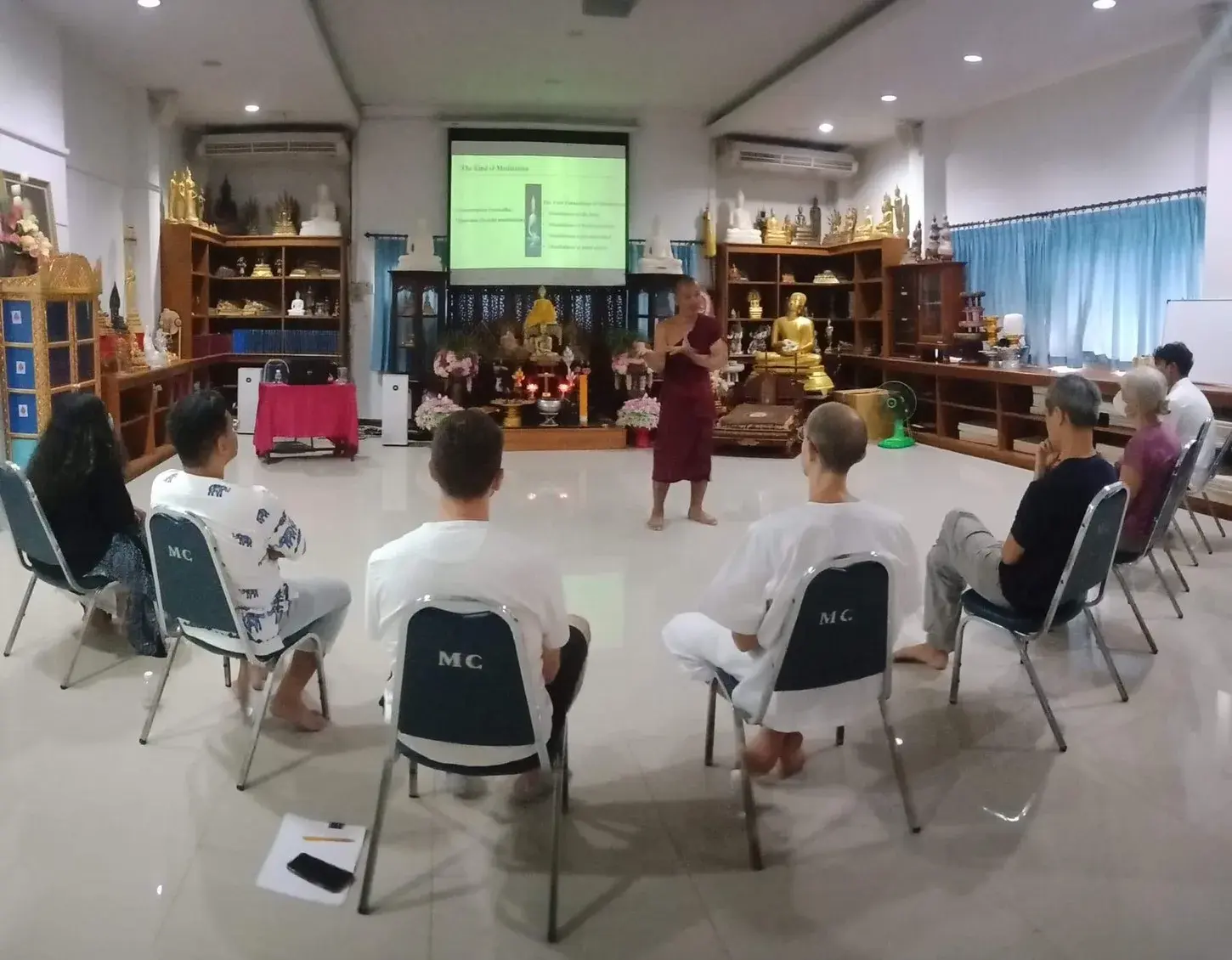
Monk Chat is an open, informal cultural exchange program organized at several prominent temples (including Wat Chedi Luang, Wat Suan Dok, and Wat Umong). Travelers are invited to sit down at outdoor tables with novice and ordained monks for casual conversation. The monks practice their English language skills, while visitors can ask sincere, respectful questions about Buddhist philosophy, monastic discipline, and Thai cultural traditions. Participation is free and no advance reservations are needed.
Q4 What is the best way to get to Wat Phra That Doi Suthep?
The most convenient and scenic way to reach Doi Suthep is by taking a shared red songthaew (pickup truck taxi). You can catch red songthaews waiting outside the north gate of the Old City (Chang Phuak Gate) or near Chiang Mai University for approximately 50 to 80 THB per person each way. Alternatively, you can book a private Grab taxi or hire a songthaew driver for a half-day round trip (around 400 to 600 THB) including waiting time.
Q5 Can I hike the Monk’s Trail to Wat Pha Lat safely?
Yes. The Monk’s Trail is a well-established, moderate hike of roughly 45 to 60 minutes starting near the end of Suthep Road behind Chiang Mai University. The trail is marked by orange monk cloth tied to trees. Wear supportive running shoes, carry plenty of drinking water, and apply mosquito repellent. The trail ends directly at the serene waterfall complex of Wat Pha Lat.
Q6 Why are women not allowed inside the Silver Temple ordination hall?
Under centuries-old Lanna Buddhist customs, the consecrated boundary stones (Bai Sema) and protective sacred amulets buried underneath the ordination hall (Ubosot) of Wat Sri Suphan require absolute ritual purity. Traditional belief dictates that physical entry by women may disrupt the spiritual energy of these buried relics. This restriction applies only to the central Silver Ubosot; women can freely explore the rest of the monastery, including the grounds, museum, and silver artisan workshops.
Q7 What are the best hours to visit Chiang Mai temples to avoid crowds?
For outdoor and mountain temples like Wat Phra That Doi Suthep and Wat Pha Lat, arrive early between 06:30 AM and 08:30 AM to experience mystical mountain mist, morning monk chanting, and cool temperatures before tour vans arrive. For temples inside the Old City, late afternoons from 16:00 to 18:30 PM offer golden sunset lighting for photography, followed by peaceful evening candle-lit chanting ceremonies.
Q8 Are Chiang Mai temples illuminated at night?
Yes! Several temples are beautifully illuminated after dark. Wat Chedi Luang, Wat Phan Tao, and Wat Lok Moli are lit with golden floodlights from 19:00 to 21:00 PM, creating a deeply tranquil and dramatic ambiance for nighttime walking tours.
Q9 How many temples should I plan to visit in a single day?
To avoid exhaustion and maintain genuine appreciation for the art and atmosphere, we recommend limiting your schedule to 3 or 4 temples per day: two inside the Old City during the morning or late afternoon, and one or two forest temples (such as Wat Pha Lat and Doi Suthep) during cooler morning hours.
Q10 Should I take a guided temple tour or explore on my own?
While exploring independently by bicycle or walking is easy inside the Old City, reserving a guided cultural experience—such as our Chiang Mai Monk Chat & Craft Tour—offers invaluable context. A licensed local guide decodes complex Buddhist murals, explains obscure Lanna symbols, and facilitates meaningful conversations with resident monks that independent travelers often miss.


.webp&w=1920&q=75)
.webp&w=1920&q=75)