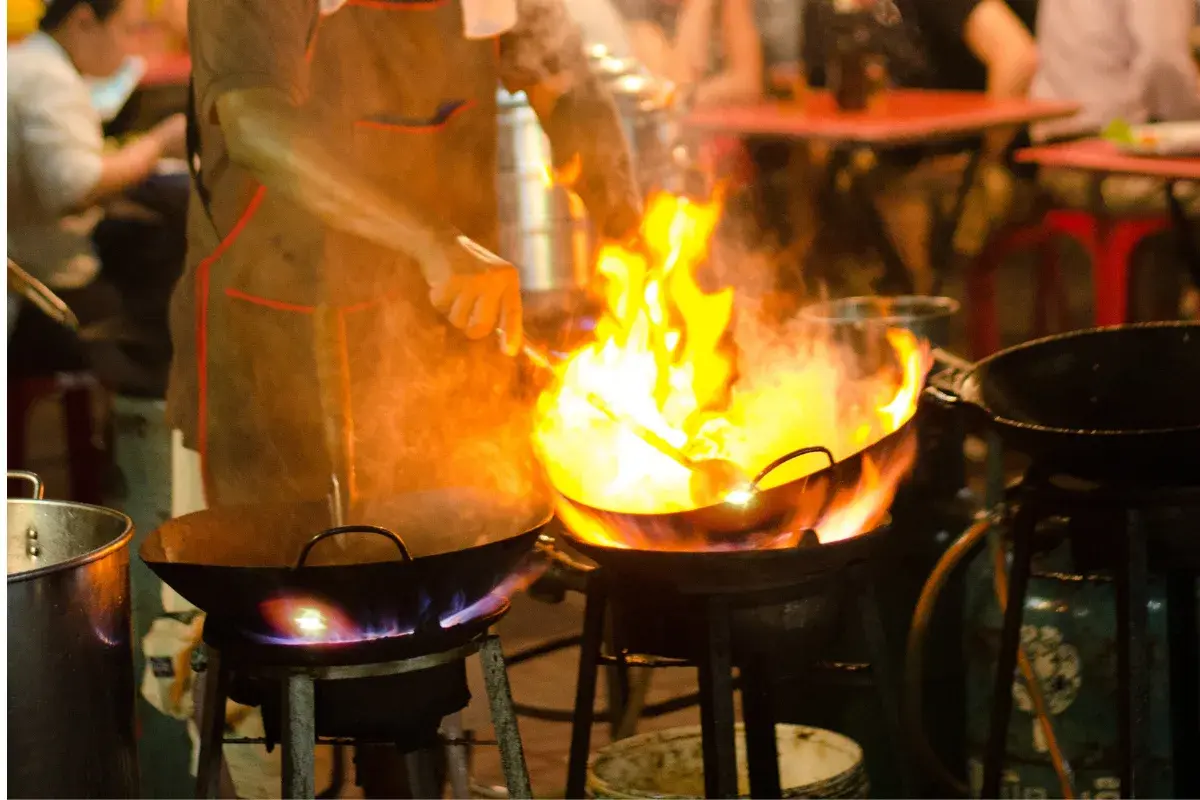

A Bangkok food tour is the fastest way to understand Thai food. In a few hours you taste dishes you would never find on your own, learn what to order and how to eat it, and hear the stories behind family shops that have cooked the same recipe for decades. This guide explains what a food tour includes, where the best food areas are, which dishes to try, and how to choose a tour, or plan your own.
Why Food Tours Are So Popular
Food tourism has grown around the world because eating is the easiest way into a culture. Taste, smell and color stay in the memory long after the photos are forgotten. Instead of seeing culture behind glass in a museum, you eat it, talk to the cook and watch daily life around you.
Bangkok is one of the best cities for this. Street food is part of everyday life, recipes are passed down in families, and every neighborhood has its own specialties. A food tour connects these places for you, so you spend your time eating rather than searching.
5 Reasons to Join a Bangkok Food Tour
1. Taste more in less time
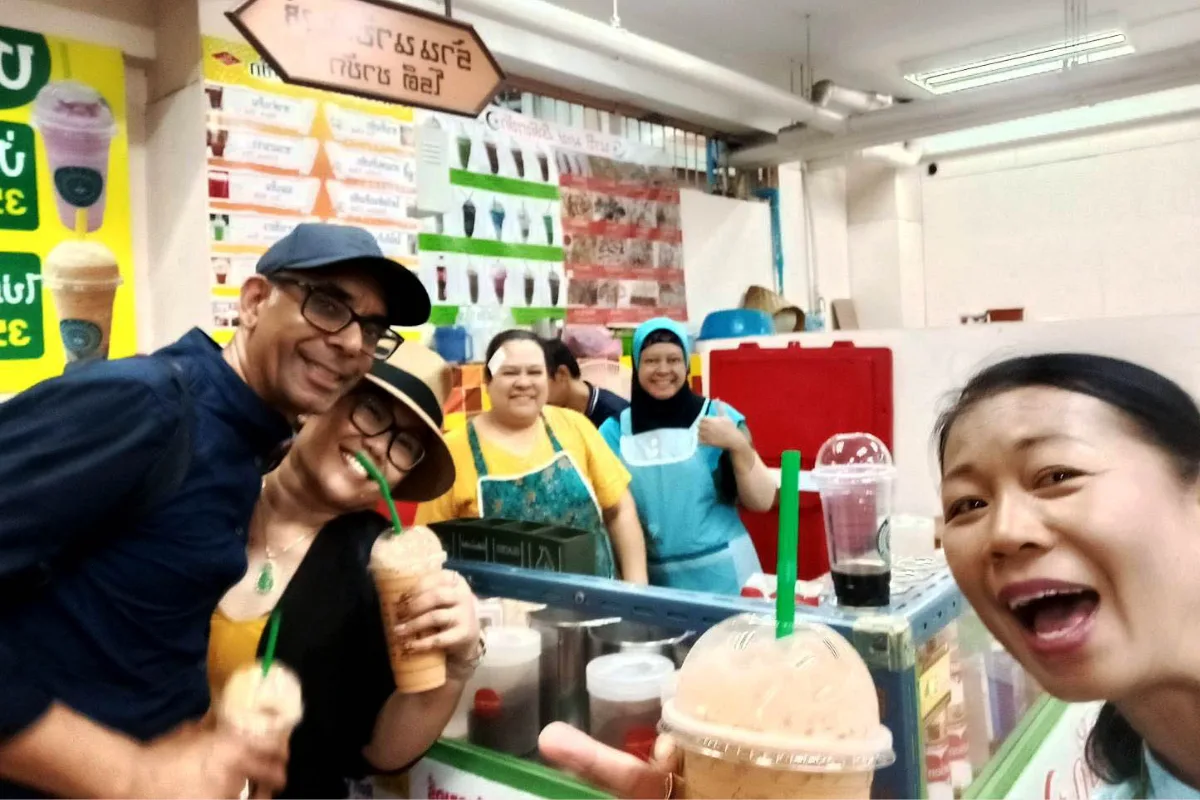
A typical tour includes five or six tastings: a main dish, snacks, a dessert and a drink. You try more variety in one evening than you would in several days alone, and next time you see the same dish on the street, you will know what to order.
2. Local guides who know where to go
Good guides know which stall makes the best version of each dish, when to arrive before the queue, and how to eat each one. They also translate, order for you and explain the ingredients, so you can try new things with confidence.
3. Stories, not just food
Food tours usually pass temples, shrines and old shophouses, such as the colorful Sri Maha Mariamman Temple (Wat Khaek) on Silom Road or the Guanyin shrines of Chinatown. You learn how Chinese, Indian and Thai communities shaped the dishes you eat.
4. Fun ways to get around
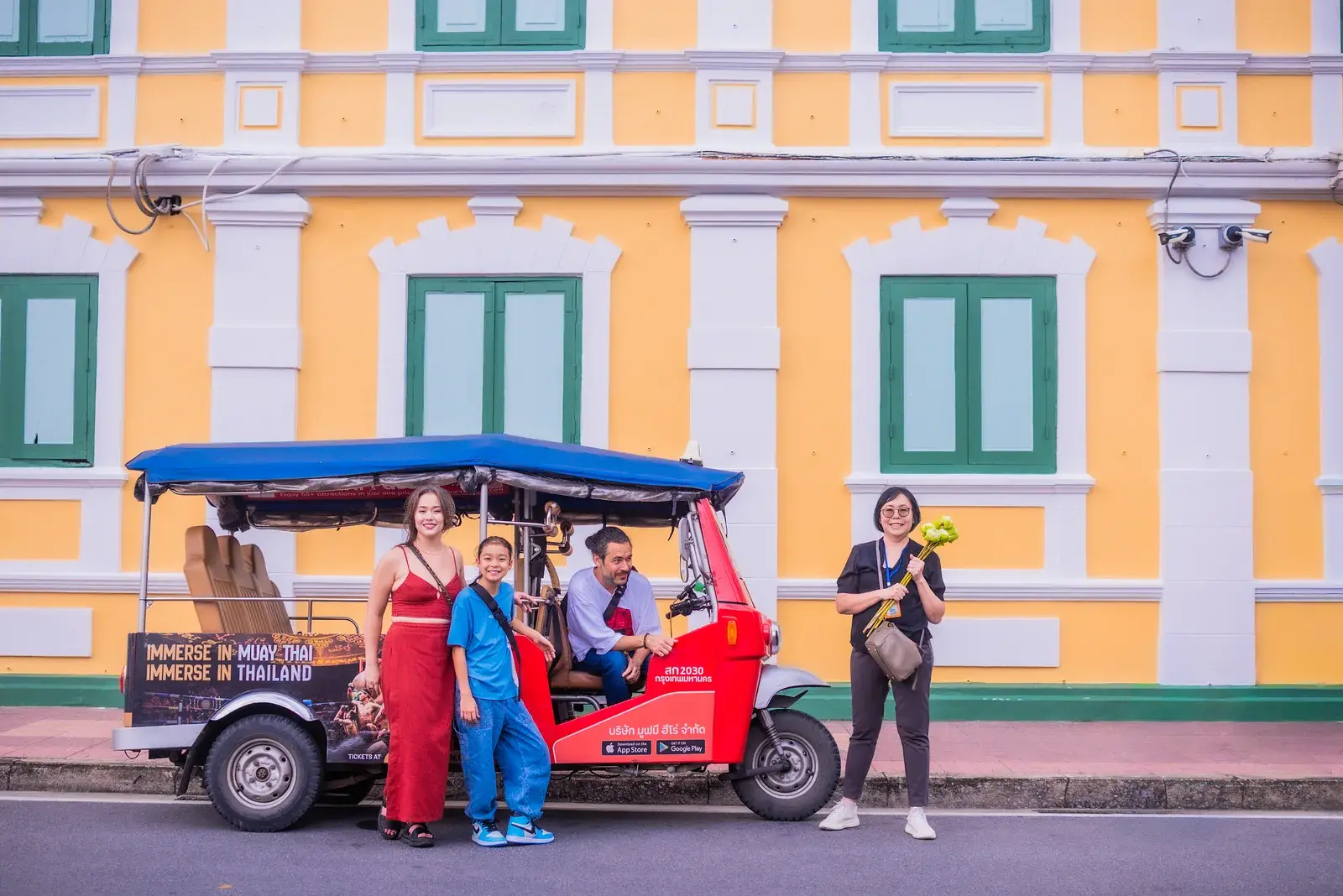
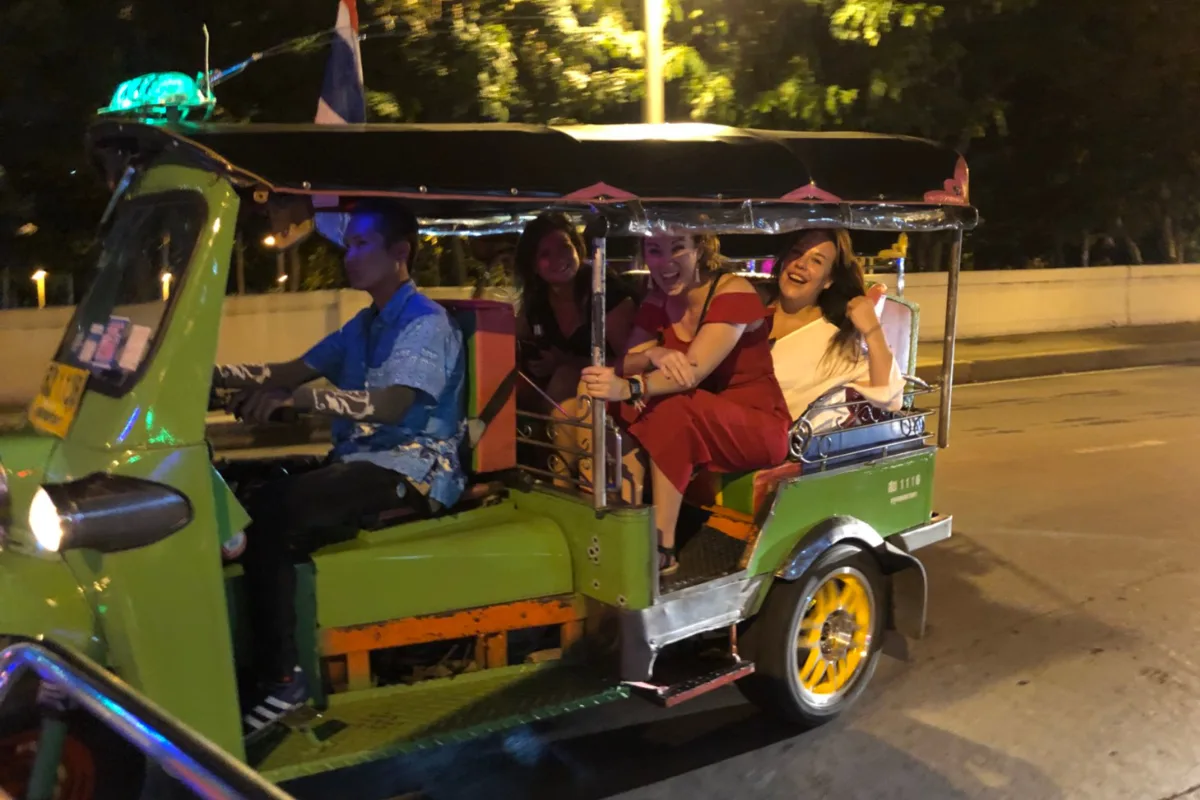
Many tours use a tuk-tuk, a boat or a walk through narrow alleys. Riding a tuk-tuk through Bangkok's streets at night is an experience in itself.
5. Day or night options
Morning tours visit fresh markets and breakfast stalls. Afternoon tours explore the old town near the Grand Palace. Evening tours dive into Chinatown, when neon lights come on and hundreds of food carts fill the street.
Where to Eat in Bangkok: The Best Food Areas
Yaowarat (Chinatown)
Bangkok's most famous street food district, known for roast duck, dim sum, noodles, seafood and Chinese desserts. Most stalls open in the evening. See our Bangkok Chinatown Food Guide for the dishes to look for.
Talad Noi
The quiet riverside neighborhood next to Chinatown has family shops that have been open since the mid-1900s, serving duck, crispy oyster omelet, pork satay and rice noodle rolls, along with cafés in old shophouses.
Giant Swing and the old town (Sao Chingcha)
The streets around the Giant Swing and City Hall are a favorite lunch area for locals, with toasted bread and pandan custard (khanom pang sangkaya), duck noodles, Pad Thai and long-running Thai restaurants. Read our old town food trail for specific shops.
Phraeng Phuthon and Pratu Phi
This old city area near the former city wall is home to some of Bangkok's best-known names, including Thipsamai Pad Thai and Jay Fai, whose crab omelets have a long queue. Book ahead where you can.
Banthat Thong Road
A street once known for sports shops has become a food street, with Hainanese chicken rice, pork satay, instant noodles with seafood and many late-night favorites. Our night food tour guide covers the evening scene.
Local markets
Markets are where locals grab quick meals and snacks. Or Tor Kor Market is known for top-quality fruit, seafood and sweets; Chatuchak has food stalls between its shops; and neighborhood markets such as Wang Lang, Tha Phra Chan, Huai Khwang, Nang Loeng and Wongwian Yai are full of noodle shops and snack stalls that have run for 30 to 60 years. Wang Lang and Tha Phra Chan are close to the Grand Palace; see our Wang Lang Market food trip.
Mall food courts
For air conditioning and easy ordering, try a mall food court. Siam Paragon's food hall gathers branches of well-known Bangkok shops in one place, MBK's food court is a long-time favorite, and Terminal 21 is popular for its street-food-style dishes at low prices. You usually pay with a prepaid card or at a cashier, then order from any stall.
Floating Markets Near Bangkok
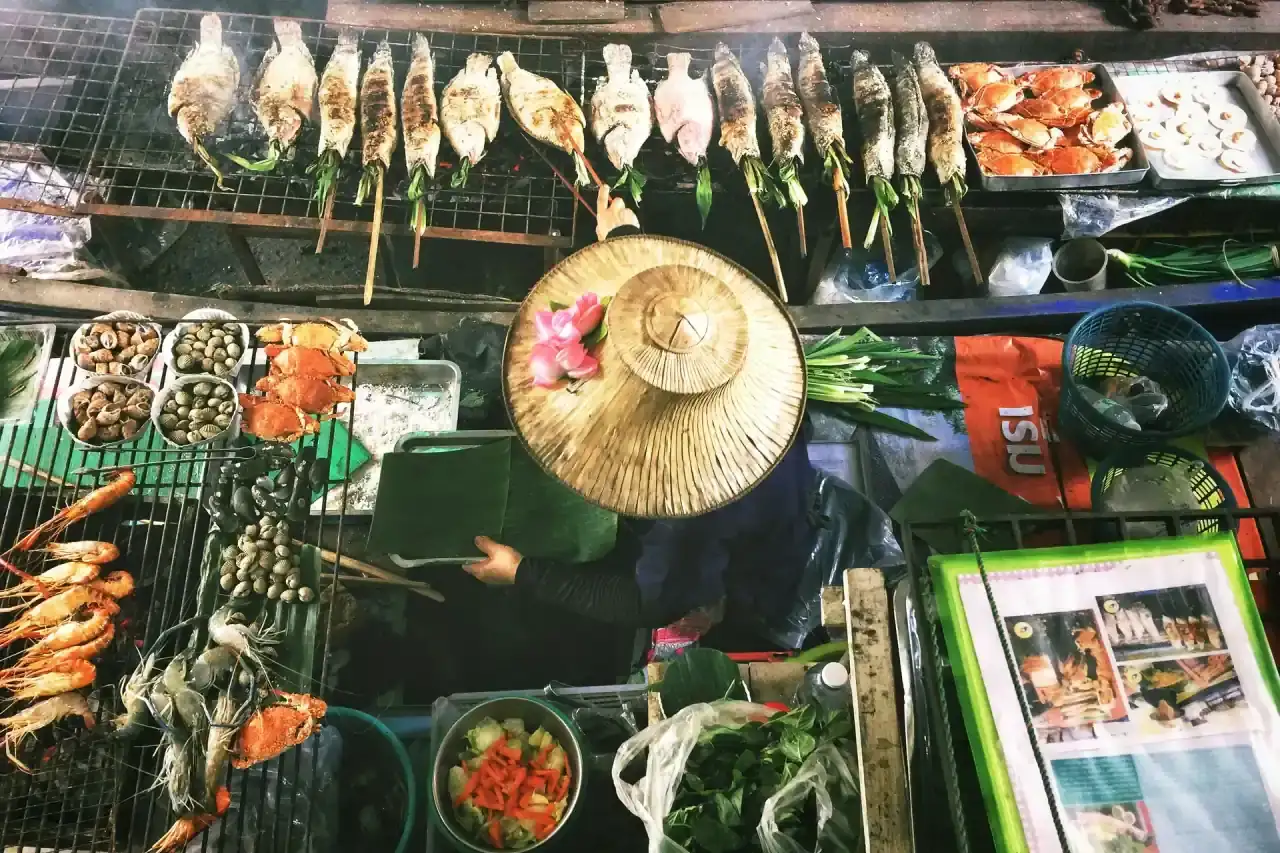
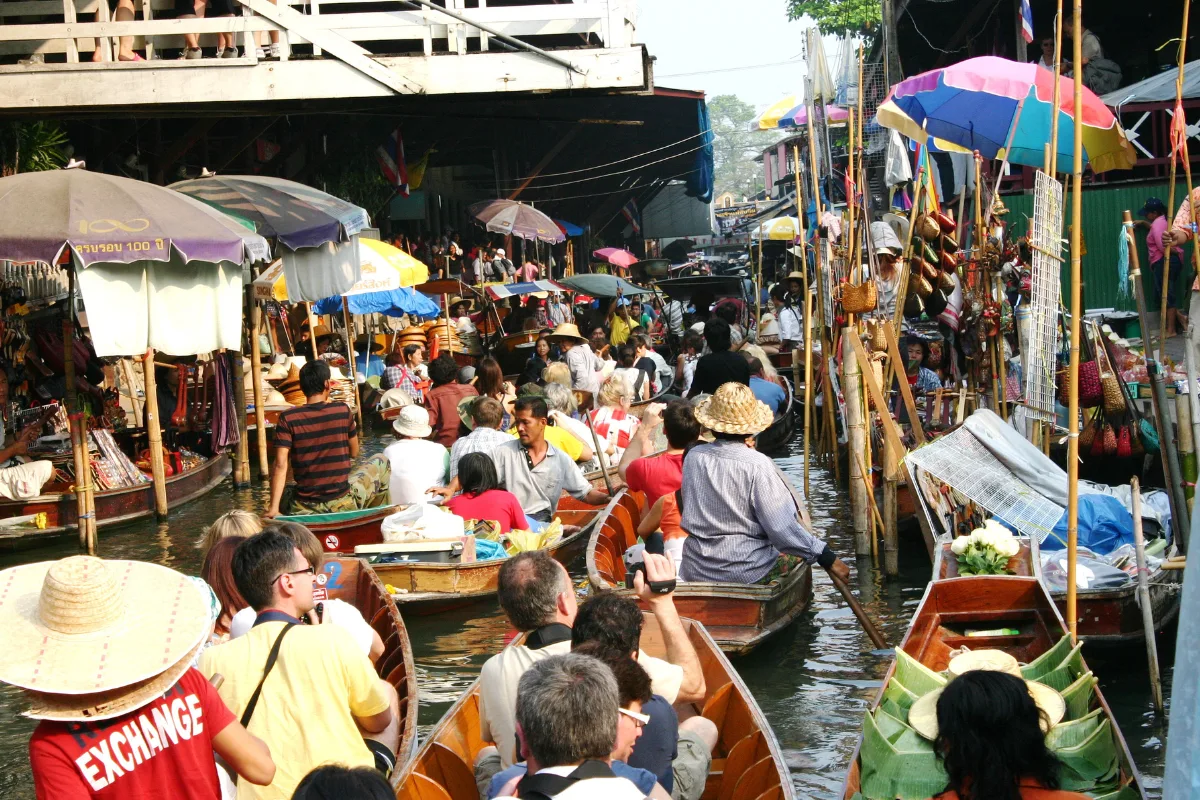
A morning at a floating market combines food with canal life. Boats sell noodles, grilled seafood, fruit and sweets cooked right on board.
- Damnoen Saduak: the largest and most famous, with vendors selling food and snacks from boats.
- Amphawa: best in the late afternoon and evening, with a wide range of Thai snacks and desserts.
- Tha Ka: a quieter, more local market where you can see coconut sugar being made.
- Khlong Lat Mayom: a weekend canal market on the edge of Bangkok, known for fresh produce and home-style food.
- Bang Nam Phueng: a weekend community market in Bang Krachao, Bangkok's Green Lung.
Read Is a Bangkok Floating Market Worth Visiting? to choose the right one for you.
Thai Cooking Classes
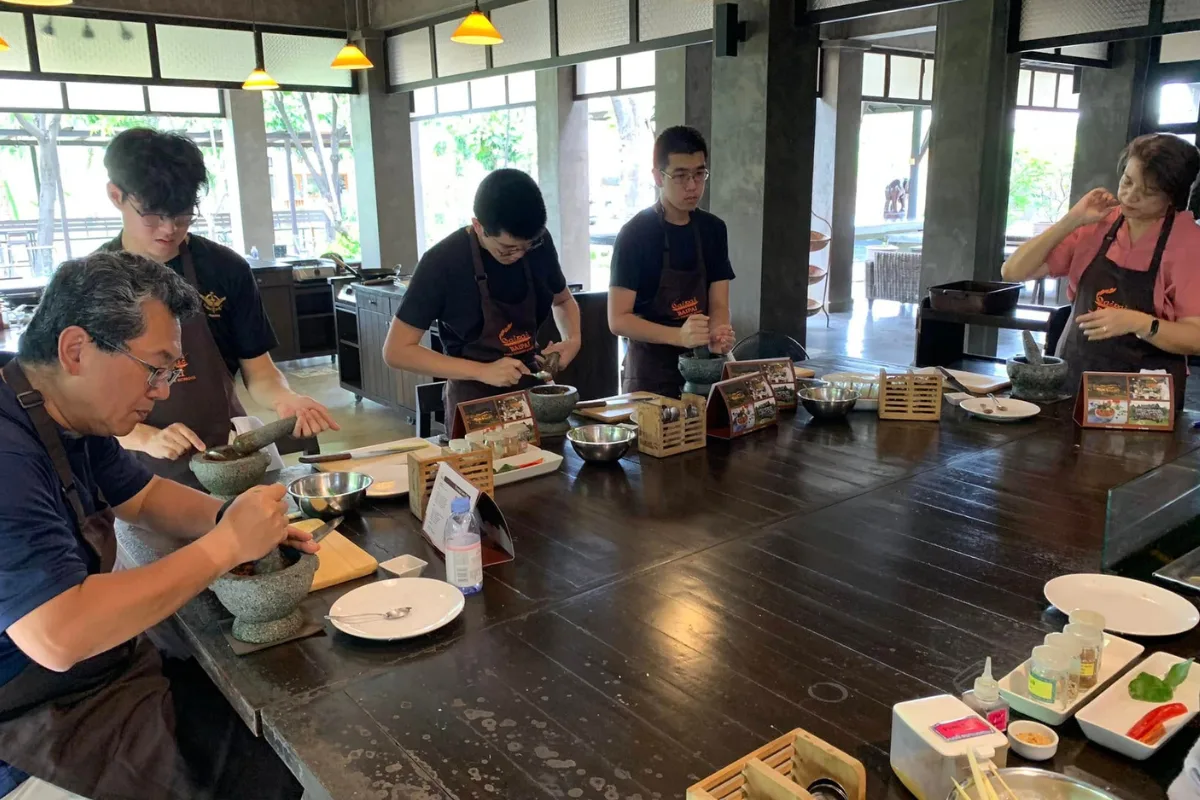
Many visitors add a cooking class to their food trip so they can recreate Thai dishes at home. Classes are run by cooking schools, restaurants and hotels across Bangkok. A typical class starts at a market, where you learn to choose fresh ingredients, then you cook three or four dishes such as Tom Yum Goong, Som Tam, Tom Kha Gai, red curry and Pad Thai.
Michelin-Recognized Food in Bangkok
Bangkok has its own Michelin Guide, and many of the recognized places are simple street stalls and family restaurants rather than fine dining. Jay Fai, Thipsamai Pad Thai and many Chinatown stalls appear in the guide, while restaurants such as Sorn show modern, refined Southern Thai cooking. Expect queues at the most famous names.
Famous Thai Food to Try
Pad Thai is everywhere, even frozen in supermarkets abroad, so look beyond it. Some everyday favorites:
- Fruit carts: fresh cut fruit with a sweet, salty and spicy dip. It sounds strange, but try it once.
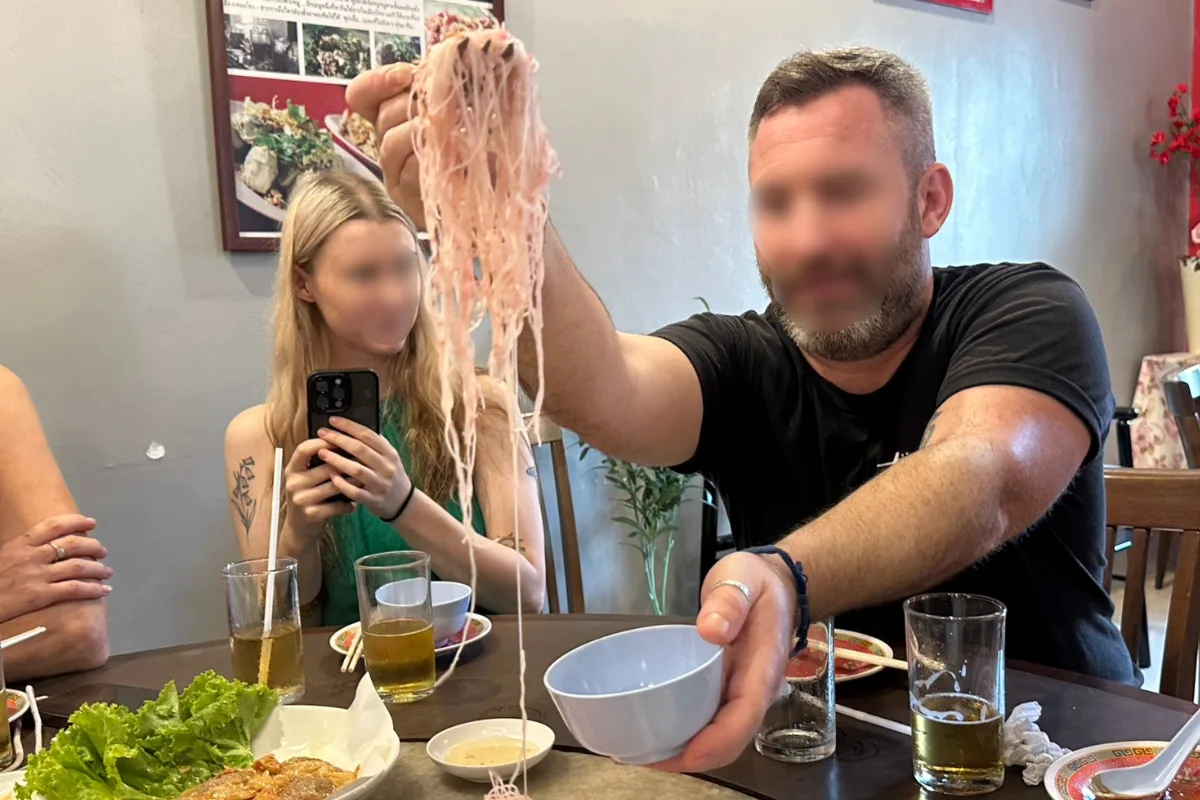
- Stir-fried glass noodles (woon sen pad see ew): clear noodles fried with soy sauce, egg, vegetables and your choice of meat, a common lunch.
- Tom Yum noodles: the famous hot and sour soup with noodles added.
- Som Tam: spicy green papaya salad, pounded to order.
- Coconut ice cream: served with toppings such as sticky rice, corn, taro and colorful jelly noodles.
- Thai breakfast: rice porridge (jok), rice soup (khao tom) and coconut pancakes (khanom krok) at morning markets.
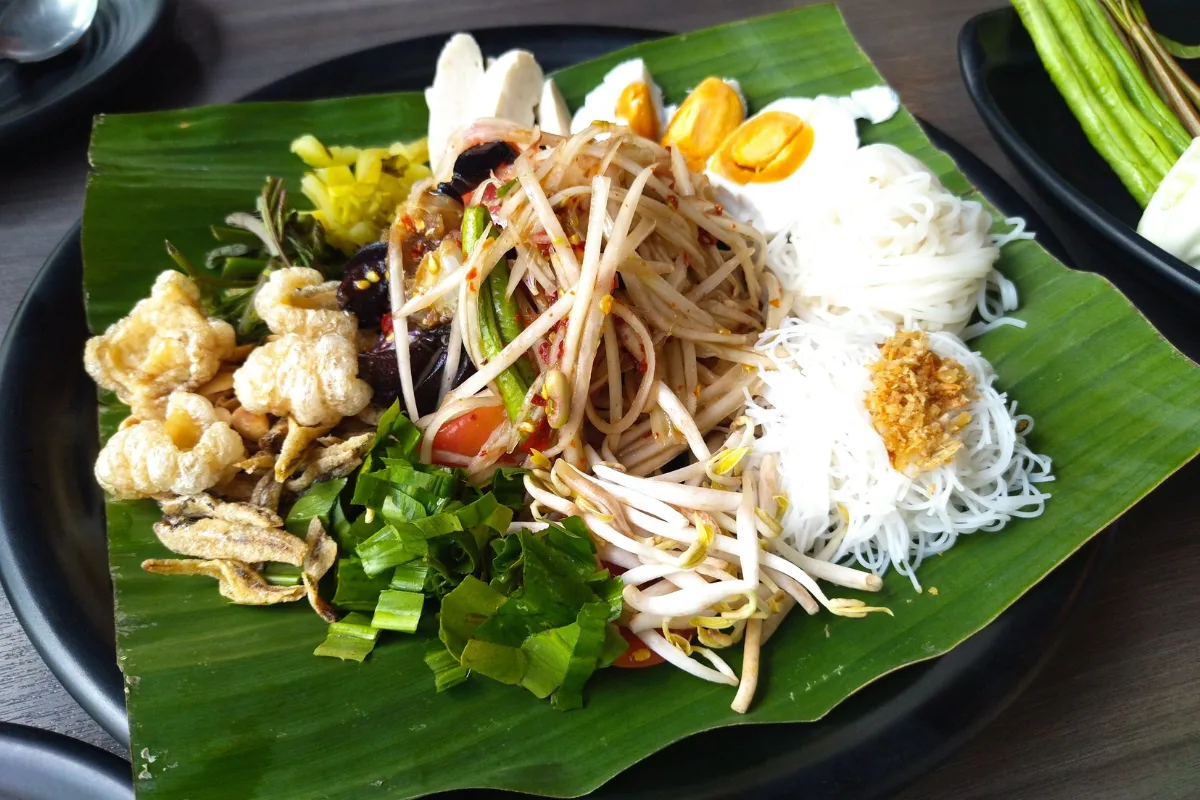
For more ideas, see Bangkok street food we cannot live without.
How to Choose a Bangkok Food Tour
- Join or private: join-in tours are good value and sociable; private tours suit families and groups who want their own pace and menu.
- Appetite: most tours serve three to six tastings, so come hungry. If you eat very little, choose a shorter tour.
- Time of day: markets in the morning, old town by day, Chinatown at night.
- Dietary needs: tell the operator in advance about allergies, vegetarian food or foods you avoid.
- Do it yourself: Bangkok is easy to navigate, so confident travelers can plan their own route with guides like this one.
- Add food to a sightseeing tour: if you book a private day tour to the Grand Palace or Ayutthaya, ask the operator to include local food stops.
A Sample One-Day Food Itinerary
- Morning: start at Or Tor Kor Market or a neighborhood market with fruit, coconut water and Thai sweets.
- Lunch: head to the old town for Pad Thai, curries and noodles around the Giant Swing.
- Afternoon: walk the old town and snack on grilled pork skewers (moo ping), Isan sausage and mango sticky rice.
- Evening: explore Chinatown for crispy pork, oyster omelet, seafood and stir-fried noodles.
- Dessert: finish with mango sticky rice or a Thai dessert shop.
Drink plenty of bottled water, wear comfortable shoes and bring a sense of adventure.
Explore Bangkok's Food With a Local Guide
Want someone to handle the route and the ordering? Join our Bangkok Chinatown Walking Tour for street food and stories in Yaowarat, or our Bangkok Green Lung tour to cycle, kayak and snack your way through Bang Krachao.