
Yaowarat Bangkok Chinatown food guide from Eat Walk Talk Tour.
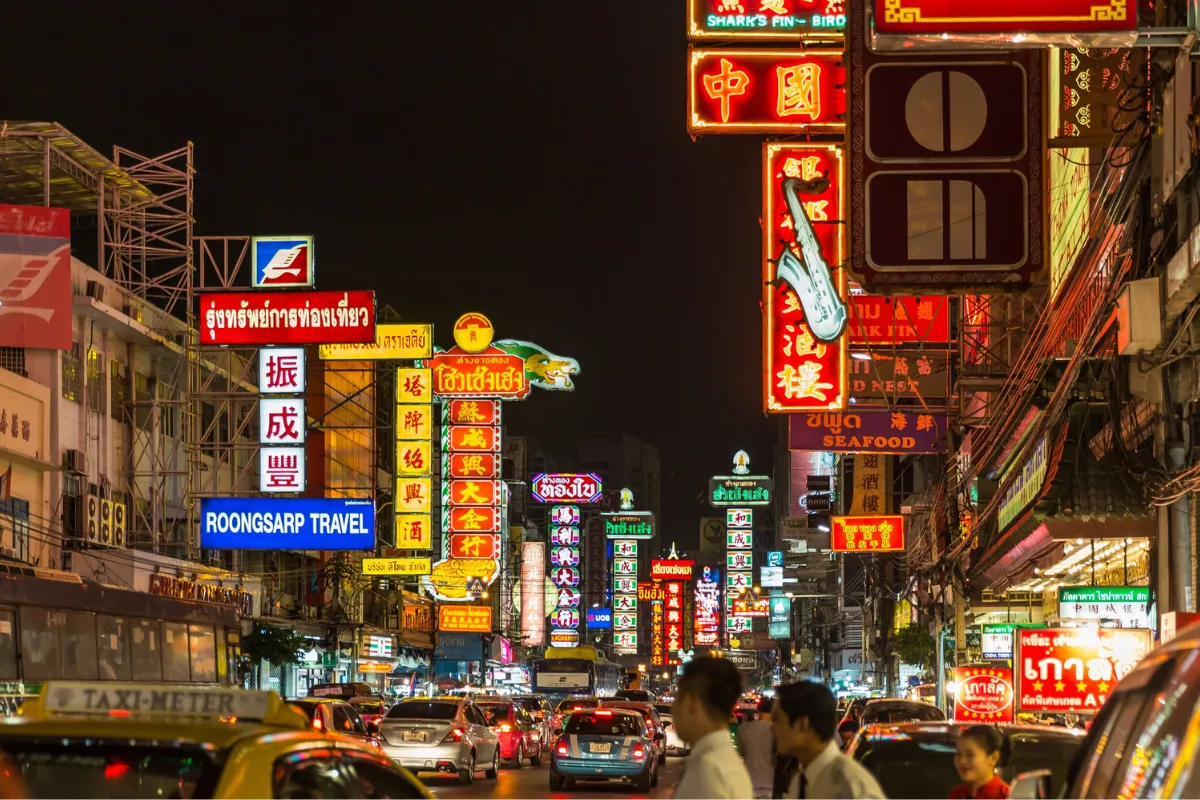
Yaowarat, Bangkok’s world-renowned Chinatown, is widely celebrated as one of the planet’s greatest street food epicenters and the undisputed culinary heartbeat of Thailand's capital. By day, this historic artery serves as Bangkok’s premier gold trading district, where century-old shophouses conduct bustling wholesale commerce and gold merchants weigh precious metals behind ornamental iron grilles. Yet as twilight falls and the sun sinks beyond the Chao Phraya River, Yaowarat undergoes an electrifying transformation. Traditional shopfronts lower their metal shutters, giant luminous neon signs blazing with classic Chinese characters illuminate the evening sky, and hundreds of mobile food carts roll onto the asphalt, converting the entire thoroughfare into a dazzling, open-air gastronomic wonderland.
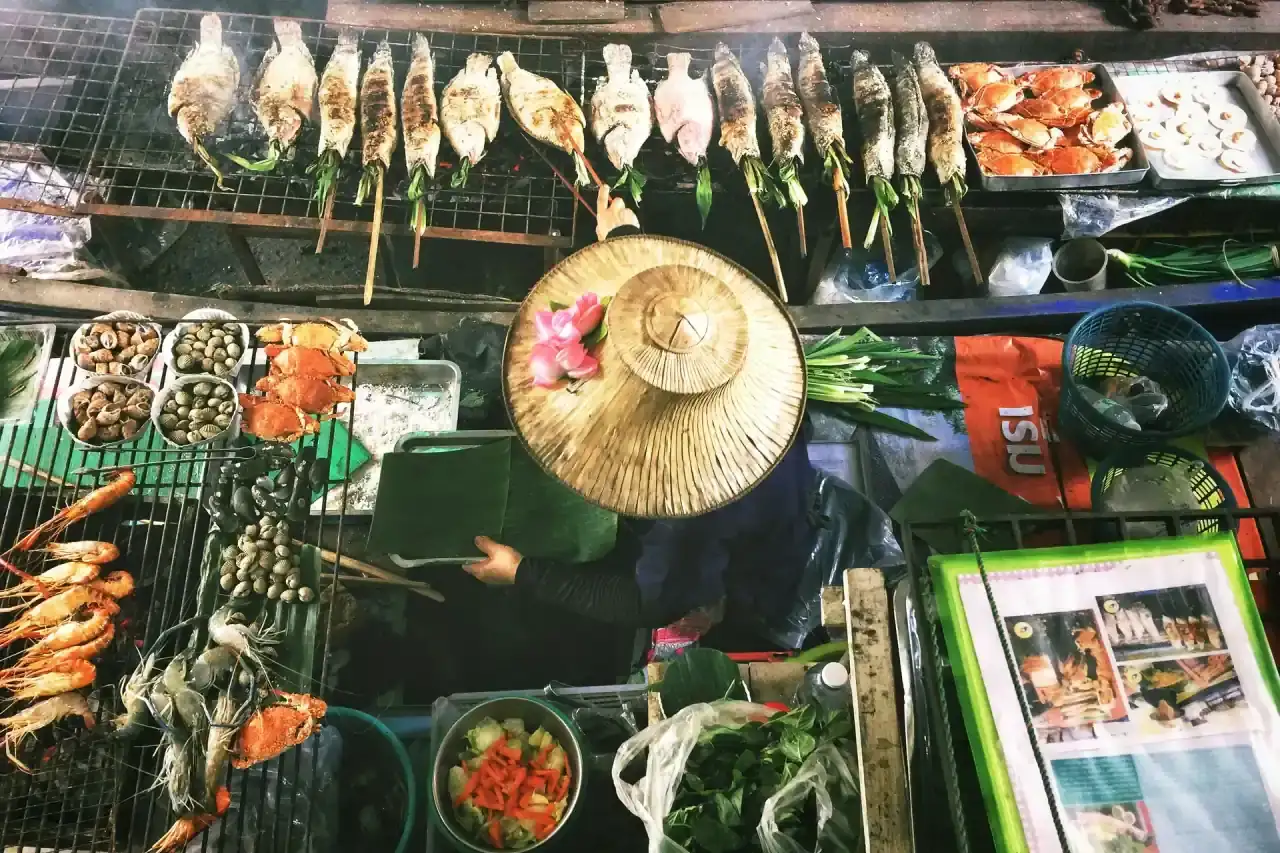
Bangkok's Chinatown has flourished for more than two centuries, dating back to 1782 when King Rama I established Bangkok as the new royal capital on the eastern bank of the Chao Phraya River. The Chinese merchant community, which originally resided where the Grand Palace now stands, was relocated downriver to Sampheng and Yaowarat. Over generations, Teochew, Cantonese, Hakka, Hainanese, and Hokkien immigrants blended their traditional culinary heritage with vibrant Siamese ingredients—such as bird's eye chilies, kaffir lime leaves, fish sauce, and fragrant lemongrass. Today, walking down Yaowarat Road is an immersive sensory celebration: the unmistakable hiss of jet-burner woks imparting intense wok hei (breath of the wok), the rhythmic chopping of cleavers against wooden butcher blocks, bubbling cauldrons of five-spice master stock, and the tantalizing fragrance of roasted duck and grilled tiger prawns drifting through the evening breeze.
Whether you are an intrepid culinary explorer or a first-time visitor eager to taste authentic flavors, navigating this vibrant maze can feel pleasantly exhilarating yet delightfully overwhelming. From third-generation family street stalls honored with the Michelin Bib Gourmand to long-standing seafood rivals facing off across narrow alleys, this comprehensive guide explores the absolute finest street foods in Yaowarat, practical insider tips, transit advice, and detailed answers to the most frequently asked questions about dining in Bangkok’s legendary Chinatown. To dive deeper into the heritage of this neighborhood, discover our detailed features on Yaowarat: A Cross-Century Journey and the 6 Reasons to Visit Bangkok Chinatown.
💡 Quick Traveler Summary: The street food stalls along Yaowarat Road operate predominantly from Tuesday to Sunday, starting around 18:00 and continuing until late midnight. To avoid peak queues, arrive between 17:45 and 18:30. Take the MRT Blue Line directly to Wat Mangkon Station (Exit 1) for seamless, traffic-free access.
The Michelin Guide's Impact on Bangkok's Chinatown Street Food
In recent years, Bangkok’s international culinary standing has reached new heights, spurred significantly by the prestigious Michelin Guide’s recognition of street food craftsmanship. Yaowarat stands as one of the most distinguished beneficiaries of this global attention. Modest roadside pushcarts, plastic-stool eateries, and narrow shophouses that have quietly served local families for decades now proudly display the Michelin Bib Gourmand badge—a tribute to remarkable culinary skill, consistent quality, and outstanding value for money.
Crucially, global stardom has not altered the essence of Chinatown’s cooking masters. Unlike high-end dining rooms that adapt menus to global tourism, Yaowarat’s veteran cooks steadfastly preserve their original recipes, cooking techniques, and unapologetic spice levels. Broths continue to simmer for eight hours in colossal aluminum cauldrons; pork belly crackles under precise two-stage roasting methods; and noodle doughs are hand-kneaded using time-honored formulations passed down through generations. Eating here is not simply dinner; it is an active encounter with living culinary history.
Top Legendary Street Food Stalls & Dishes in Yaowarat
1) Grapoh Pla Lert Ros (Fish Maw Soup) (กระเพาะปลาเลิศรส เยาวราช)
One of the ultimate comfort foods in traditional Teochew-Thai dining is braised fish maw soup, and Grapoh Pla Lert Ros is widely considered one of Yaowarat's finest exponents. Fish maw, the dried commercial swim bladder of large fish, is deep-fried to create a spongy, golden texture that miraculously absorbs rich broth without losing its delicate bite.
Served piping hot in earthenware clay pots that maintain high heat right to your plastic table, the soup features a deeply flavorful, mahogany-hued stock simmered patiently from whole chickens, pork marrow bones, Chinese herbs, and aged dark soy sauce. Submerged inside are succulent braised bamboo shoots, tender chicken meat, silky duck blood curd, and quail eggs. Seasoned at your table with a splash of sour chili vinegar (Nam Som Prik) and a sprinkle of aromatic ground white pepper, every spoonful delivers rich, restorative warmth that exemplifies authentic Chinese comfort cooking.
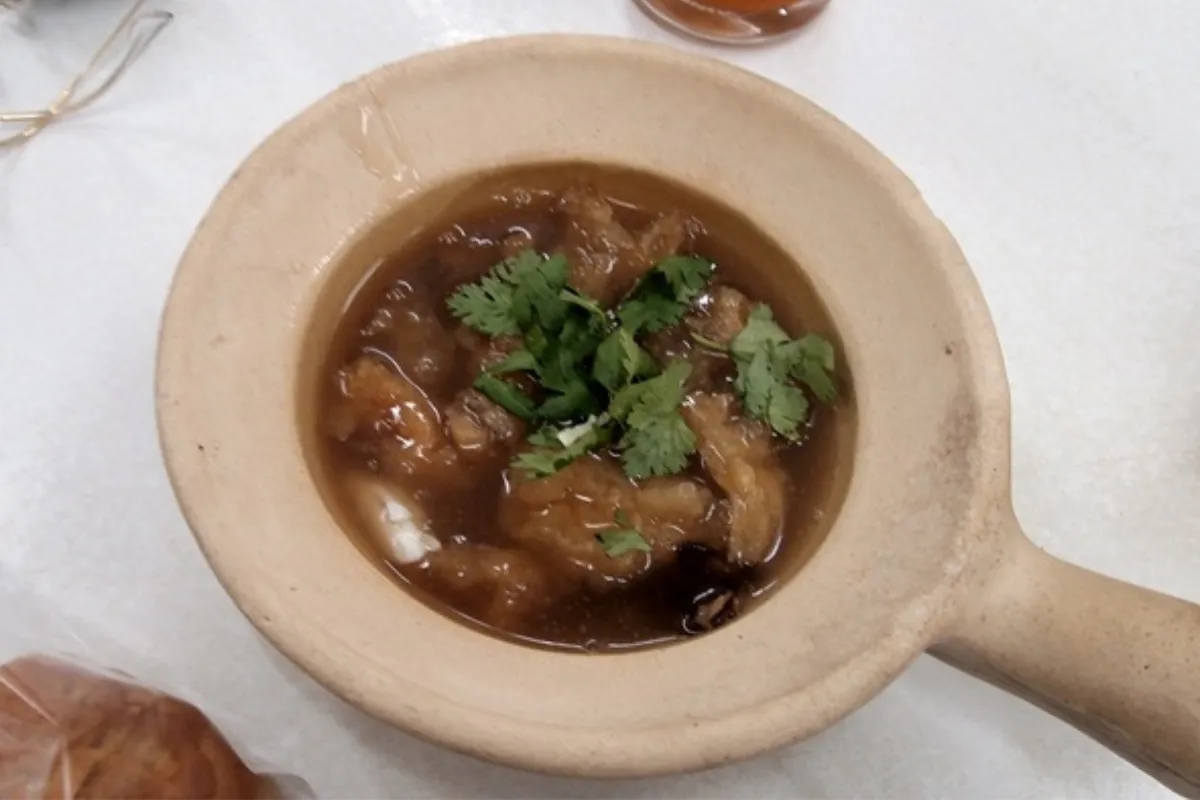
- Signature Dish: Claypot Fish Maw Soup with Chicken and Duck Blood Curd (กระเพาะปลาหม้อดิน)
- Average Price: 80 – 120 THB
- Opening Hours: Tuesday – Sunday: 18:00 – 01:00 (Closed Mondays)
- Exact Location: Curbside on Yaowarat Road, stationed directly in front of the Seiko Watch store, near Soi Yaowarat 11.
For more neighborhood recommendations, take a look at our curated list of Famous Bangkok Chinatown Restaurants.
2) Guay Teow Lord (Steamed Rice Noodle Rolls) (ก๋วยเตี๋ยวหลอดเยาวราช)
Guay Teow Lord is a savory Thai-Chinese specialty that marries delicate textures with intense sweet-and-savory flavor contrasts. Fresh, wide rice noodle sheets are steamed until tender and slightly chewy, then layered with a mountain of slow-cooked toppings that reflect centuries of Cantonese and Teochew influence in Siam.
The star filling includes savory-sweet goon-chiang (Chinese pork sausage), tender minced pork braised with five-spice aromatics, braised shiitake mushrooms, dried umami shrimp, firm fried tofu cubes, and crisp fresh bean sprouts. Before serving, the vendor ladles a luscious, sweet-savory dark soy sauce gravy over the rolls, finishing the plate with golden fried garlic and freshly chopped coriander. Diners can customize each bite using the stainless steel condiment caddy—adding granulated sugar, toasted chili flakes, or sour pickled chili vinegar to tailor the dish precisely to their palate.
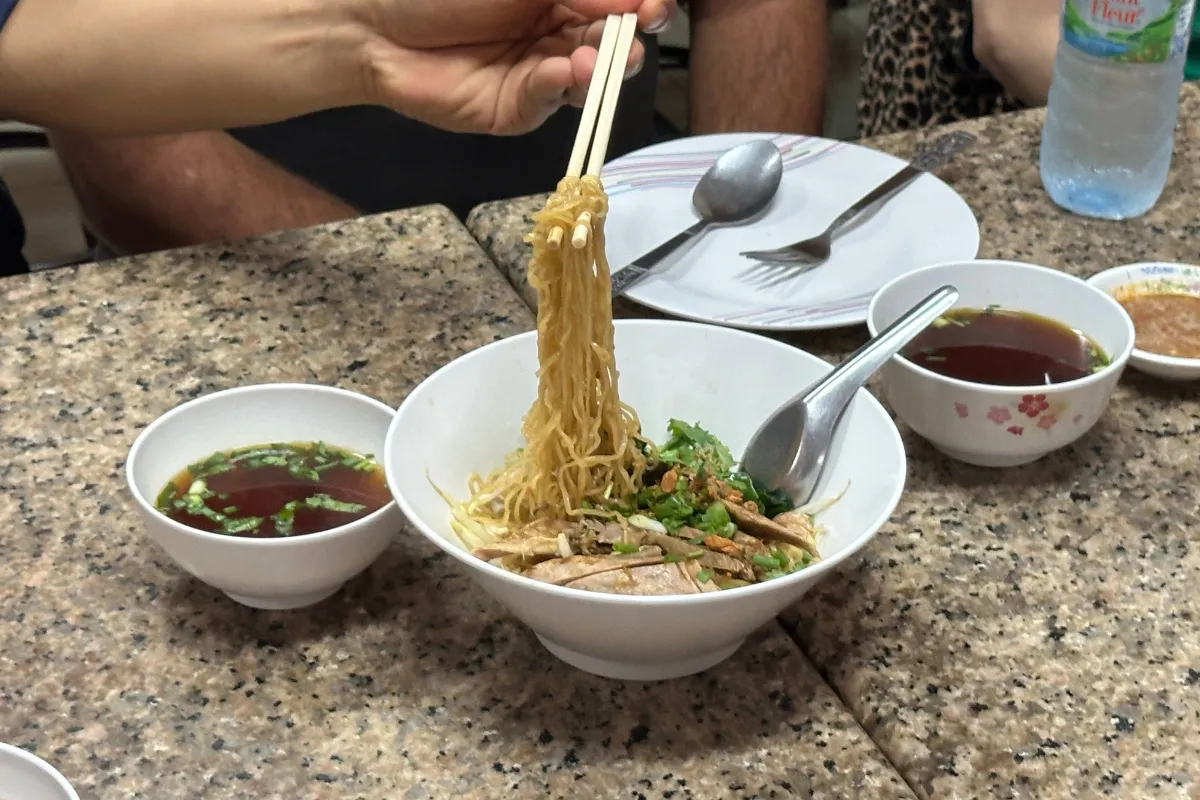
- Signature Dish: Mixed Steamed Rice Noodle Rolls with Chinese Sausage and Tofu (ก๋วยเตี๋ยวหลอดทรงเครื่อง)
- Average Price: 60 – 80 THB
- Opening Hours: Tuesday – Sunday: 18:00 – 01:00 (Closed Mondays)
- Exact Location: Yaowarat Road, parked opposite Rung Sap Traveling, close to the intersection of Yaowaphanit.
3) Guay Jub Uan Pochana (Michelin Bib Gourmand) (ก๋วยจั๊บอ้วนโภชนา)
No culinary journey through Bangkok is complete without sampling the fiery, peppery rolled noodle soup at Guay Jub Uan Pochana. Honored consistently by the Michelin Guide with a Bib Gourmand, this iconic roadside stand draws an eager, perpetual queue outside the vintage facade of the old China White cinema building.
Guay Jub features square rice noodle sheets that roll up into tender hollow cylinders upon boiling. What sets Uan Pochana apart from all competitors is its crystalline pork bone broth, heavily infused with fresh, potent white pepper. The first spoonful delivers an electrifying warmth that immediately awakens the senses. Floating in this invigorating broth is an assortment of tender, painstakingly cleaned pork offal (tender stomach, liver, and intestines), accompanied by the stall's legendary crispy pork belly (Moo Krob). Remarkably, the pork skin retains its crisp crunch even after resting in the boiling broth. If you prefer your soup without offal, simply order "Moo Krob Luan" for an entire bowl filled exclusively with crispy pork belly.
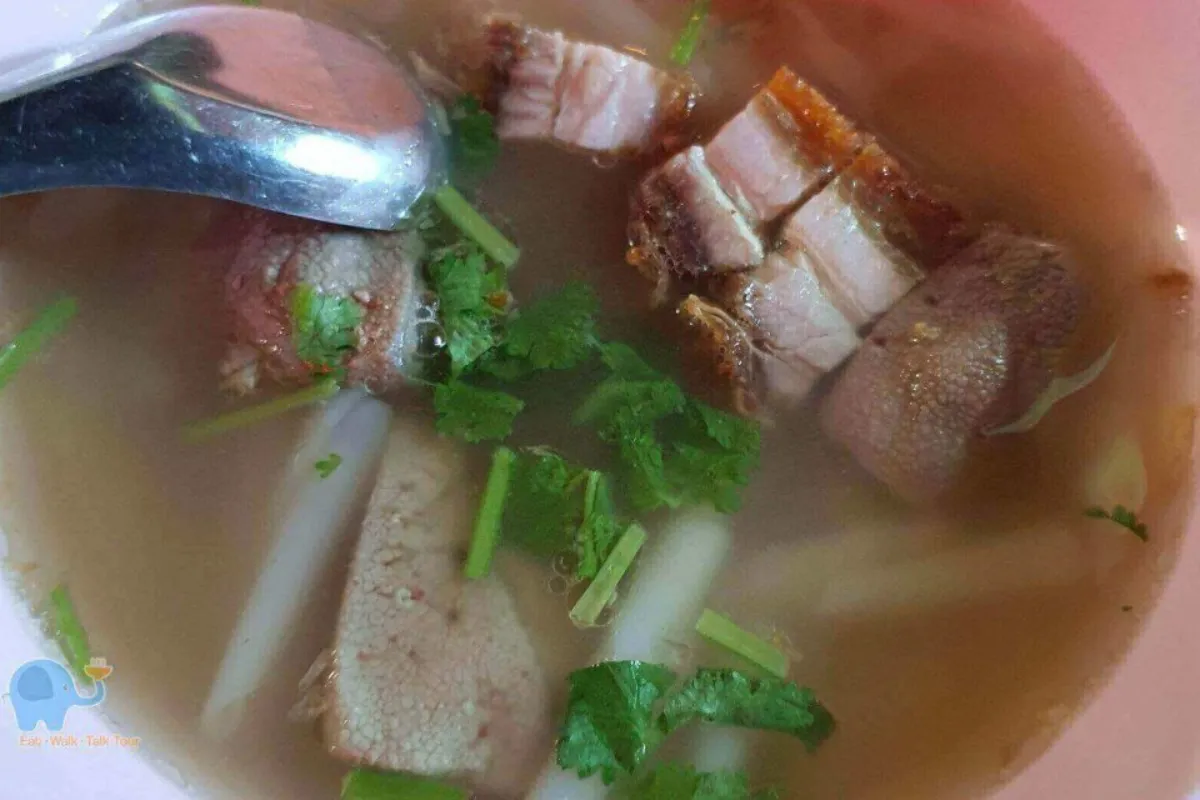
- Signature Dish: Peppery Rolled Rice Noodle Soup with Crispy Pork Belly (ก๋วยจั๊บน้ำใสน้ำซุปพริกไทย)
- Average Price: 60 – 100 THB
- Opening Hours: Tuesday – Sunday: 18:00 – 03:00 (Closed Mondays)
- Exact Location: In front of the historic, old Rama Cinema (China White) on Yaowarat Road.
To prepare your palate for the bustling stalls, explore our practical Guide to Experience Bangkok Chinatown Food.
4) Nai Ek Roll Noodle (ก๋วยจั๊บนายเอ็ก)
Located just a few minutes’ walk along Yaowarat Road near Soi 9, Nai Ek Roll Noodle represents another giant in Chinatown's noodle landscape. Operating out of a traditional two-story shophouse rather than a pavement cart, Nai Ek holds a Michelin Bib Gourmand recognition and offers indoor tables, making it an excellent stop if you prefer dining with overhead fans and structured seating.
While Uan Pochana is known for its intense white pepper punch, Nai Ek prepares a broth with a deeper, rounded sweetness derived from hours of simmering marrow bones, Chinese herbs, and coriander roots alongside aromatic pepper. In addition to rolled noodle soup, Nai Ek is revered for its broader traditional menu: succulent braised pork ribs that fall clean off the bone, meltingly tender braised pork knuckle (Kha Moo), tender pork tongue, and deep-fried crispy pork belly served with rich herbal gravy and steamed jasmine rice. Because Nai Ek opens early in the morning, it is also a prime breakfast and lunch haven for travelers exploring Chinatown during daylight hours.
- Signature Dish: Rolled Rice Noodles in Herbal Pork Broth & Crispy Pork Belly Rice (ก๋วยจั๊บนายเอ็ก และข้าวหมูกรอบ)
- Average Price: 70 – 150 THB
- Opening Hours: Daily: 08:00 – Midnight
- Exact Location: 442 Yaowarat Road, near the corner of Yaowarat Soi 9.
5) The Legendary Seafood Showdown: T&K Seafood vs. Lek & Rut Seafood
At the bustling corner where Yaowarat Road meets Phadung Dao Road (affectionately known as Soi Texas), visitors witness one of Bangkok’s most famous culinary rivalries: the "Seafood Battle" between T&K Seafood and Lek & Rut Seafood. Stationed directly across the narrow street from one another, their energetic waitstaff—clad in vibrant green shirts for T&K and bright red shirts for Lek & Rut—orchestrate open-air feasts amidst roaring gas burners and passing tuk-tuks.
🟢 T&K Seafood (The Green Shirts)
T&K Seafood is particularly popular among international travelers and offers four floors of air-conditioned indoor seating above its energetic outdoor stalls. Glass display cases at the street entrance showcase live giant river prawns, massive mud crabs, and whole white sea bass on crushed ice.
Top Orders: Charcoal-grilled jumbo river prawns served with zesty, sour green chili seafood sauce; whole steamed sea bass in spicy lime and garlic broth (Pla Kapong Neung Manao); and fiery Tom Yum Goong bursting with lemongrass, galangal, and straw mushrooms.
🔴 Lek & Rut Seafood (The Red Shirts)
Lek & Rut maintains a thoroughly authentic, roadside street atmosphere. Seating consists of colorful plastic stools arrayed directly along the alleyway, placing you right next to the roaring wok stations and the sensory pulse of Chinatown nightlife.
Top Orders: Wok-fried mud crab in rich yellow curry powder (Poo Pad Pong Karee), spicy flash-fried water mimosa (Pad Pak Krachate), and grilled butter cockles accompanied by garlic seafood dip. The smoky wok hei here is extraordinarily intense.
- Average Price: 200 – 600 THB per dish (priced by weight for fresh crab, fish, and prawns)
- Opening Hours: Tuesday – Sunday: 16:30 – 01:00
- Exact Location: Intersection of Yaowarat Road and Phadung Dao Road (Soi Texas).
6) Pa Tong Go Savoey (Michelin Bib Gourmand) (ปาท่องโก๋เสวย)
For an irresistible snack while walking between major courses, seek out Pa Tong Go Savoey. This unassuming street stall has captured international renown and earned a coveted Michelin Bib Gourmand for perfecting a beloved Chinese staple: deep-fried dough sticks (Youtiao or Pa Tong Go).
The skilled dough masters stretch and twist fresh dough into paired batons before dropping them into vats of pristine, gently bubbling oil. The crullers puff up rapidly, emerging with a shatteringly crisp, golden-brown crust while remaining delightfully light, airy, and soft on the interior without retaining grease. To elevate the experience, order your hot dough sticks paired with their silky, aromatic green pandan coconut custard (Sangkaya Bai Toey) or sweetened condensed milk. In addition to classic fried versions, the stall also offers a grilled option (Pa Tong Go Yang), where fried sticks are toasted briefly over charcoal for an added layer of smoky crunch.
- Signature Dish: Deep-Fried Chinese Crullers with Pandan Custard Dip (ปาท่องโก๋จิ้มสังขยาใบเตย)
- Average Price: 50 – 80 THB per set
- Opening Hours: Tuesday – Sunday: 17:30 – 23:30 (Closed Mondays)
- Exact Location: At the entrance of Phadung Dao Road, outside the 7-Eleven store.
7) Khanom Pang Chao Ded (The Legendary Toasted Buns) (ขนมปังเจ้าเด็ดเยาวราช)
If you observe a dense crowd gathered around a charcoal grill holding numbered tickets on Yaowarat Road, you have arrived at Khanom Pang Chao Ded. This iconic bakery stall has achieved legendary status in Bangkok for its decadent charcoal-grilled buns with molten sweet fillings.
The buns are toasted over glowing coals until their exterior achieves a smoky, golden crispness while the interior bread stays pillowy and warm. The bakers then pump generous amounts of rich filling inside until the bun practically bursts. You can choose from an array of fillings, including rich chocolate fudge, fragrant green pandan custard, melted butter with granulated sugar, sweetened milk cream, and savory-spicy chili paste with pork floss (Nam Prik Pao Moo Yong). Take a careful first bite—the piping-hot filling will immediately ooze out, delivering pure street dessert euphoria.
- Signature Dish: Charcoal-Grilled Buns with Melted Butter-Sugar, Chocolate, and Pandan Kaya
- Average Price: 25 – 35 THB per bun
- Opening Hours: Tuesday – Sunday: 18:30 – Midnight (Closed Mondays)
- Exact Location: Yaowarat Road, stationed directly in front of the Government Savings Bank (GSB).
8) Sweettime: Chinatown’s Premier Herbal Dessert Haven
After navigating peppery soups, savory noodles, and spicy seafood dishes, your palate will welcome the soothing coolness of Chinatown’s classic desserts. Look for the glowing pink neon sign of Sweettime, an enduring favorite that has satisfied late-night cravings for decades.
Sweettime specializes in traditional Thai-Chinese shaved ice desserts, herbal infusions, and comforting sweet soups. Their most sought-after dish is Bua Loy Nom Sod—chewy, handcrafted glutinous rice balls stuffed with molten roasted black sesame paste, served in chilled, sweet fresh milk. Other standout selections include Tao Tung (shaved ice topped with lotus root, gingko nuts, longan, and red beans in sweet syrup) and warming bowls of Bua Loy Nam Khing (black sesame dumplings submerged in spicy, restorative hot ginger broth). It provides the ideal refreshing finale to an evening of culinary discovery.
- Signature Dish: Black Sesame Dumplings in Cold Fresh Milk (บัวลอยนมสด) and Hot Ginger Tea (บัวลอยน้ำขิง)
- Average Price: 40 – 60 THB
- Opening Hours: Tuesday – Sunday: 18:00 – 01:30 (Closed Mondays)
- Exact Location: Yaowarat Road, opposite the Bangkok Bank branch.
9) Lim Lao Ngow (Handmade Fishball Noodles) (ลิ้มเหล่าโหงว)
Operating for over eight decades, Lim Lao Ngow has earned a Michelin Bib Gourmand for what locals affectionately celebrate as Bangkok's "bouncing fishballs." Located on the edge of Chinatown along Song Wat Road and Yaowarat, this legendary street cart produces fishballs from 100% fresh sea fish without adding flour or chemical binders.
The texture of these artisanal fishballs is extraordinarily springy, succulent, and bursting with natural sea umami. Paired with flat egg noodles tossed in a proprietary mixture of dark soy sauce, fragrant lard, and mild vinegar, the dish is crowned with crispy wonton crisps and tender fish cakes. A bowl of Lim Lao Ngow dry noodles (Bami Haeng) followed by a clear, sweet bone broth delivers a timeless masterclass in pure, unadulterated ingredient quality.
- Signature Dish: Dry Egg Noodles with Hand-Pounded Bouncing Fishballs (บะหมี่แห้งลูกชิ้นปลากระโดดได้)
- Average Price: 50 – 80 THB
- Opening Hours: Daily: 16:30 – 20:30
- Exact Location: In front of the Bangkok Bank Song Wat branch, close to Yaowarat Road.
10) Street Aromas: Charcoal-Roasted Chestnuts & Fresh Pomegranate Juice
As you wander along the vibrant sidewalks of Yaowarat, distinct fragrances will tempt your senses at every corner. One of Chinatown's most enduring visual and aromatic traditions is the slow roasting of chestnuts (Gao Lak). Vendors operate large mechanical iron roasters loaded with small black pebbles and heated coffee beans, roasting imported Chinese chestnuts evenly. The result is a smoky, naturally sweet, and creamy nut that vendors pack warm into paper bags—making an addictive snack to nibble on as you explore.
To refresh your palate between rich broths and barbecued dishes, look out for roadside carts displaying pyramids of glowing ruby pomegranates. Vendors press the seeds in hand-cranked metal presses right before your eyes, bottling 100% pure, unadulterated pomegranate juice with zero added sugar or preservatives. Tart, vibrantly sweet, and naturally chilled over ice, this ruby elixir cuts cleanly through spicy and oily street dishes, leaving you refreshed for your next stop.
Step-by-Step Walking Route & Strategy for Food Lovers
To maximize your culinary exploration without feeling exhausted by crowds or overwhelmed by options, follow this tested walking route:
- 17:45 – 18:15 | Arrival & Early Appetizer: Arrive at MRT Wat Mangkon Station (Exit 1). Walk down Soi Plaeng Nam to admire early evening lanterns and pick up your first light bite—such as Pa Tong Go Savoey dough sticks before queue lengths swell.
- 18:30 – 19:30 | The Noodle & Broth Round: Proceed to the main Yaowarat Road. Join the queue at Guay Jub Uan Pochana for their iconic peppery noodle soup with crispy pork belly, or stop by Grapoh Pla Lert Ros for bubbling claypot fish maw soup.
- 19:45 – 20:45 | Seafood & Wok Hei Main Course: Turn into Phadung Dao Road (Soi Texas) for the seafood showdown. Take a seat at T&K Seafood or Lek & Rut Seafood to share grilled jumbo river prawns, crab yellow curry, and spicy morning glory.
- 21:00 – 21:45 | Sweet Finish & Night Sights: Conclude your feast with Bua Loy Nom Sod at Sweettime, grab a hot molten bun from Khanom Pang Chao Ded, and sip freshly squeezed cold pomegranate juice while soaking in the glowing neon vistas of Yaowarat.
How to Get to Bangkok Chinatown (Yaowarat)
In previous years, traveling to Yaowarat required navigating Bangkok's notorious traffic in taxis or bargaining with tuk-tuk drivers. Today, thanks to modern rapid rail expansions, accessing Chinatown is smooth, fast, and completely immune to road gridlock.
🚇 The Best Way: MRT Subway (Blue Line)
Board the MRT Blue Line and disembark at Wat Mangkon Station (Station BL29). Renowned as one of the most stunning subway stations in Thailand, Wat Mangkon features magnificent Sino-Portuguese architecture, vibrant dragon murals, and ornate red pillars. Take Exit 1 (Charoen Krung Road / Plaeng Nam). From the top of the escalators, a leisurely 3-minute stroll down vibrant Soi Plaeng Nam brings you directly onto the neon-lit expanse of Yaowarat Road.
Alternative Transport Options:
- Chao Phraya Express Boat: Take the Blue Flag or Orange Flag river boat to Ratchawong Pier (N5). From the pier, walk straight up Ratchawong Road for roughly 8 minutes to reach the intersection of Yaowarat Road. This is a breathtaking way to arrive during sunset.
- Taxis & Ride-Hailing (Grab / Bolt): If traveling by car, advise your driver to set the drop-off location near Charoen Krung Road or Rama IV Road rather than Yaowarat Road itself. Yaowarat Road becomes heavily congested after 18:30, and getting dropped off one block away will save you 20 to 30 minutes in stationary traffic.
Essential Insider Tips for Street Food Lovers
- 1. Share Everything (The Golden Rule): Yaowarat is an endurance marathon, not a sprint. Never order a full multi-course meal at the first stall. Share one signature dish per stop among your companions so you can sample 6 to 8 different stalls throughout the evening.
- 2. Bring Sufficient Cash & Small Banknotes: While QR-code PromptPay is common among Thai residents, international cards are rarely accepted at roadside pushcarts. Carry 20, 50, and 100 Baht notes to ensure smooth, swift transactions.
- 3. Carry Wet Wipes & Tissues: Most roadside stalls provide minimal napkins or small tissue dispensers. Keeping a personal pack of antibacterial wet wipes and tissues in your day bag will keep your hands clean after peeling grilled prawns and handling sweet buns.
- 4. Dress in Light, Breathable Fabrics: The combination of tropical humidity, outdoor woks, and dense foot traffic generates considerable heat. Wear loose cotton or linen clothes and supportive, flat walking shoes.
- 5. Avoid Monday Evenings for Street Carts: The Bangkok Metropolitan Administration (BMA) designates Mondays as city-wide street cleaning days. While permanent shophouse restaurants remain open, the majority of pavement food carts do not operate on Mondays. Plan your visit from Tuesday through Sunday for the full, vibrant experience.
If you prefer a seamless, expertly curated culinary journey without waiting blindly in lines or feeling lost in the crowds, book our popular Bangkok Chinatown Walking Tour led by licensed local food experts.
Exploring Cultural Landmarks Beyond the Street Food
While food is the headline attraction, Chinatown is also steeped in profound cultural, spiritual, and architectural history. Between meals, take time to visit several iconic landmarks nestled within walking distance:
- Wat Traimit (Temple of the Golden Buddha): Located at the beginning of Yaowarat Road near the Odeon Circle Chinatown Gate, this revered royal temple houses the world’s largest solid gold Buddha statue—weighing an astonishing 5.5 tons of pure gold and dating back to the Sukhothai period.
- Wat Mangkon Kamalawat (Leng Noei Yi): The largest and most influential Chinese Buddhist temple in Bangkok, built in 1871. It serves as the primary center for Taoist, Buddhist, and Confucian ceremonies, particularly during Chinese New Year and the annual Vegetarian Festival.
- Song Wat Road & Talad Noi: Just one street south along the riverbanks, historic Song Wat Road features beautifully conserved century-old trading warehouses, indie specialty coffee roasters, art galleries, and vibrant wall murals that reveal Bangkok's creative modern Renaissance.
Frequently Asked Questions (FAQ) About Bangkok Chinatown Food
คำถามที่พบบ่อยและข้อมูลสำคัญที่คุณควรรู้ รวบรวมโดยผู้เชี่ยวชาญท้องถิ่น
Q1 What are the absolute must-try street foods in Bangkok Chinatown (Yaowarat)?
If you have only one evening in Yaowarat, prioritize these legendary staples: (1) Guay Jub Uan Pochana for peppery rolled rice noodles and ultra-crispy pork belly; (2) Claypot Fish Maw Soup at Grapoh Pla Lert Ros; (3) Pa Tong Go Savoey fried Chinese crullers with pandan coconut dip; (4) Charcoal-grilled river prawns and yellow curry crab at T&K or Lek & Rut Seafood; and (5) Bua Loy Nom Sod (black sesame dumplings in cold milk) at Sweettime.
Q2 What time does street food start and end in Yaowarat?
Most mobile street food carts begin setting up between 17:30 and 18:00, hitting full swing by 19:00. The peak atmosphere continues until around 22:30. Stalls begin packing up between midnight and 01:00, although select noodle stalls—such as Guay Jub Uan Pochana—remain open until 03:00 for late-night revelers.
Q3 Is Bangkok Chinatown street food open on Monday?
Monday is designated as municipal deep-cleaning day across Bangkok. Consequently, about 70% of the mobile sidewalk carts on Yaowarat Road are closed on Monday nights. However, brick-and-mortar shophouse restaurants (such as Nai Ek Roll Noodle, Texas Suki, and traditional dim sum houses) remain open. To witness the iconic, neon-lit outdoor food cart spectacle at its peak, visit from Tuesday through Sunday.
Q4 How do I get to Yaowarat Chinatown by public transportation?
The fastest and most reliable route is the MRT Blue Line subway to Wat Mangkon Station (BL29). Take Exit 1, walk down Soi Plaeng Nam for three minutes, and you will arrive directly on Yaowarat Road. Alternatively, take the Chao Phraya Express Boat to Ratchawong Pier (N5) and walk eight minutes up Ratchawong Road.
Q5 How much money should I budget for street food in Yaowarat?
For casual street food stalls (noodle soups, spring rolls, dumplings, and desserts), budget approximately 250 to 400 THB ($7 – $12 USD) per person, which covers 3 to 4 substantial dishes and a drink. If you plan to dine on fresh seafood—such as grilled jumbo tiger prawns, mud crab in yellow curry, or steamed whole sea bass—budget around 600 to 1,200 THB ($17 – $35 USD) per person.
Q6 What is the difference between Guay Jub Uan Pochana and Guay Jub Nai Ek?
Both are Michelin Bib Gourmand recipients serving rolled rice noodle soup, but their flavor profiles and settings differ:
- Guay Jub Uan Pochana: Operates as an outdoor street cart in front of the old cinema. Its broth is intensely spicy with fresh white pepper (clear peppery soup) and specializes in extra-crispy pork belly and delicate pork offal.
- Guay Jub Nai Ek: Located inside a traditional shophouse with seating. Its broth has a gentler pepper level with a deeper, savory herbal richness. Nai Ek also offers a wider menu including braised pork ribs, pork knuckle, and crispy pork rice.
Q7 Which Chinatown stalls have earned Michelin Guide recognition?
Yaowarat is home to numerous Michelin Bib Gourmand and Michelin Selected street vendors, including:
- Guay Jub Uan Pochana: Famous peppery rolled noodle soup and crispy pork.
- Nai Ek Roll Noodle: Rich herbal rolled noodle soup and braised pork.
- Pa Tong Go Savoey: Deep-fried and charcoal-grilled Chinese crullers with pandan custard.
- Lim Lao Ngow: Hand-crafted bouncing fishball egg noodles on Song Wat Road.
Q8 Between T&K Seafood and Lek & Rut Seafood, which one should I choose?
Both restaurants face each other at the Soi Texas intersection and serve comparable, fresh seafood menus. Choose T&K Seafood (Green Shirts) if you prefer multi-level indoor air-conditioned seating or are dining with children and seniors. Choose Lek & Rut (Red Shirts) if you crave an authentic, raw Bangkok street food experience sitting on plastic stools inches away from sizzling woks and street life.
Q9 Is street food in Bangkok Chinatown safe for tourists to eat?
Yes, Yaowarat street food is generally very safe. The immense turnover means ingredients are replenished continuously throughout the evening, so food never sits around at room temperature. Look for stalls that have high customer turnover and cook food fresh to order over high heat in boiling cauldrons or roaring woks. Stalls in Thailand use purified ice produced in certified ice factories (distinguished by uniform cylindrical shapes with holes through the center), which is safe to consume.
Q10 Are there vegetarian or Halal food options in Yaowarat?
While traditional Chinatown cuisine leans heavily toward pork, seafood, and chicken, options for dietary restrictions exist:
- Vegetarian & Vegan: During the annual nine-day Tesagan Gin Je (Vegetarian Festival) held in September or October, Chinatown becomes the vegetarian capital of Asia with hundreds of yellow-flag stalls. Throughout the rest of the year, look for dishes marked with the yellow "เจ" (Je) symbol. Many Chinese dessert stalls (Sweettime, shaved ice, soy milk) and fruit carts are naturally vegan.
- Halal: Dedicated Halal-certified meat stalls are less common directly along the central Yaowarat strip. However, seafood stalls (grilled fish and prawns), fresh fruit juices, roasted chestnuts, and mango sticky rice are suitable. Certified Halal options can be found a short walk away near the Haroon Mosque community in Charoen Krung.
Q11 Where can I find the famous charcoal-grilled buns with molten fillings?
The famous stall is Khanom Pang Chao Ded (ขนมปังเจ้าเด็ดเยาวราช), located directly in front of the Government Savings Bank (GSB) on Yaowarat Road. Look for the large queue and collect an order slip. Fillings include chocolate, pandan kaya, sweet milk, and butter sugar. Prices range from 25 to 35 THB per bun.
Q12 What should I do if a famous stall has an intimidatingly long queue?
Do not be discouraged! Street food vendors in Yaowarat operate with astonishing speed and efficiency. Queues at Guay Jub Uan Pochana or Khanom Pang Chao Ded that appear 30 people deep typically move within 10 to 15 minutes. Alternatively, visit during the early evening window (17:45 – 18:30) or after 21:30 when line lengths subside significantly.
Q13 Can I pay with credit cards or mobile apps at Yaowarat street stalls?
Major restaurants (like T&K Seafood) and modern cafes accept credit cards, often subject to a small transaction fee or minimum spend. However, 90% of sidewalk pushcarts and dessert stalls only accept cash or local Thai PromptPay QR transfers. International digital wallets like Apple Pay or Google Pay are not supported at street carts. Always bring physical cash in small Baht denominations.
Q14 What are the best drinks to pair with Chinatown street food?
Chinatown is famous for refreshing, natural beverages that balance rich, peppery dishes:
- Fresh Pomegranate Juice: Cold-pressed, 100% pure ruby juice with no added sugar.
- Nam Bai Bua Bok (Pennywort Juice): A deep green herbal juice renowned in Thai medicine for cooling internal body heat.
- Chrysanthemum Herbal Tea (Nam Gek Huay): Lightly sweetened iced floral tea served from large stainless dispensers.
- Cha Yen (Thai Iced Tea): Creamy, sweet spiced orange tea that instantly cools chili heat.
Q15 Should I take a guided food walking tour or explore on my own?
If you are confident navigating bustling crowds and reading Thai-Chinese menus, exploring independently can be very exciting. However, booking a professional guided tour—such as our Bangkok Chinatown Walking Tour—offers significant advantages: your local guide secures seats and dishes without queue friction, introduces hidden alleyway gems rarely found in guidebooks, explains the rich immigration history behind every recipe, and customizes orders to accommodate dietary preferences.