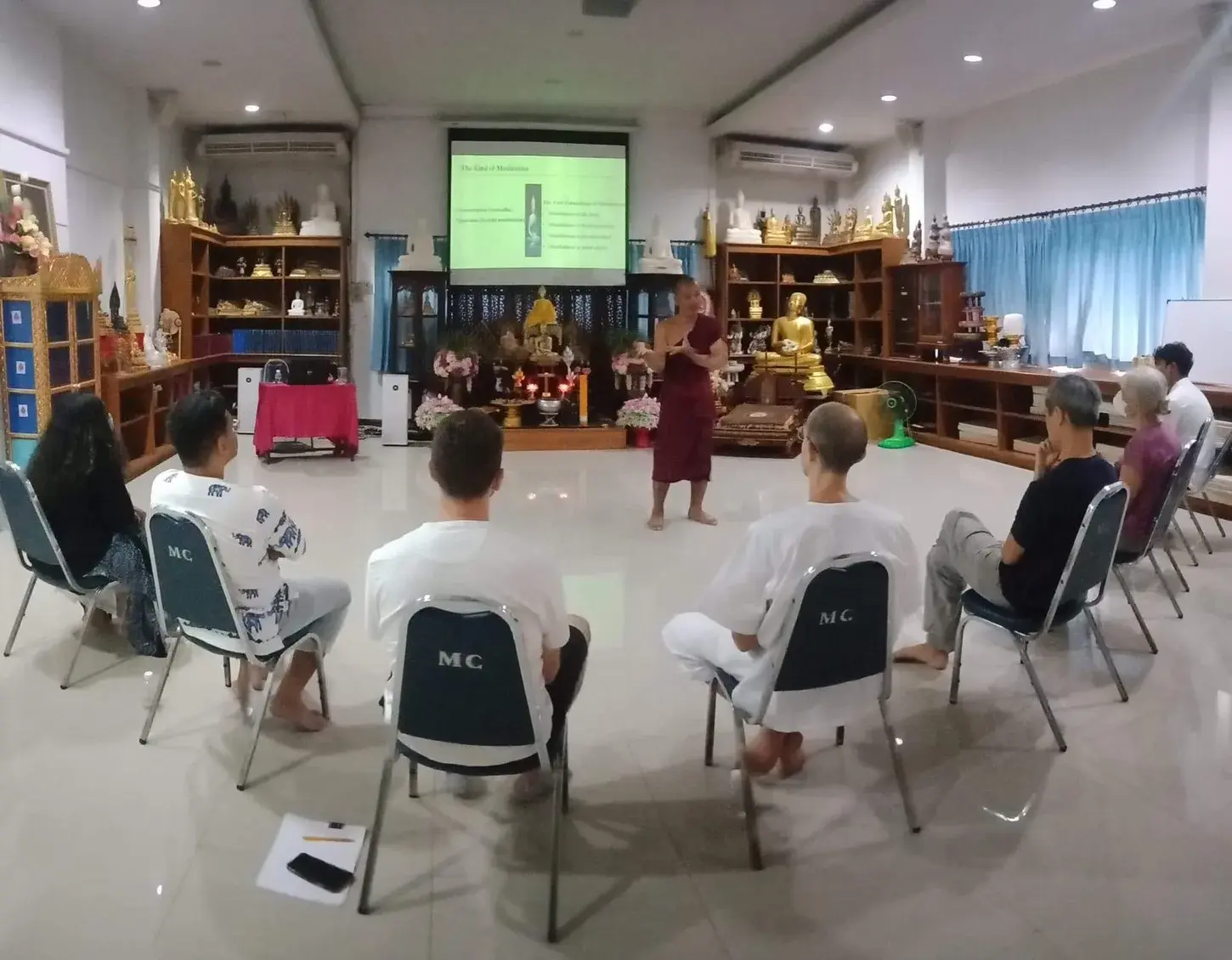

Capture picture-perfect holiday moments with Eat Walk Talk Tour.
Tips for the Best Photos During Vacation in Thailand: Composition, Gear, Secret Locations & Ethics 📸✨
Travel and photography are inseparable companions. When journeying through a country as visually magnificent as Thailand—where shimmering golden stupas rise into tropical skies, turquoise seas lap against limestone karst pinnacles, and night markets blaze under multi-colored neon—your camera becomes your ultimate instrument for preserving lifelong memories. Yet capturing truly extraordinary vacation photography requires far more than simply pointing your smartphone at famous landmarks and snapping a casual selfie.
The tropical light of Southeast Asia presents unique challenges: harsh midday glare that washes out delicate colors, sudden monsoon rain showers, dynamic crowd movement, and intricate religious decorum that demands cultural sensitivity. Whether you are carrying a high-end mirrorless camera with multiple prime lenses or relying exclusively on the latest smartphone, mastering lighting, composition, local etiquette, and timing will elevate your vacation images from mundane snapshots into breathtaking visual stories. This comprehensive photography guide covers essential gear selection, lighting mastery, composition secrets, sacred temple rules, and the most iconic Instagram-worthy viewpoints across Thailand. For romantic visual inspiration in the capital, read our guide on Romantic Bangkok Vacation Ideas.
📷 Travel Photography Summary: The secret to exceptional travel images in Thailand is mastering the Golden Hour (06:00–07:30 AM and 17:00–18:30 PM) and the Blue Hour right after sunset. Use leading lines in temples, incorporate human elements for scale, and always adhere to religious decorum: dress modestly, remove shoes, and never pose disrespectfully with Buddha images.
Essential Equipment: Smartphone vs. Mirrorless Camera
1. Mastering Smartphone Travel Photography
Modern flagship smartphones (iPhone Pro, Samsung Galaxy Ultra, Google Pixel) are extraordinary photographic tools that are lightweight, unobtrusive, and always accessible in your pocket:
- Clean Your Lenses Constantly: Tropical humidity, sunscreen residue, and finger oils constantly smudge phone lenses, creating hazy, milky light flares around temple lights. Wipe your lenses with a microfiber cloth before every shooting session.
- Lock Focus & Expose for Highlights: Tap on the brightest part of high-contrast scenes (such as the glowing sky behind Wat Arun) and drag the exposure slider down slightly. Recovering shadow details in post-processing is simple, but blown-out, overexposed highlights are lost forever.
- Utilize Ultra-Wide & Optical Telephoto Modes: Use the 0.5x ultra-wide lens inside cramped temple courtyards to capture soaring chedis, and switch to 3x or 5x optical telephoto lenses for candid street food portraits that create natural background blur without distortion.
- Shoot in ProRAW or RAW: Capturing uncompressed RAW files preserves dynamic range, allowing you to balance deep temple shadows and bright tropical skies in editing apps like Lightroom Mobile.
2. The Ideal Mirrorless Camera Kit
If you prefer a dedicated mirrorless camera (Sony, Canon, Fujifilm, Nikon), keep your travel kit versatile and lightweight:
- The All-in-One Zoom Lens: A standard 24-70mm f/2.8 or 24-105mm f/4 lens will handle 80% of travel situations—from wide architectural temple shots to street food close-ups.
- A Fast Prime Lens (35mm or 50mm f/1.8): Indispensable for night markets and dim temple interiors. The wide aperture lets you shoot in low light without raising your ISO, producing creamy, beautiful bokeh behind street food masters.
- Circular Polarizer (CPL Filter): Essential for island travel in Phuket, Krabi, and Samui. A polarizing filter eliminates reflections on water surfaces, rendering tropical seas intensely transparent and turquoise while boosting cloud contrast.
- A Lightweight Travel Tripod: Perfect for smooth long-exposure night shots of city traffic light trails or silky waterfalls in Chiang Mai's national parks.
Mastering Light: Conquering the Tropical Sun
In equatorial Thailand, lighting quality changes dramatically throughout the day:
- Golden Hour (06:00 – 07:30 AM): The most magical light for architectural and landscape photography. The sun sits low, casting a warm, honeyed glow across temple stuccos and eliminating harsh facial shadows. Major sites like the Grand Palace, Wat Pho, and Chiang Mai's Doi Suthep are virtually deserted at dawn, allowing you to photograph pristine courtyards without crowds.
- Midday Harsh Light (10:30 AM – 15:30 PM): Direct tropical sun creates unflattering vertical shadows under eyes and washes out colors. Use midday hours to seek shaded environments: ornate wooden shophouses, covered markets like Chatuchak or Warorot, cafe interiors, or looking for high-contrast architectural shadow patterns.
- Blue Hour (18:15 – 19:00 PM): The 20 to 30 minutes following sunset, when the sky turns a deep royal blue while temple floodlights, glowing neon signs, and street lanterns switch on. This balance between natural twilight and artificial illumination produces breathtaking cityscapes.
Composition Principles: Storytelling in Your Travel Frames
- 1. Incorporate Natural Frames: Frame your subject using Thai architectural elements: ornate teakwood doorways, archways draped in bougainvillea, window grilles, or low-hanging branches of bodhi trees. This creates three-dimensional depth and guides the viewer's eye into the scene.
- 2. Use Strong Leading Lines: Long marble walkways, colonnades lined with golden Buddha statues, the curves of the Chao Phraya River, or symmetrical Naga serpent staircases create compelling leading lines that draw the viewer deep into your image.
- 3. Include a Human Element for Scale: Colossal monuments—such as the 46-meter Reclining Buddha at Wat Pho or the ancient chedis of Ayutthaya—can appear flat without perspective. Include a person walking gently through the frame to establish scale and emotional connection.
- 4. Capture Movement with Shutter Drag: Capture the kinetic energy of Bangkok by slowing your shutter speed slightly (1/4 to 1/15 second) while resting your camera steadily on a railing: passing illuminated tuk-tuks, speeding longtail boats, and busy street cooks will produce beautiful motion blur while the background remains pin-sharp.
- 5. Look for Complementary Color Contrasts: Orange saffron monk robes set against cool grey stone, or radiant gold spires set against royal blue evening skies, create striking visual tension that captivates audiences.
Top Iconic Photographic Locations Across Thailand
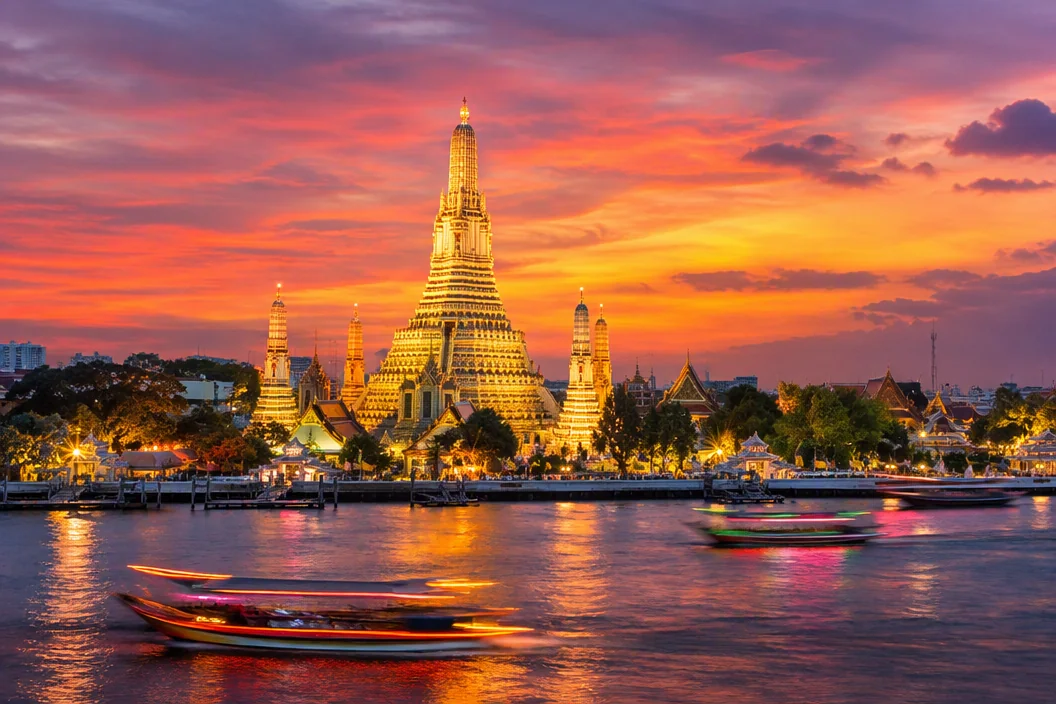
- Wat Arun at Sunset (Bangkok): The ultimate postcard shot. Position yourself directly across the river at Tha Tien pier or reserve an open-air terrace table at riverside rooftops like Eagle Cafe or Sala Rattanakosin to capture the spires silhouetted against purple evening skies.
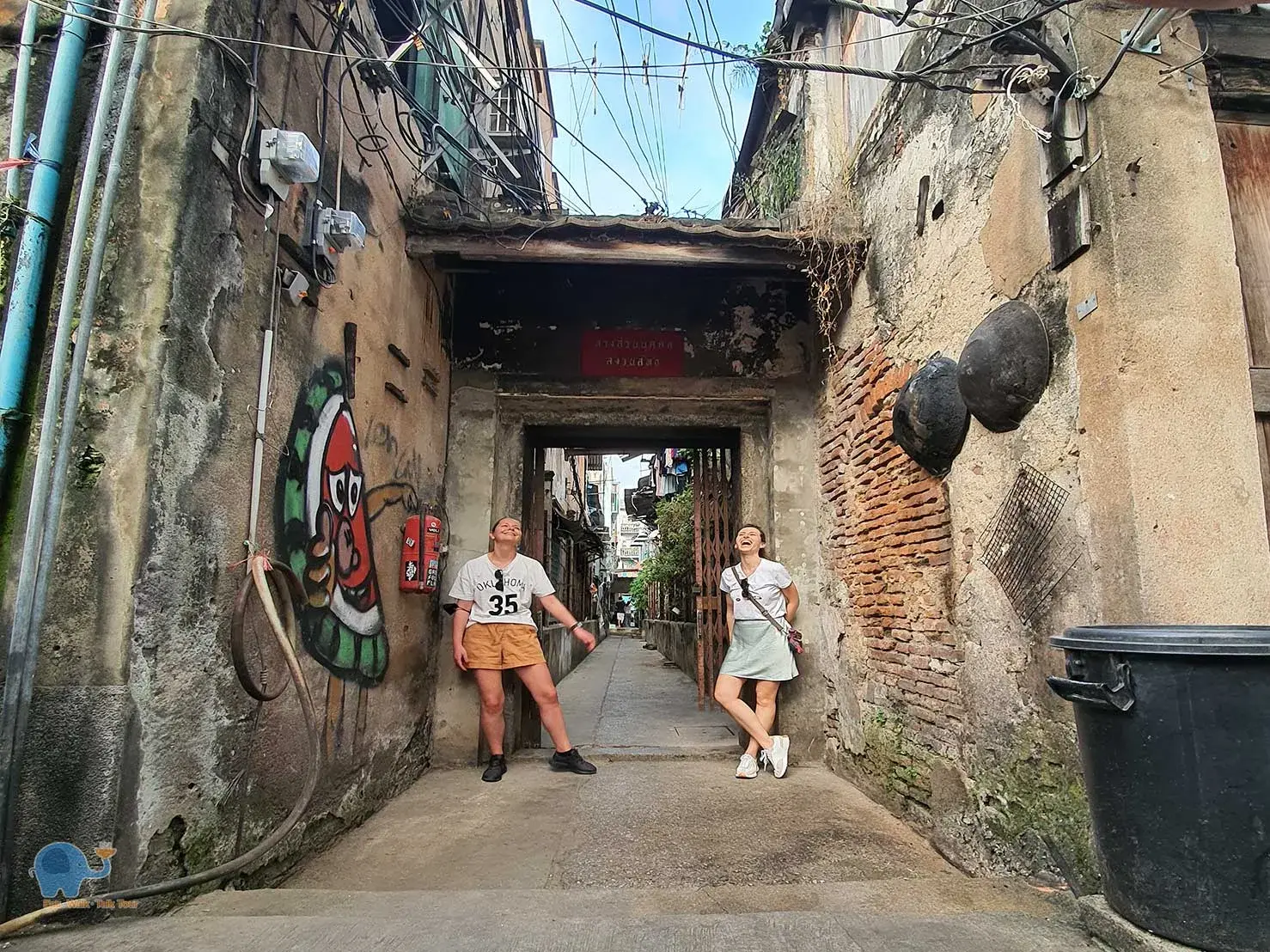
- Talad Noi & Song Wat Street Art (Bangkok): Shaded alleys adorned with colorful murals, vintage Fiat cars, iron mechanic garages, and century-old Chinese courtyards. Explore our Talad Noi & Song Wat Guide.
- King Power Mahanakhon SkyWalk (Bangkok): Stand on the glass cantilever floor 314 meters above the metropolis at dusk for futuristic city panoramas.
- Wat Pha Lat & Doi Suthep (Chiang Mai): Moss-covered stone bridges, jungle waterfalls, and golden mountain stupas enveloped in morning mist.
- Maya Bay & Pileh Lagoon (Phi Phi Islands): Emerald waters enclosed by sheer limestone karsts, best captured from the bow of a traditional wooden longtail boat.
- Red Lotus Sea (Udon Thani): Millions of blooming pink lotus flowers stretching across the lake at sunrise from a wooden boat.
- Sam Phan Bok (Ubon Ratchathani): Alien rock basins and water-carved craters along the Mekong River at sunset.
Temple Etiquette & Photographic Ethics in Thailand
Photography in Thailand is widely embraced, but observing cultural decorum is essential:
- Respect the Buddha: Never climb, lean against, or sit upon any Buddha statue or historic ruin. Avoid comical, romantic, or disrespectful poses in front of religious images. Posing for photos with your head higher than a seated monk or Buddha image is considered disrespectful.
- Dress Respectfully: Temples enforce strict dress codes (covered shoulders and knees). Your photos will look infinitely more authentic and dignified when dressed in modest, elegant linen or traditional Thai attire.
- Photographing Monks: Always ask permission with a polite Wai before taking close-up portraits of Buddhist monks. Female photographers must never touch or brush against a monk.
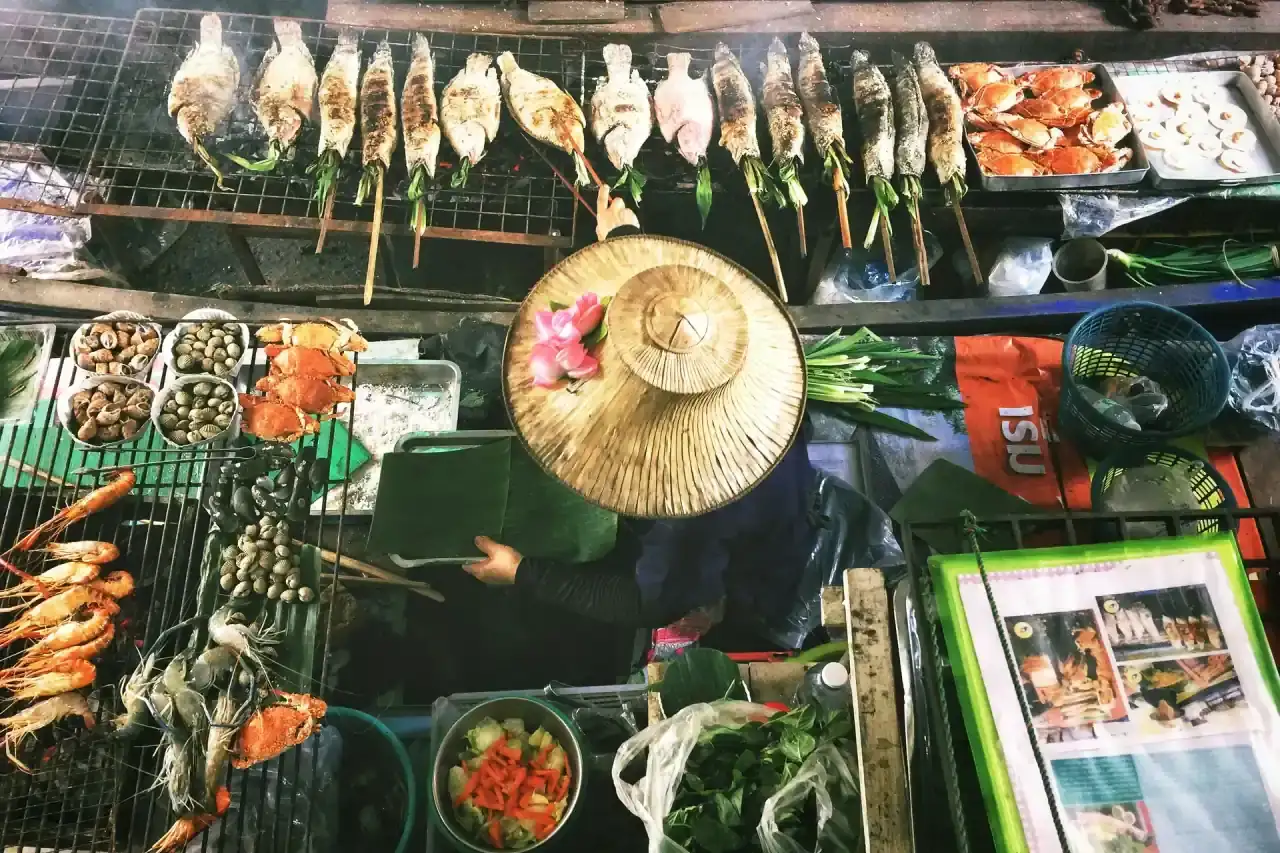
- Street Photography Courtesy: When photographing street vendors, make a small purchase or ask with a friendly smile before taking close-up portrait shots. A shared smile breaks all barriers.
Frequently Asked Questions (FAQ) About Vacation Photography in Thailand
คำถามที่พบบ่อยและข้อมูลสำคัญที่คุณควรรู้ รวบรวมโดยผู้เชี่ยวชาญท้องถิ่น
Q1 What is the single best time of day for photography in Thailand?
The optimal times are early morning Golden Hour (06:00 to 07:30 AM) and sunset Blue Hour (17:30 to 18:45 PM). Morning light is gentle and atmospheric, and major tourist sites are nearly empty. Evening blue hour creates stunning contrasts between twilight skies and illuminated golden temples.
Q2 Where is the best spot to photograph Wat Arun in Bangkok?
The classic view of Wat Arun is captured from across the Chao Phraya River on the eastern riverbank around Tha Tien Pier. Rooftop bars and restaurants—such as Sala Rattanakosin, Eagle Cafe, and The Deck by Arun Residence—offer prime unobstructed vistas as the sunset colors reflect off the water.
Q3 Are tripods allowed inside Thai temples and royal palaces?
Tripods are strictly prohibited inside the Grand Palace and Wat Phra Kaew, and within interior ordination halls (Ubosots and Viharns) of most temples. However, compact travel tripods or monopods are generally permitted in outdoor temple courtyards, public streets, and parks. Always check with security officers at ticket counters.
Q4 Can I fly a drone for aerial photography in Thailand?
Recreational drone flying in Thailand is subject to strict legal registration. You must register your drone with both the NBTC (National Broadcasting and Telecommunications Commission) and the CAAT (Civil Aviation Authority of Thailand) before flying, and hold comprehensive third-party liability insurance. Drones are strictly banned near airports, royal palaces, military facilities, and over dense crowds.
Q5 How can I take beautiful photos in crowded places without other tourists in the background?
Use three proven methods: (1) Arrive right at opening time (08:00 AM or earlier) when tourist buses have not yet arrived; (2) Look upward: frame your subject using high architectural archways, roof spires, and sky to eliminate ground crowds; and (3) Use portrait mode or wide apertures (f/1.8 – f/2.8) to blur background passersby into soft bokeh.
Q6 Where can I rent traditional Thai costumes for aesthetic photoshoots?
Costume rental shops are abundant directly outside Wat Arun in Bangkok and near Tha Phae Gate in Chiang Mai. For approximately 200 to 300 THB ($6–$9 USD), shops provide ornate traditional Thai silk outfits (Chut Thai), jewelry, accessories, and parasols, allowing you to capture stunning cultural portraits against ancient temple stone.
Q7 How do I protect my camera gear from tropical humidity and rain?
Carry a waterproof dry bag in your daypack, especially during boat trips and the green season (June to October). To prevent lens condensation when stepping from air-conditioned hotel rooms into humid tropical air, place your camera inside a sealed bag for 10 minutes to allow the temperature to equalize gradually.
Q8 What are the best camera settings for photographing Bangkok night markets?
Set your camera to Aperture Priority (A/Av) at your widest aperture (e.g., f/1.8 or f/2.8). Keep your shutter speed at 1/125 second or faster to freeze walking pedestrians, and set Auto ISO with an upper limit of 3200 or 6400. On smartphones, activate Night Mode and hold the device steady against your chest for two seconds.
Q9 What are the top photogenic locations in Northern Thailand (Chiang Mai)?
In Chiang Mai, don't miss the all-teakwood facade of Wat Phan Tao during evening lantern festivals, the mossy waterfall jungle ruins of Wat Pha Lat, the white royal mausoleums of Wat Suan Dok at sunset, and the flower-filled misty peaks of Doi Inthanon National Park.
Q10 Can I take photos of street vendors and their food carts?
Yes. Thai vendors are remarkably warm and accustomed to cameras. Show courtesy by ordering a skewer, noodle bowl, or drink first, then ask with a friendly smile, "Chai roop dai mai khrap/kha?" (May I take a photo?). Showing them the picture on your camera screen afterward creates joyful cultural connection.
Q11 How can I get clear, vibrant water photos on island boat trips?
Attach a Circular Polarizer (CPL filter) to your lens. Rotate the outer ring until surface glare on the ocean disappears, revealing the transparent turquoise seabed and coral reefs underneath. On phones, angle your camera at roughly 45 degrees to the water surface to minimize reflection.
Q12 Should I book a photo walking tour in Bangkok?
Booking a specialized walking tour—such as our 2-Hour Bangkok Cultural Discovery by Electric Tuk-Tuk or Chinatown Walking Tour—gives you access to hidden backstreet alleyways, secret viewpoints, and golden hour timing guided by locals who know precisely where and when the light is most magical.