
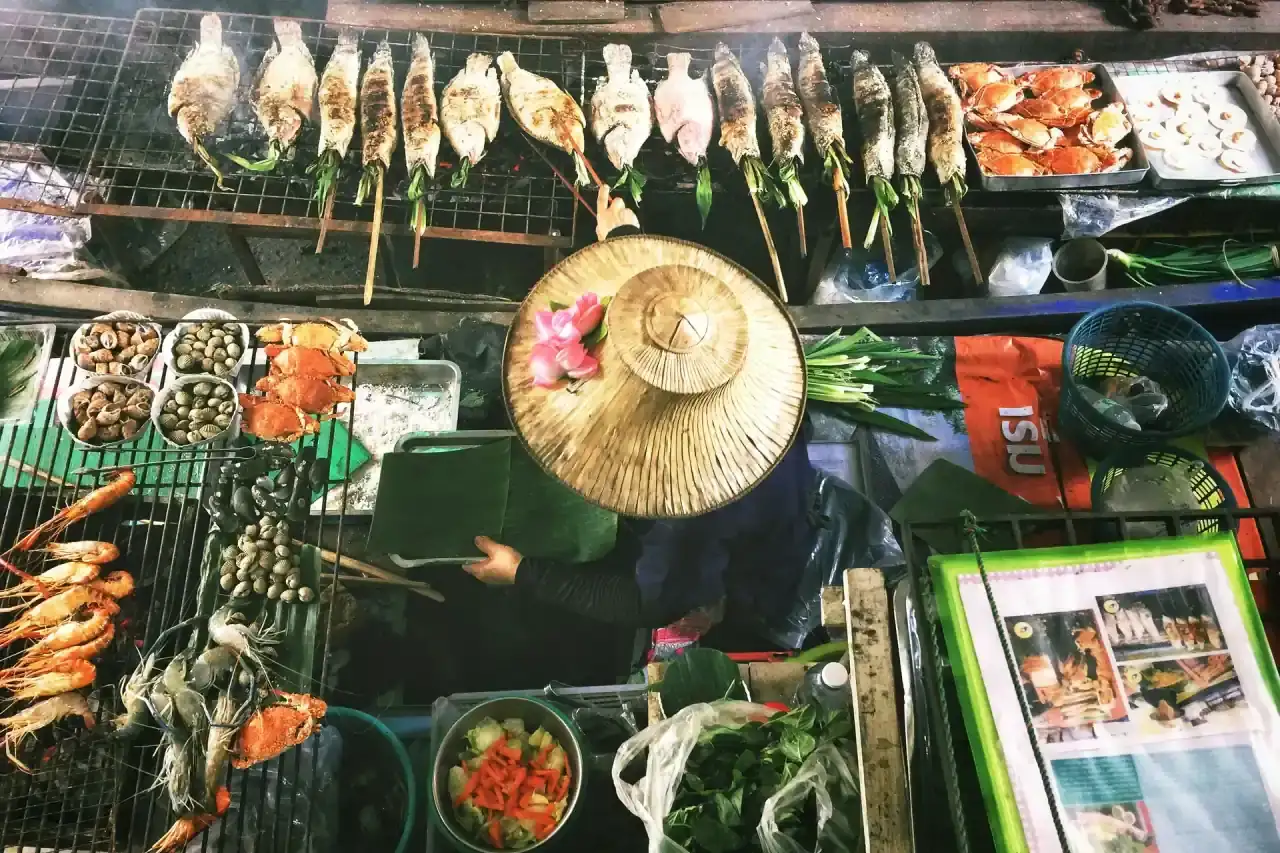
Explore the hidden waterways of the Venice of the East with Eat Walk Talk Tour.
Kayak & Boat in Bangkok: Small Group & Shared River Canal Tours 🛶🚤
Before asphalt roads, elevated concrete expressways, and Skytrain viaducts reshaped the modern skyline of Bangkok, the Thai capital was celebrated by 19th-century European voyagers as the "Venice of the East". Life in ancient Siam was inherently amphibious: communities flourished along tidal waterways, commerce took place on floating wooden barges, and elaborate canal networks (Khlongs) served as the primary arteries of transit, trade, and national defense. While many central Bangkok canals on the eastern Rattanakosin side were paved over during the mid-20th century to accommodate motor vehicle traffic, the historic western bank of the Chao Phraya River—the ancient kingdom of Thonburi—has preserved its intricate maze of living waterways largely intact.
Today, exploring Thonburi’s tranquil canal network via small-group traditional longtail boat or an eco-friendly guided kayak expedition provides an intimate, eye-level window into a vanishing world. Away from the roaring traffic of downtown Sukhumvit, you glide past centuries-old teakwood stilt houses, fragrant fruit orchards, hidden Buddhist temples, and prehistoric water monitor lizards sunning themselves on weathered wooden piers. To discover the fascinating backstory of how Bangkok evolved from an amphibious canal capital into a modern metropolis, review our comprehensive guide on Ways to Learn the History of Bangkok and pair it with outdoor cycling in our Bang Kachao Island Guide.
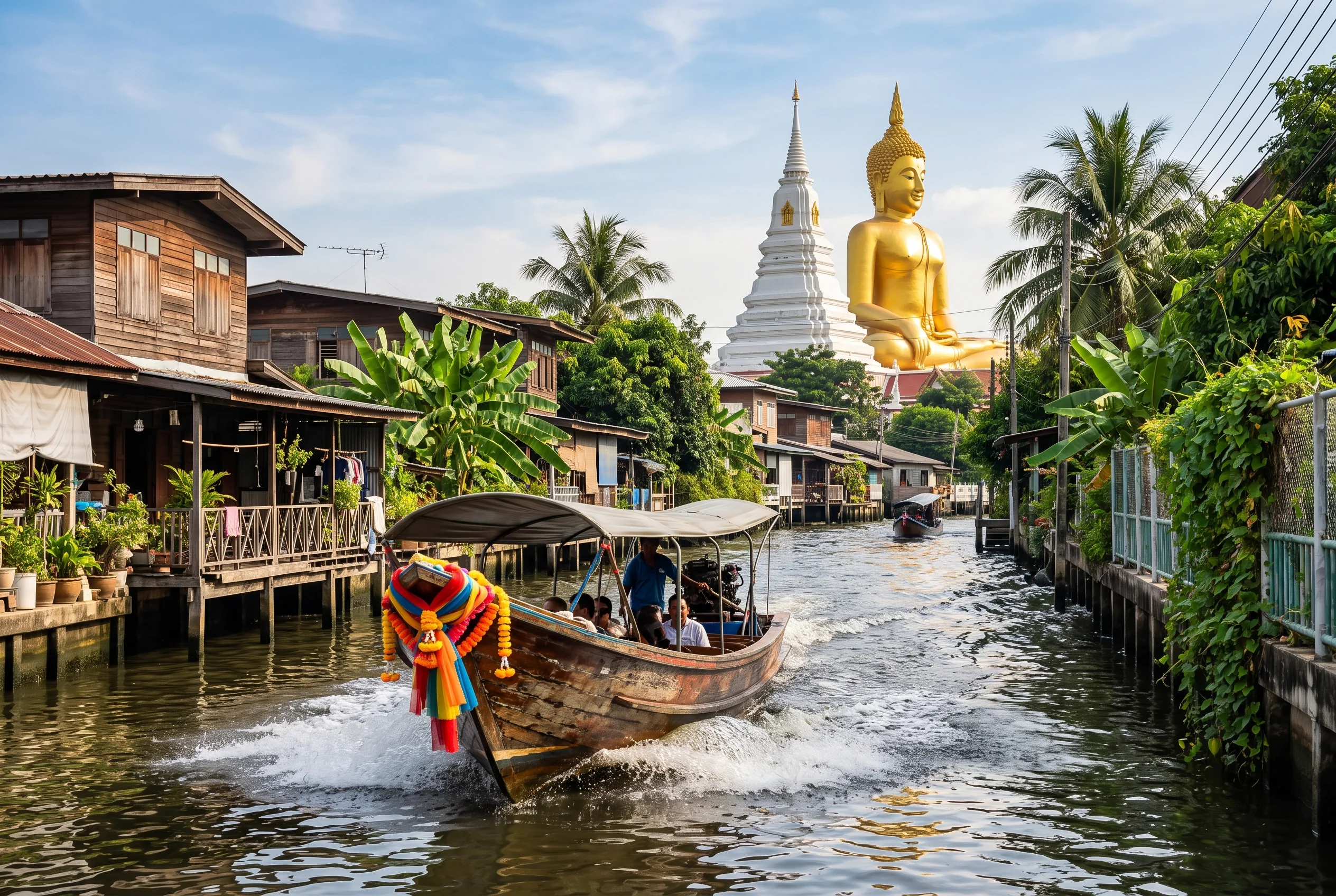
🌊 Canal Adventure Summary: Travelers can choose between two exceptional waterway experiences: (1) Chartered Traditional Longtail Boats (Ruea Hang Yao) for rapid, exhilarating navigation through major arterial canals like Khlong Bangkok Yai and Khlong Mon, or (2) Guided Small-Group Sea Kayaking for silent, eco-friendly paddling into narrow residential canals where motorized watercraft cannot enter. Major highlights include The Artist's House (Baan Silapin) traditional puppet theater and dramatic waterside views of the colossal 69-meter Wat Paknam Giant Buddha.
The Living Waterways of Thonburi: A Historical Overview
To appreciate the significance of Bangkok's canal tours, one must understand Thonburi's unique history. Following the fall of Ayutthaya to Burmese forces in 1767, King Taksin the Great re-established the capital of Siam on the western banks of the Chao Phraya River at Thonburi. The strategic layout was entirely aquatic: deep arterial canals such as Khlong Bangkok Yai (which was originally the main course of the Chao Phraya River before a bypass shortcut canal was excavated in 1538) and Khlong Bangkok Noi formed natural protective moats that could be defended by Siamese naval war junks.
When King Rama I founded the Chakri Dynasty in 1782 and relocated the royal palace across the river to Rattanakosin, Thonburi retained its peaceful agrarian identity. Rather than being consumed by massive concrete redevelopment, Thonburi’s network of secondary khlongs—including Khlong Dan, Khlong Bang Luang, Khlong Chak Phra, and Khlong Mon—remained home to traditional orchard farmers, wooden boatbuilders, and monastic riverside communities. Navigating these waters today feels like stepping directly into 19th-century Siam.
Longtail Boat vs. Kayak: Choosing Your Canal Experience
Both longtail boats and kayaks offer extraordinary perspectives on Bangkok's canal culture, but they cater to distinct travel styles, group sizes, and physical preferences:
1. The Traditional Longtail Boat (เรือหางยาว): Power, Speed, and Heritage
The iconic Thai longtail boat is an ingenious engineering triumph developed by local river mechanics in the mid-20th century. Built from heavy teak or local hardwood hulls, these slender vessels are powered by massive, reconditioned automotive V8 truck or diesel car engines mounted on an open swivel gimbal at the stern. A long steel propeller shaft—extending three to four meters behind the boat like a rooster tail—gives the craft its famous name.
- The Vibe: Exhilarating, breeze-cooled, and classic. The boat slices through the water with deep mechanical rumbles, covering extensive distances across multiple canals in a standard 2-hour itinerary.
- Best For: Families with young children, senior travelers, photographers, and visitors with limited time who want to cover vast stretches of Khlong Bangkok Yai, Khlong Dan, and Khlong Mon comfortably under canvas shade canopies without physical exertion.
2. The Guided Small-Group Kayak: Intimate, Silent, and Eco-Friendly
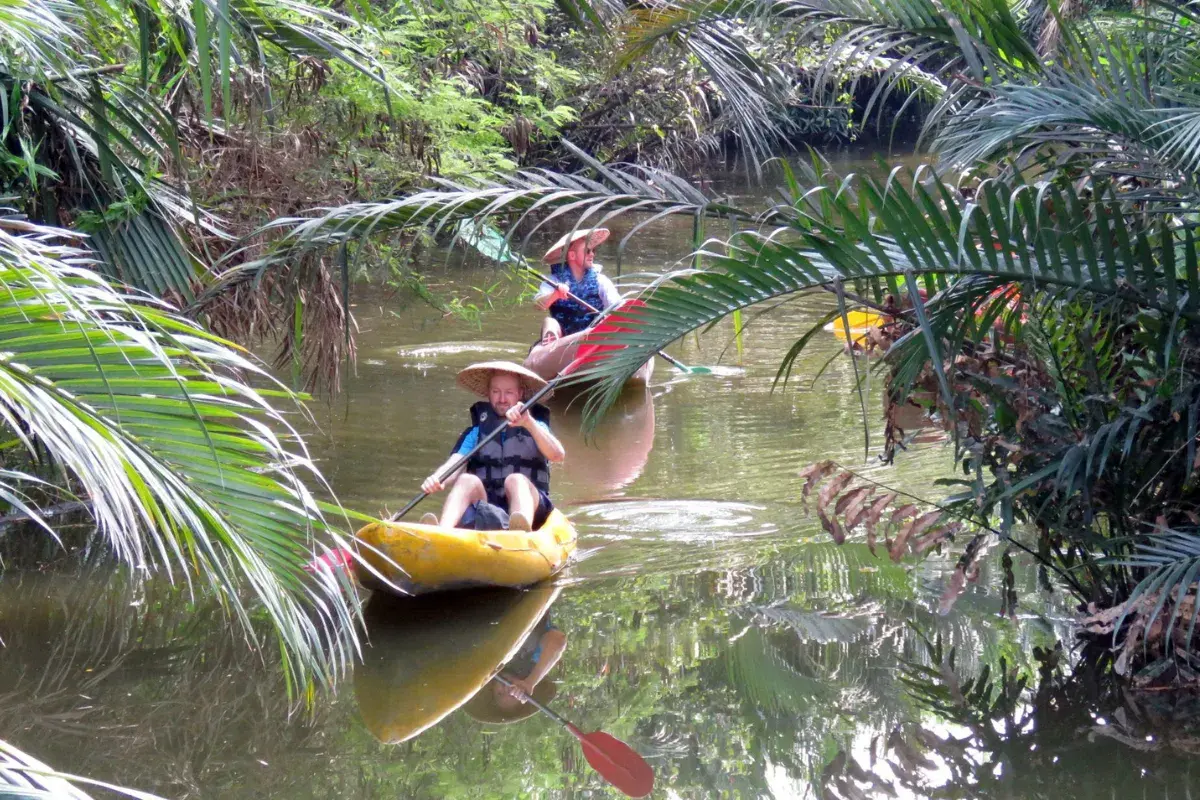
For active travelers seeking physical immersion, sea kayaking and sit-on-top recreational kayaks offer an unmatched connection to canal life. Because kayaks create zero engine noise and zero boat wake, you glide through peaceful residential waterways without disrupting local communities or churning canal silt.
- The Vibe: Peaceful, serene, and adventurous. Paddling at water level allows you to exchange warm smiles with elders sitting on wooden porches, observe kingfishers diving into the water, and navigate beneath charming wooden footbridges with only inches of overhead clearance.
- Best For: Active adventurers, fitness lovers, solo explorers, eco-conscious travelers, and small groups seeking a meditative escape from the urban metropolis.
Must-See Landmarks Along the Thonburi Khlongs
As you navigate west from the main Chao Phraya River through the colossal floodgates of Bangkok Yai, you enter a peaceful world punctuated by historic cultural landmarks:
1. Baan Silapin (The Artist's House at Khlong Bang Luang)
Perched along the wooden boardwalk of Khlong Bang Luang, Baan Silapin (บ้านศิลปิน) is a beautifully preserved 200-year-old traditional L-shaped teakwood house built during the early Rattanakosin era. Surrounding a weathered 300-year-old Ayutthaya-era brick stupa in its inner courtyard, this community art center is world-famous for preserving Hun Lakhon Lek (หุ่นละครเล็ก)—traditional Thai small-puppet marionette theater.
During regular afternoon weekend performances, master puppeteers dressed in all-black attire manipulate exquisitely carved and gilded mythological puppets depicting dramatic scenes from the Ramakien epic (featuring Hanuman the brave white monkey warrior and celestial maidens). Visitors can also string their own colorful glass-bead bracelets, sip iced Thai tea on wooden decks overlooking passing longtail boats, feed schooling river fish, and browse watercolor paintings created by resident local artists.
2. Wat Paknam Phasi Charoen: The Colossal 69-Meter Giant Buddha
Approaching along Khlong Bangkok Yai or Khlong Dan, nothing prepares you for the jaw-dropping sight of The Giant Golden Buddha (Phra Buddha Dhammakaya Thepmongkhon) rising above the humble corrugated tin roofs and wooden stilt homes of the canal village. Standing at an astounding 69 meters (226 feet) in height—equivalent to a 20-story skyscraper—this majestic seated bronze Buddha gleams in brilliant gold under the tropical sun.
From the unique vantage point of a kayak or boat, the perspective is breathtaking: the massive calm face of the Buddha towers directly above the waterway, creating one of Bangkok's most unforgettable photographic compositions. Directly behind the statue stands the Great Glass Stupa inside Phra Maha Chedi Maharatchamongkhon, whose emerald-green glass stupa ceiling is painted with psychedelic cosmic mandalas depicting the Buddhist cosmological heavens.
3. Wat Khun Chan: The Multi-Mythological Riverside Wonder
Located just across the canal from Wat Paknam, Wat Khun Chan presents an explosion of colorful sacred iconography. Unlike traditional minimalist Theravada temples, Wat Khun Chan features colossal outdoor statues of Rahu (the celestial deity who swallows the moon), multi-armed Guan Yin bodhisattvas, giant guardian yakshas, and a dramatic Reclining Buddha perched directly above the canal retaining wall, surrounded by vibrant sculptures of mythological animals from the Himavanta forest.
4. Authentic Stilt House Communities and Canal Life
Between major temple sights, the true magic of the canal tour lies in the everyday rhythm of local life. You will observe elderly residents tending potted orchids, monks receiving morning almsgiving by wooden canoes, children diving gleefully into clean upper canal tributaries, and local vendor boats selling cold sodas, fresh mangoes, and boat noodles directly from water level. The historic architecture displays intricate gingerbread fretwork carvings and weathered teak planks that have stood firm for a century.
5. Encounters with Asian Water Monitors (ตัวเหี้ย)
The canals of Thonburi are home to healthy, thriving populations of Asian Water Monitor Lizards (Varanus salvator). These prehistoric-looking reptiles—often growing over two meters (6.5 feet) in length and weighing over 40 kilograms—are frequently spotted swimming gracefully through the water or sunbathing lazily on concrete steps and wooden pilings. Despite their formidable size, they are timid scavengers that do not attack humans if respected from a comfortable distance.
The Engineering Wonder: Bangkok's Tidal Sluice Gates (Canal Locks)
One of the most fascinating engineering aspects of entering Thonburi’s canal system is passing through the massive Canal Sluice Gates (Pratu Nam). Because the Chao Phraya River experiences dramatic twice-daily tidal surges from the Gulf of Thailand—causing water levels to fluctuate by over two vertical meters—Bangkok’s Department of Drainage and Sewerage operates heavy mechanical floodgates at Khlong Bangkok Yai, Khlong Bangkok Noi, and Khlong Mon.
When your boat approaches the gate, the massive steel barriers lower or raise, and your vessel enters a lock chamber where water levels equalize before the inner gates open. This sophisticated hydraulic system prevents tidal saltwater intrusion, shields residential wooden stilt foundations from erosion, and maintains stable navigability for canal vessels throughout the dry and monsoon seasons.
Practical Tips for Your Canal Exploration
| Category | Longtail Boat Recommendation | Kayak Tour Recommendation |
|---|---|---|
| What to Wear | Light casual clothing, sunglasses, wide-brim hat | Quick-dry rashguard, boardshorts, water shoes |
| Valuables & Gear | Secure camera strap, light daypack | Strictly waterproof dry bag (10L–20L), waterproof phone pouch |
| Best Departure Time | 09:00 AM or 15:30 PM (avoid midday sun) | Early morning (07:30 – 09:30 AM) or sunset golden hour |
| Typical Duration | 1.5 to 2.5 hours | 2.5 to 3.5 hours (including puppet stop) |
| Primary Launch Piers | Sathorn Pier, Tha Tien Pier, River City Pier | Baan Silapin Pier, Wat Kalayanamit, Khlong San Pier |
Frequently Asked Questions (FAQ) About Bangkok Canal Tours
คำถามที่พบบ่อยและข้อมูลสำคัญที่คุณควรรู้ รวบรวมโดยผู้เชี่ยวชาญท้องถิ่น
Q1 What is the difference between Bangkok canals and the Chao Phraya River?
The Chao Phraya River is a massive, heavily trafficked commercial highway filled with commuter express boats, dinner cruises, and cargo barges. The canals (Khlongs) of Thonburi are sheltered, narrow residential waterways winding through historic stilt-house villages, offering a tranquil glimpse of traditional Thai life untouched by modern vehicular traffic.
Q2 How much does a private longtail boat tour cost in Bangkok?
Standard charter rates at major public piers (such as Tha Tien, Sathorn, or Phra Arthit) range from 1,200 to 2,000 THB per boat for a 1.5 to 2-hour tour. Rates cover up to 6–8 passengers. Always agree on the route, duration, and price before boarding, or book in advance through a reputable tour operator.
Q3 Can beginners or non-swimmers participate in kayak canal tours?
Yes. Small-group kayak tours utilize stable, wide sit-on-top or recreational touring kayaks designed for calm, flat-water paddling. Professional guides provide a thorough safety briefing, and certified high-buoyancy life jackets (PFDs) are mandatory for all participants at all times.
Q4 Is the canal water clean, and will I get wet?
Water quality in Thonburi's outer canals has improved significantly due to modern water treatment gates and daily tidal flushes, but it is not swimming water. In a longtail boat, you may experience light wind mist or occasional boat-wake spray (protective clear plastic side curtains can be raised). In a kayak, your shorts and hands will get splashed from paddling.
Q5 What days and times are puppet shows held at The Artist's House (Baan Silapin)?
Traditional puppet performances at Baan Silapin typically take place around 14:00 PM on weekends (Saturdays and Sundays), though occasional weekday shows occur depending on visiting school groups. The house itself, its art workshop, and its riverside cafe are open daily from 10:00 AM to 18:00 PM.
Q6 What is the best time of day to take a canal tour in Bangkok?
The ideal times are early morning (08:00 to 10:00 AM), when temperatures are cooler and morning almsgiving can be seen, or late afternoon (15:30 to 17:30 PM), when the golden hour light illuminates temple stupas and giant Buddhas beautifully.
Q7 Are the giant water monitor lizards dangerous?
No. Asian water monitor lizards (Varanus salvator) are naturally shy and scavenge on fish and small crabs. They will not attack boats or kayaks. Maintain a respectful distance of 3–5 meters, avoid making sudden aggressive motions, and never attempt to feed or touch them.
Q8 How do I reach the starting point for Bangkok canal tours?
Most longtail boat tours depart conveniently from Sathorn Pier (connected directly to BTS Saphan Taksin Station) or Tha Tien Pier (connected to MRT Sanam Chai Station near the Grand Palace and Wat Pho). Kayak tours typically meet near MRT Bang Phai or BTS Bang Wa stations.
Q9 Can children join small group canal tours?
Yes. Longtail boat tours are suitable for children of all ages, with child-sized life jackets provided. For guided kayak tours, children aged 6 to 11 can typically paddle in tandem double kayaks accompanied by an adult guardian.
Q10 What should I bring on a canal kayaking or boating tour?
Bring high-SPF sunscreen, sunglasses with a neck strap, insect repellent spray, a dry bag for electronics, cash for snacks and donations at Baan Silapin, and a reusable water bottle to stay hydrated under the tropical sun.
Q11 What happens if it starts raining during a canal tour?
Longtail boats are equipped with waterproof overhead roofs and roll-down transparent side plastic curtains to keep passengers dry during tropical passing showers. For kayak tours, guides carry lightweight ponchos or pause under sheltered canal temple pavilions until rain passes.
Q12 What is the dress code for stopping at temples along the canals?
If you disembark to explore riverside temples such as Wat Paknam or Wat Khun Chan, standard Thai temple etiquette applies: shoulders and knees must be respectfully covered, and footwear must be removed before stepping inside main prayer halls (Ubosot).


.webp&w=1920&q=75)
.webp&w=1920&q=75)